

Ready & Packaged Foods
All →Vegetables & Legumes
All →Desserts & Confectionery
All →Meat & Protein
All →Grains & Bakery
All →Beverages
All →Milk & Dairy
All →

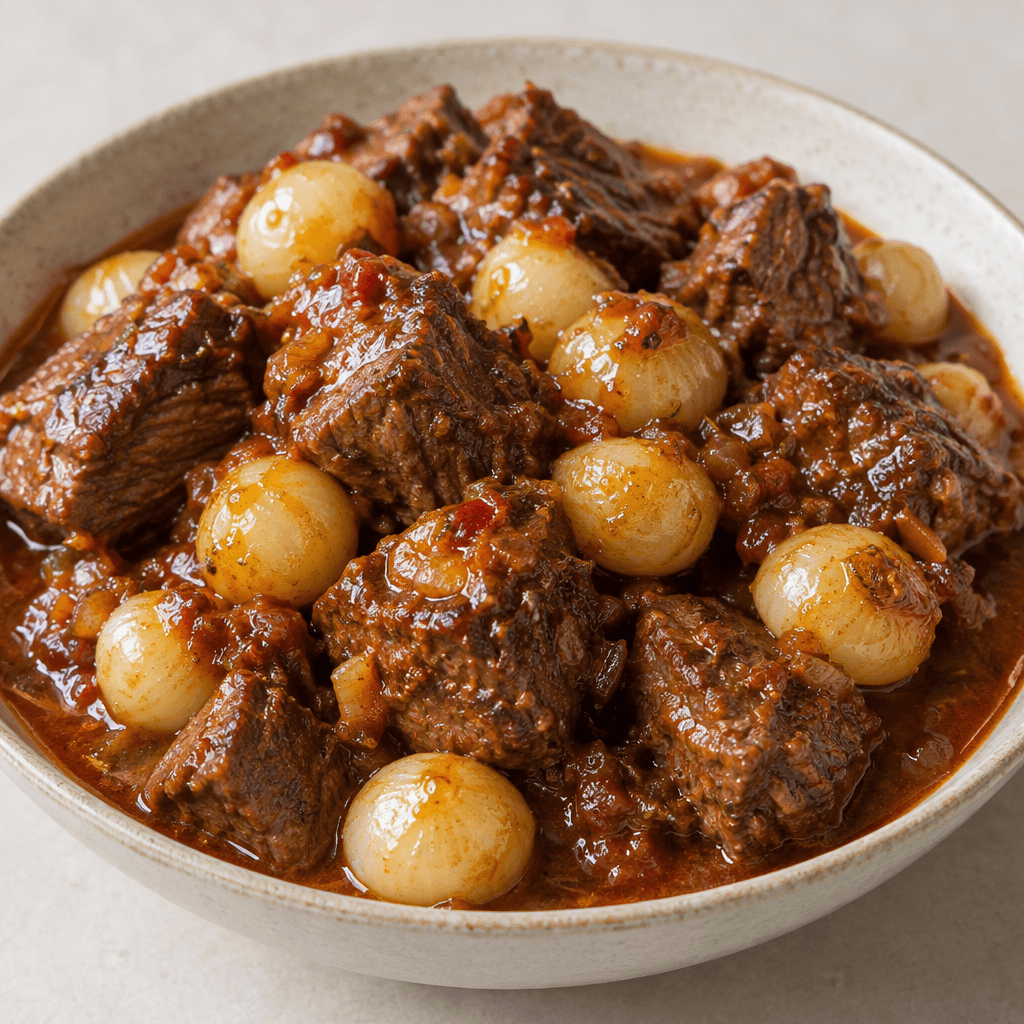
Yahni Calories
Traditional Turkish stew, often with vegetables and/or meat
In season: Autumn · Winter
CALORIES
GI
POTASSIUM
FIBER
Quick answer
1 serving (medium) of Yahni (200 g) has 220 calories. That works out to 110 calories per 100 g. It contains 20 g of carbs, 9 g of protein, 10 g of fat and 4.4 g of fiber. Its 440 mg of Sodium covers 19% of the Daily Value. Its glycemic index is 55 (medium), so it raises blood sugar at a moderate pace.
What is Yahni?
Yahni is a Turkish slow-cooked stew, commonly made with meat and onions, with tomatoes, pulses or other vegetables added according to the recipe. Versions vary between households and regions; some keep the ingredients simple, while others make a fuller, thicker pot. Gentle simmering gives the meat time to become tender and lets the cooking juices develop into a rich sauce.
It is usually served hot, often with rice, bulgur or bread to soak up the sauce. In Turkey it is familiar home cooking for family meals, while elsewhere it makes a warming, adaptable one-pot dinner. Depending on its ingredients, yahni can bring together protein and vegetables or pulses; it has 110 calories per 100 g. For a lighter serving, use oil sparingly and add extra vegetables, with a fresh salad alongside.
Yahni Nutrition Facts
Selected: 100 g
110
KCAL / 100G
Carbs
10g
· 4% DV
Protein
4.5g
· 9% DV
Fat
5g
· 6% DV
Fiber
2.2g
· 8% DV
DV is the share of the daily value covered, on a 2,000 kcal reference diet.
Calories come from: Carbs 39% · Protein 17% · Fat 44%
Yahni Vitamins & Minerals
Vitamins
Biotin
2µg · 7% DV
Vitamin K
8µg · 7% DV
B1
0.07mg · 6% DV
B12
0.15µg · 6% DV
Minerals
Sodium
220mg · 10% DV
Zinc
1mg · 9% DV
Iron
1mg · 6% DV
Phosphorus
45mg · 6% DV
How Nutritious Is Yahni?
Nutrient density
Medium
How many vitamins, minerals and how much fiber this food carries per calorie. A high score means a lot of nutrition for few calories.
Satiety score
Medium
An EatBetter score computed from fiber, protein and calorie density. A high score means staying full longer on the same calories.
Both scores are calculated per 100 g and do not change with the selected portion. The satiety score is EatBetter's own calculation, not a clinical measure.
Yahni Glycemic Index
GLYCEMIC INDEX
GLYCEMIC LOAD
Accounts for portion size — a more realistic measure than GI alone.
How to Burn Off Yahni
To burn the 110 calories in 100 g:
🚶
Walking (5 km/h)
🏃
Running (8 km/h)
🚴
Cycling
🏊
Swimming
Times are calculated with the MET equation for a 70 kg adult. Actual burn varies with your weight, age and pace.
Is Yahni Processed?
NOVA 3
Processed
1. Unprocessed
2. Minimally Processed
3. Processed
4. Ultra-Processed
NOVA classifies foods into 4 groups by industrial processing. NOVA 1 (unprocessed) is the healthiest.
Does Yahni Contain Allergens?
No known major allergens
Which Diets Is Yahni Good For?
Vegan
— Not suitable
Vegetarian
— Not suitable
Gluten-Free
— Not suitable
Dairy-Free
— Not suitable
Mediterranean
✓ Suitable
Paleo
— Not suitable
Whole30
— Not suitable
DASH
— Not suitable
Keto
— Not suitable
Low FODMAP
— Not suitable
Yahni Fat Profile
SATURATED
1.1g
MONOUNSATURATED
2.2g
POLYUNSATURATED
1g
Omega 6:3 ratio 8.8:1
Above the ideal 4:1 (8.8:1).
Compare Yahni
Foods Similar to Yahni
Frequently Asked Questions About Yahni
What is Yahni?
Yahni is a slow-cooked stew found in Turkish and neighboring cuisines, commonly made with meat, onions, and a savory sauce. Recipes vary by region and household, and some versions use vegetables or omit meat.
How is Yahni traditionally made?
Yahni is traditionally cooked slowly in a pot so the meat and onions become tender and the sauce develops flavor. Many recipes brown the meat first, then simmer it with onions, tomatoes or tomato paste, and seasonings.
What meat is used in Yahni?
Beef or lamb is commonly used in meat-based Yahni. Tougher cuts that benefit from slow cooking work well; the dish can also be made with beans or vegetables instead of meat.
Is Yahni Turkish or Greek?
Yahni is associated with Turkish cooking, but similar stew traditions and dishes also appear across the Balkans, Greece, and the wider region. The name and ingredients vary, so it is better understood as a family of regional stews than a dish with one exclusive version.
What does Yahni taste like?
Yahni tastes savory, rich, and gently sweet from the slowly cooked onions, with a tender texture and a sauce that may be tomato-based. Its exact flavor depends on the meat, vegetables, and spices used in the recipe.
What is the difference between Yahni and a regular stew?
Yahni is a kind of stew, usually distinguished by its slow-cooked meat and onions in a concentrated sauce. The term covers several regional recipes, while “stew” is a broader English category that includes many different cooking styles.
What should you serve with Yahni?
Serve Yahni with rice, bulgur, or crusty bread to soak up its sauce. A simple salad or plain yogurt also pairs well and adds a fresh contrast to the rich, slow-cooked dish.
Can Yahni be made without meat?
Yes, Yahni can be made without meat using onions, beans, or vegetables as the main ingredients. Simmer the ingredients until tender and let the sauce reduce so the meat-free version still has a full, hearty texture.
Can you make Yahni in a slow cooker?
Yes, Yahni works well in a slow cooker because its meat benefits from gentle, prolonged cooking. Browning the meat and onions in a pan first adds flavor; transfer them with the other ingredients and cook until tender.
How long does leftover Yahni last in the fridge?
Leftover Yahni keeps for 3–4 days in the refrigerator when cooled promptly and stored in a covered container. Reheat only the portion you plan to eat, making sure it is hot throughout before serving.
Have another question about Yahni?
Ask the AI nutrition coach — calories, portions, alternatives and more, answered in seconds in the app.

Scan calories with your camera
Instant AI nutrition analysis

Nutrition data compiled from USDA FoodData Central and scientific sources.