

Ready & Packaged Foods
All →Vegetables & Legumes
All →Desserts & Confectionery
All →Meat & Protein
All →Grains & Bakery
All →Beverages
All →Milk & Dairy
All →

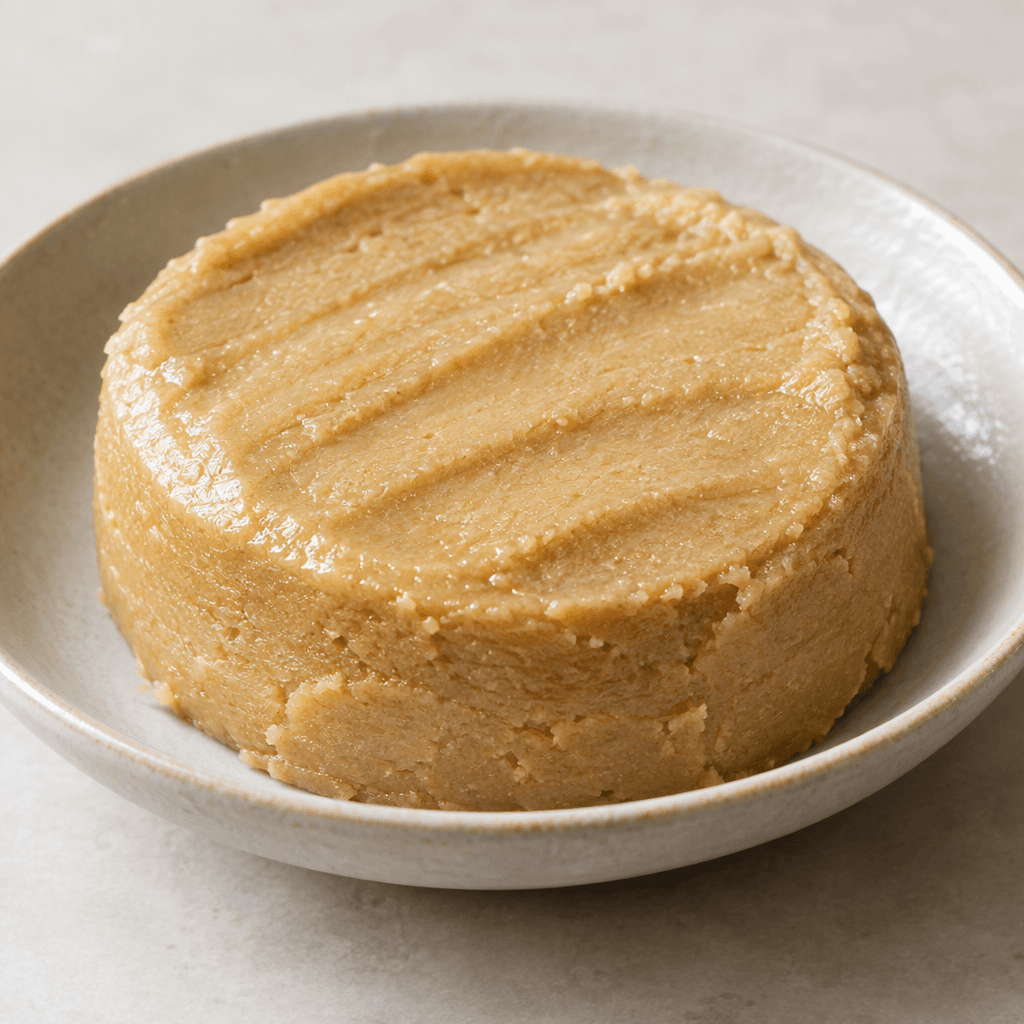
Yahin Halva Calories
Traditional Turkish halva made from roasted flour, sugar, and fat
In season: Autumn · Winter
CALORIES
GI
POTASSIUM
FIBER
Quick answer
1 piece (medium) of Yahin Halva (40 g) has 172 calories. That works out to 430 calories per 100 g. It contains 24 g of carbs, 1.8 g of protein, 7.2 g of fat and 0.6 g of fiber. Its glycemic index is 65 (high), so it raises blood sugar quickly.
What is Yahin Halva?
Yahin Halva is a traditional Turkish flour halva made by combining toasted flour with sugar and fat. Toasting gives the flour a warm, lightly nutty aroma; the finished sweet is rich and tender, with a texture that can crumble softly rather than feel chewy.
In Turkey, it is commonly served in small pieces with tea, after a meal or on special occasions. Its nutrition is led by carbohydrates and fat, with relatively little protein; a 100 g portion provides 430 kcal. For a lighter serving, have a medium piece and pair it with unsweetened tea.
Yahin Halva Nutrition Facts
Selected: 100 g
430
KCAL / 100G
Carbs
60g
· 22% DV
Protein
4.5g
· 9% DV
Fat
18g
· 23% DV
Fiber
1.5g
· 5% DV
DV is the share of the daily value covered, on a 2,000 kcal reference diet.
Calories come from: Carbs 57% · Protein 4% · Fat 39%
Yahin Halva Vitamins & Minerals
Vitamins
B3
0.6mg · 4% DV
B5
0.2mg · 4% DV
Vitamin E
0.6mg · 4% DV
B1
0.04mg · 3% DV
Minerals
Iron
1mg · 6% DV
Phosphorus
40mg · 6% DV
Magnesium
16mg · 4% DV
Selenium
2µg · 4% DV
How Nutritious Is Yahin Halva?
Nutrient density
Low
How many vitamins, minerals and how much fiber this food carries per calorie. A high score means a lot of nutrition for few calories.
Satiety score
Low
An EatBetter score computed from fiber, protein and calorie density. A high score means staying full longer on the same calories.
Both scores are calculated per 100 g and do not change with the selected portion. The satiety score is EatBetter's own calculation, not a clinical measure.
Yahin Halva Glycemic Index
GLYCEMIC INDEX
GLYCEMIC LOAD
Accounts for portion size — a more realistic measure than GI alone.
How to Burn Off Yahin Halva
To burn the 430 calories in 100 g:
🚶
Walking (5 km/h)
🏃
Running (8 km/h)
🚴
Cycling
🏊
Swimming
Times are calculated with the MET equation for a 70 kg adult. Actual burn varies with your weight, age and pace.
Is Yahin Halva Processed?
NOVA 3
Processed
1. Unprocessed
2. Minimally Processed
3. Processed
4. Ultra-Processed
NOVA classifies foods into 4 groups by industrial processing. NOVA 1 (unprocessed) is the healthiest.
Does Yahin Halva Contain Allergens?
No known major allergens
Which Diets Is Yahin Halva Good For?
Vegan
— Not suitable
Vegetarian
✓ Suitable
Gluten-Free
— Not suitable
Dairy-Free
— Not suitable
Mediterranean
✓ Suitable
Paleo
— Not suitable
Whole30
— Not suitable
DASH
— Not suitable
Keto
— Not suitable
Low FODMAP
— Not suitable
Yahin Halva Fat Profile
SATURATED
7g
MONOUNSATURATED
6g
POLYUNSATURATED
1.5g
Omega 6:3 ratio 25:1
Above the ideal 4:1 (25:1).
Compare Yahin Halva
Foods Similar to Yahin Halva
Frequently Asked Questions About Yahin Halva
What is Yahin Halva?
Yahin Halva is a traditional Turkish sweet made with roasted flour, sugar, and fat. It is classified as a processed food; making it at home does not change that classification.
What ingredients go into Yahin Halva?
Yahin Halva is made from roasted flour, sugar, and fat. Recipes can vary in the proportions and in how the sweet mixture is added, which affects how rich, firm, or crumbly the finished halva feels.
How is Yahin Halva traditionally made?
To make Yahin Halva, flour is slowly roasted in fat, then combined with a sweetened mixture and shaped or served once it comes together. Stirring steadily over low heat helps prevent scorching and an unpleasant bitter taste.
Where does Yahin Halva come from?
Yahin Halva is a traditional Turkish halva, but a single regional origin for this specific name is not consistently documented. Local recipes and naming can differ, so it is safer not to assign it to one town without a reliable regional source.
How is Yahin Halva different from Turkish un helvası?
Yahin Halva belongs to the broader family of Turkish flour halvas. The distinction is generally in the regional name and recipe proportions rather than a completely different base; those details can change its flavor and texture.
Why does Yahin Halva turn lumpy?
Yahin Halva can become lumpy if the sweet mixture is added too quickly to the roasted flour. Add it gradually while stirring, and let the mixture rest briefly before shaping so it can set more evenly.
What texture should Yahin Halva have?
Yahin Halva is usually soft and crumbly, with a toasted-flour aroma. Roasting the flour longer deepens its color and flavor, but taking it too far can make the halva bitter and dry.
How is Yahin Halva served?
Yahin Halva is served in small portions as a dessert. Turkish tea is a natural accompaniment, while unsweetened tea or plain coffee can balance its sweetness without adding another sugary flavor.
How should you store Yahin Halva?
Keep Yahin Halva in a sealed container in a cool, dry place. Refrigerate it if the room is warm, since the fat can soften; discard it if you notice mold, an off smell, or an unusual change in texture.
Can you freeze Yahin Halva?
Yes, Yahin Halva can be frozen in a tightly sealed container, ideally divided into portions. Thaw it in the refrigerator and avoid refreezing it; its texture may be slightly drier or more crumbly after thawing.
Have another question about Yahin Halva?
Ask the AI nutrition coach — calories, portions, alternatives and more, answered in seconds in the app.

Scan calories with your camera
Instant AI nutrition analysis

Nutrition data compiled from USDA FoodData Central and scientific sources.