

Ready & Packaged Foods
All →Vegetables & Legumes
All →Desserts & Confectionery
All →Meat & Protein
All →Grains & Bakery
All →Beverages
All →Milk & Dairy
All →

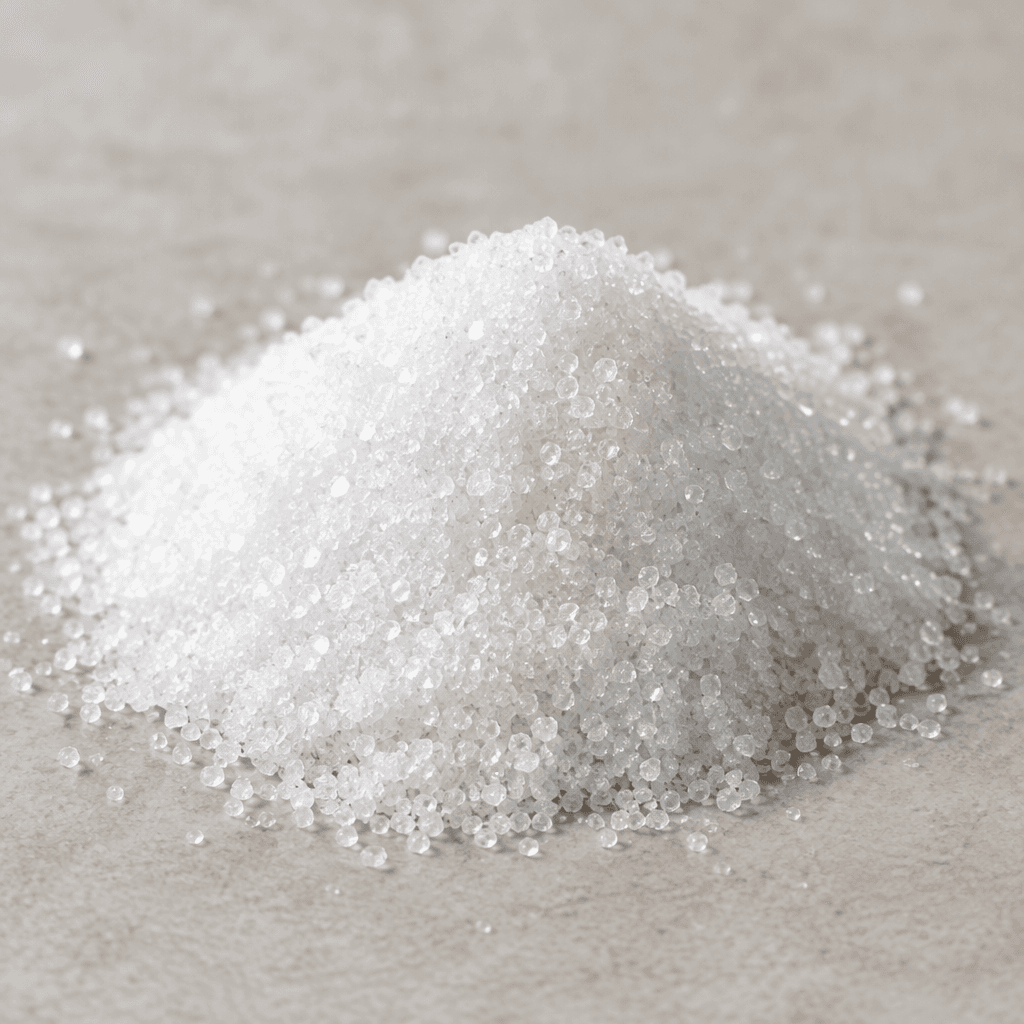
Xylitol Calories
Low-calorie sweetener, tooth-friendly, low glycemic index
CALORIES · 100 G
GI
POTASSIUM · 100 G
FIBER · 100 G
Quick answer
1 teaspoon (medium) of Xylitol (4 g) has 10 calories. That works out to 240 calories per 100 g. It contains 4 g of carbs, 0 g of protein, 0 g of fat and 0 g of fiber. Its glycemic index is 7 (low), so it raises blood sugar slowly.
Xylitol Nutrition Facts
Selected: 1 teaspoon (medium) · 4 g
10
KCAL / 4G
Carbs
4g
· 1% DV
Protein
0g
· 0% DV
Fat
0g
· 0% DV
Fiber
0g
· 0% DV
DV is the share of the daily value covered, on a 2,000 kcal reference diet.
Calories come from: Carbs 100% · Protein 0% · Fat 0%
Xylitol nutrition facts table · 1 teaspoon (medium) (4 g)
| Nutrient | Amount | % DV |
|---|---|---|
| Calories | 10 kcal | |
| Total fat | 0 g | 0% |
| Saturated fat | 0 g | 0% |
| Trans fat | 0 g | |
| Sodium | 0 mg | 0% |
| Total carbohydrate | 4 g | 1% |
| Fiber | 0 g | 0% |
| Protein | 0 g | 0% |
Calories: Calories measure energy. Average daily need is 2,000 kcal. Excess calories are stored as fat, too few cause weight loss.
Carbs: Your body's primary energy source. The brain runs exclusively on carbs. Daily need: 275g.
Protein: Essential for muscle repair and cell growth. Daily need: 50g. Keeps you full and boosts metabolism.
Fat: Needed for hormone production and vitamin absorption. Daily need: 78g. Limit saturated fats, choose unsaturated.
Fiber: Critical for digestive health and satiety. Daily need: 28g. Stabilizes blood sugar, lowers cholesterol.

Log this food in EatBetter
100,000+ people use it
- Get your daily calorie target
- Snap your meal, log it in seconds
- See every vitamin and mineral

📸 Scan the code to get the app free.

How Many Calories in 1 Teaspoon of Xylitol?
| Serving | Amount | Calories |
|---|---|---|
| 1 teaspoon (medium) | 4 g | 10 kcal |
| 1 piece (small) | 2 g | 5 kcal |
| 1 teaspoon (small) | 2 g | 5 kcal |
| 1 serving (medium) | 10 g | 24 kcal |
| 1 tablespoon (medium) | 12 g | 29 kcal |
| 1 tablespoon (large) | 15 g | 36 kcal |
| 100 g | 100 g | 240 kcal |
| 1 pack (medium) | 100 g | 240 kcal |
| 1 cup (medium) | 190 g | 456 kcal |
Calculated from 240 calories per 100 g.
Frequently Asked Questions About Xylitol
What is xylitol made from?
Xylitol is a sugar alcohol found naturally in small amounts in some fruits and vegetables. Commercial xylitol is made from plant materials, which can include corn cobs or hardwoods; it is not necessarily made from birch.
Is xylitol toxic to dogs?
Yes. Xylitol can cause a dangerous drop in blood sugar and liver damage in dogs, even in small amounts. If your dog eats a product containing xylitol, contact an emergency veterinarian immediately rather than waiting for symptoms.
Does xylitol help prevent tooth decay?
Xylitol may help reduce cavity-causing bacteria’s ability to use sugars, and chewing xylitol gum can stimulate saliva. It can support oral care, but it does not replace brushing with fluoride toothpaste or regular dental care.
Can you use xylitol instead of sugar in baking?
Yes, xylitol can sweeten many baked goods, but it does not brown or caramelize like sugar. That can change a recipe’s color and texture, so results may differ even when you use it as a sugar replacement.
Does xylitol raise blood sugar?
Xylitol generally has a smaller effect on blood sugar than table sugar, but the effect is not necessarily zero. If you have diabetes, include it in your food planning and ask your healthcare professional how it fits your treatment plan.
What are the side effects of eating xylitol?
Eating too much xylitol can cause gas, bloating, or diarrhea because sugar alcohols can draw water into the gut. These effects vary between people; trying a small amount first can help you see how you tolerate it.
Can you put xylitol in coffee?
Yes, xylitol dissolves in hot coffee and can be used as a sweetener. Its sweetness is similar to sugar, though larger amounts may leave a mild cooling sensation in your mouth.
Is xylitol the same as birch sugar?
Birch sugar is another name for xylitol, not a separate sweetener. The name can be misleading, though: commercial xylitol may come from other plant sources, so it is not always made from birch.
Is xylitol safe during pregnancy?
Xylitol used as a food sweetener is generally considered acceptable during pregnancy, but larger amounts may cause digestive discomfort. If you have a pregnancy-related condition or specific dietary restrictions, ask your healthcare professional.
How is xylitol different from erythritol?
Xylitol and erythritol are different sugar alcohols with different sweetness and effects in recipes. Xylitol tastes closer to sugar, while erythritol can behave differently in baking and may leave a more noticeable cooling sensation.
Xylitol Vitamins & Minerals
Vitamins
Vitamin A
0µg · 0% DV
B1
0mg · 0% DV
B2
0mg · 0% DV
B3
0mg · 0% DV
Minerals
Calcium
0.08mg · 0% DV
Iron
0mg · 0% DV
Magnesium
0mg · 0% DV
Zinc
0mg · 0% DV
Sodium
0mg · 0% DV
Potassium ⭐
0mg · 0% DV
Xylitol Glycemic Index
GLYCEMIC INDEX
GLYCEMIC LOAD
Accounts for portion size — a more realistic measure than GI alone.
How to Burn Off Xylitol
To burn the 10 calories in 1 teaspoon (medium) (4 g):
🚶
Walking (5 km/h)
🏃
Running (8 km/h)
🚴
Cycling
🏊
Swimming
Times are calculated with the MET equation for a 70 kg adult. Actual burn varies with your weight, age and pace.
What is Xylitol?
Xylitol is a sugar alcohol found naturally in some fruits and vegetables, and is sold as a granulated sweetener as well as used in sugar-free gum and sweets. Its sweetness is close to sugar, with a mild cooling sensation that some people notice after eating it.
Use it in tea or coffee, stir it into yoghurt, or try it in home baking. It has a low glycemic index, and provides 240 calories per 100 g. Although it can replace sugar in some recipes, it may not behave exactly like sugar in baking, so start with a small batch. Keep it away from dogs, for whom it is highly toxic.
How Nutritious Is Xylitol?
Nutrient density
Low
How many vitamins, minerals and how much fiber this food carries per calorie. A high score means a lot of nutrition for few calories.
Satiety score
Low
An EatBetter score computed from fiber, protein and calorie density. A high score means staying full longer on the same calories.
Both scores are calculated per 100 g and do not change with the selected portion. The satiety score is EatBetter's own calculation, not a clinical measure.
Is Xylitol Processed?
NOVA 3
Processed
1. Unprocessed
2. Minimally Processed
3. Processed
4. Ultra-Processed
NOVA classifies foods into 4 groups by industrial processing. NOVA 1 (unprocessed) is the healthiest.
Does Xylitol Contain Allergens?
No known major allergens
Which Diets Is Xylitol Good For?
Vegan
✓ Suitable
Vegetarian
✓ Suitable
Gluten-Free
✓ Suitable
Dairy-Free
— Not suitable
Mediterranean
✓ Suitable
Paleo
✓ Suitable
Whole30
— Not suitable
DASH
— Not suitable
Keto
✓ Suitable
Low FODMAP
— Not suitable
Xylitol Fat Profile
SATURATED
0g
MONOUNSATURATED
0g
POLYUNSATURATED
0g
Compare Xylitol
Foods Similar to Xylitol
Have another question about Xylitol?
Ask the AI nutrition coach — calories, portions, alternatives and more, answered in seconds in the app.

Scan calories with your camera
Instant AI nutrition analysis

Nutrition data compiled from USDA FoodData Central and scientific sources.