

Ready & Packaged Foods
All →Vegetables & Legumes
All →Desserts & Confectionery
All →Meat & Protein
All →Grains & Bakery
All →Beverages
All →Milk & Dairy
All →

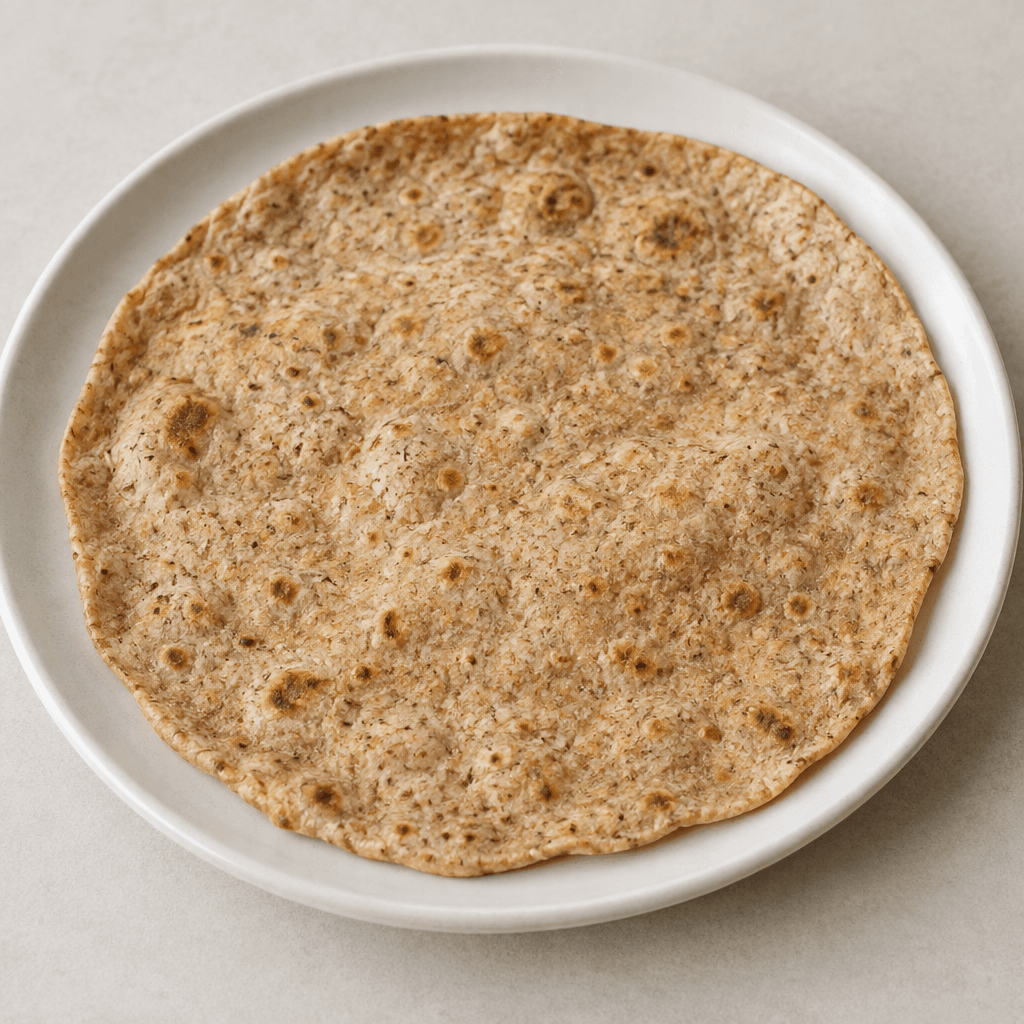
Whole Wheat Flatbread Calories
Rich in fiber and vitamins, traditional thin bread made from whole wheat.
In season: Spring · Summer · Autumn · Winter
CALORIES
GI
POTASSIUM
FIBER
Quick answer
1 piece (medium) of Whole Wheat Flatbread (60 g) has 150 calories. That works out to 250 calories per 100 g. It contains 29.4 g of carbs, 5.1 g of protein, 1.5 g of fat and 4.5 g of fiber. Its 0.7 mg of Manganese covers 29% of the Daily Value. Its glycemic index is 45 (medium), so it raises blood sugar at a moderate pace.
What is Whole Wheat Flatbread?
Whole Wheat Flatbread is a thin, round bread made from whole-wheat flour and cooked on a hot griddle. It reflects the Turkish yufka tradition: the bread is rolled out very thin, with a soft, flexible texture that makes it easy to fold or wrap.
Its mild, toasty flavour works well at breakfast with cheese, olives and fresh vegetables, or alongside soups and other meals. In Turkey, it is also used to wrap savoury fillings; elsewhere, you can serve it as a simple alternative to thicker breads or use it for wraps. Whole-wheat flour gives it a notably fibre-rich character, with 7.5 g of fibre per 100 g. For a lighter filling, pair it with plenty of vegetables and a modest amount of cheese or sauce.
Whole Wheat Flatbread Nutrition Facts
Selected: 100 g
250
KCAL / 100G
Carbs
49g
· 18% DV
Protein
8.5g
· 17% DV
Fat
2.5g
· 3% DV
Fiber
7.5g
· 27% DV
DV is the share of the daily value covered, on a 2,000 kcal reference diet.
Calories come from: Carbs 78% · Protein 13% · Fat 9%
Whole Wheat Flatbread Vitamins & Minerals
Vitamins
B1
0.35mg · 29% DV
B3
4.1mg · 26% DV
B2
0.12mg · 9% DV
B5
0.45mg · 9% DV
Minerals
Manganese
1mg · 43% DV
Selenium
18µg · 33% DV
Phosphorus
180mg · 26% DV
Magnesium
85mg · 20% DV
How Nutritious Is Whole Wheat Flatbread?
Nutrient density
Medium
How many vitamins, minerals and how much fiber this food carries per calorie. A high score means a lot of nutrition for few calories.
Satiety score
Medium
An EatBetter score computed from fiber, protein and calorie density. A high score means staying full longer on the same calories.
Both scores are calculated per 100 g and do not change with the selected portion. The satiety score is EatBetter's own calculation, not a clinical measure.
Whole Wheat Flatbread Glycemic Index
GLYCEMIC INDEX
GLYCEMIC LOAD
Accounts for portion size — a more realistic measure than GI alone.
How to Burn Off Whole Wheat Flatbread
To burn the 250 calories in 100 g:
🚶
Walking (5 km/h)
🏃
Running (8 km/h)
🚴
Cycling
🏊
Swimming
Times are calculated with the MET equation for a 70 kg adult. Actual burn varies with your weight, age and pace.
Is Whole Wheat Flatbread Processed?
NOVA 2
Minimally Processed
1. Unprocessed
2. Minimally Processed
3. Processed
4. Ultra-Processed
NOVA classifies foods into 4 groups by industrial processing. NOVA 1 (unprocessed) is the healthiest.
Does Whole Wheat Flatbread Contain Allergens?
Contains these allergens:
Which Diets Is Whole Wheat Flatbread Good For?
Vegan
✓ Suitable
Vegetarian
✓ Suitable
Gluten-Free
— Not suitable
Dairy-Free
— Not suitable
Mediterranean
✓ Suitable
Paleo
— Not suitable
Whole30
— Not suitable
DASH
— Not suitable
Keto
— Not suitable
Low FODMAP
— Not suitable
Whole Wheat Flatbread Fat Profile
SATURATED
0.4g
MONOUNSATURATED
0.3g
POLYUNSATURATED
0.5g
Omega 6:3 ratio 9:1
Above the ideal 4:1 (9:1).
Compare Whole Wheat Flatbread
Foods Similar to Whole Wheat Flatbread
Frequently Asked Questions About Whole Wheat Flatbread
Is whole wheat flatbread healthy?
Yes, whole wheat flatbread is a fiber-rich bread choice. Its whole-grain flour can make it more filling than a refined-flour flatbread, and pairing it with vegetables and a protein source makes for a more balanced meal.
Is whole wheat flatbread good for weight loss?
Yes, whole wheat flatbread can fit a weight-loss eating plan when portions and fillings are considered. Use it to wrap lean protein and plenty of vegetables, rather than relying on high-fat sauces or oversized fillings.
Does whole wheat flatbread raise blood sugar?
Yes, whole wheat flatbread contains carbohydrates and can raise blood sugar, even though its whole-grain flour provides fiber. If you have diabetes, pair it with protein and vegetables and ask your clinician or dietitian what portion suits your meal plan.
What is the difference between whole wheat flatbread and pita bread?
Whole wheat flatbread is a broad term for a thin, usually flexible bread, while pita is typically round and puffs to form a pocket when baked. Some flatbreads are also called pita, so the texture and whether it forms a pocket depend on the style.
How do you keep whole wheat flatbread from cracking when you roll it?
Warm whole wheat flatbread briefly before rolling it. A dry, cool flatbread is more likely to crack, so heat it in a skillet or microwave it under a slightly damp paper towel just until pliable.
How should you store whole wheat flatbread?
Store whole wheat flatbread in an airtight bag or container once it has cooled. Keeping air out helps prevent it from drying; discard it if you see mold or notice an unusual smell.
Can you freeze whole wheat flatbread?
Yes, whole wheat flatbread freezes well. Separate pieces with parchment paper, seal them in a freezer-safe bag, and remove only what you need; thaw at room temperature or warm straight from frozen.
How do you reheat whole wheat flatbread without drying it out?
Reheat whole wheat flatbread briefly in a skillet, covered, to help it stay soft. If it feels dry, sprinkle on a little water first; prolonged heating makes the bread tough and brittle.
What can you make with whole wheat flatbread?
Whole wheat flatbread works well for wraps, quick pizzas, and folded sandwiches. For a quick meal, add cooked vegetables and beans or chicken, then warm the assembled flatbread until the filling is hot.
Can you make whole wheat flatbread without yeast?
Yes, many thin whole wheat flatbreads are made without yeast. A simple dough of whole wheat flour, water, and salt can be rolled thin and cooked on a hot, dry skillet; resting the dough first makes it easier to roll.
Have another question about Whole Wheat Flatbread?
Ask the AI nutrition coach — calories, portions, alternatives and more, answered in seconds in the app.

Scan calories with your camera
Instant AI nutrition analysis

Nutrition data compiled from USDA FoodData Central and scientific sources.