

Ready & Packaged Foods
All →Vegetables & Legumes
All →Desserts & Confectionery
All →Meat & Protein
All →Grains & Bakery
All →Beverages
All →Milk & Dairy
All →

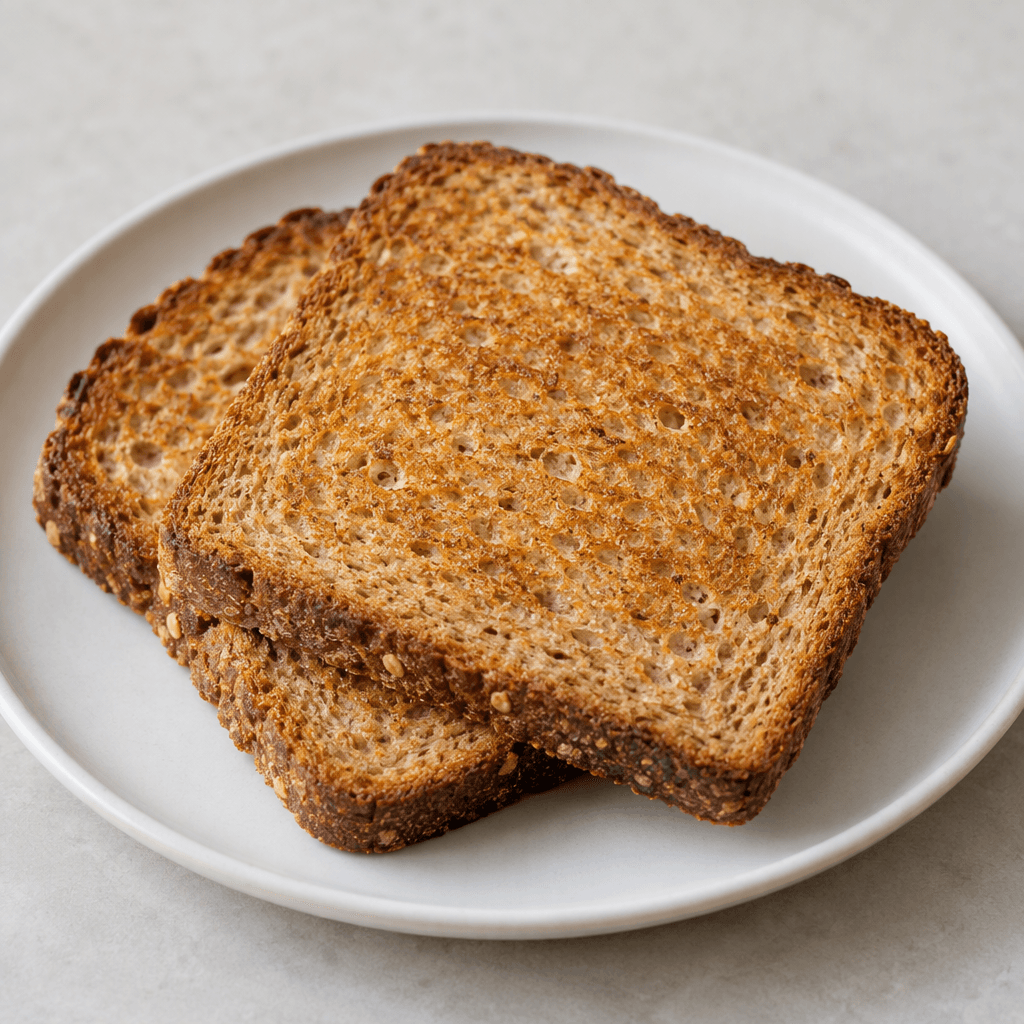
Whole wheat bread toast Calories
High fiber, complex carbs, low fat, B vitamins
CALORIES
GI
POTASSIUM
FIBER
Quick answer
1 slice (medium) of Whole wheat bread toast (35 g) has 86 calories. That works out to 245 calories per 100 g. It contains 15.1 g of carbs, 3.6 g of protein, 1.1 g of fat and 2.3 g of fiber. Its 0.4 mg of Manganese covers 17% of the Daily Value. Its glycemic index is 50 (medium), so it raises blood sugar at a moderate pace.
What is Whole wheat bread toast?
Whole wheat bread toast is made by toasting slices of bread baked with whole wheat flour, giving them a crisp surface and a hearty, grain-forward crumb. It is a familiar breakfast choice in many places: serve it warm with butter, nut butter, eggs or jam, or use it as the base for an open sandwich. The whole-grain flour makes it a fibre-rich source of complex carbohydrates, while its fat content is relatively low before toppings are added. Pair it with eggs or beans for a more substantial meal, or add fresh fruit and a modest spread for a lighter breakfast. Toasting brings out a nutty flavour without needing extra oil.
Whole wheat bread toast Nutrition Facts
Selected: 100 g
245
KCAL / 100G
Carbs
43.2g
· 16% DV
Protein
10.2g
· 20% DV
Fat
3.1g
· 4% DV
Fiber
6.7g
· 24% DV
DV is the share of the daily value covered, on a 2,000 kcal reference diet.
Calories come from: Carbs 72% · Protein 17% · Fat 11%
Whole wheat bread toast Vitamins & Minerals
Vitamins
B1
0.32mg · 27% DV
B3
3.7mg · 23% DV
B2
0.13mg · 10% DV
Folate
34µg · 9% DV
Minerals
Manganese
1mg · 43% DV
Selenium
18µg · 33% DV
Phosphorus
120mg · 17% DV
Magnesium
68mg · 16% DV
How Nutritious Is Whole wheat bread toast?
Nutrient density
Medium
How many vitamins, minerals and how much fiber this food carries per calorie. A high score means a lot of nutrition for few calories.
Satiety score
High
An EatBetter score computed from fiber, protein and calorie density. A high score means staying full longer on the same calories.
Both scores are calculated per 100 g and do not change with the selected portion. The satiety score is EatBetter's own calculation, not a clinical measure.
Whole wheat bread toast Glycemic Index
GLYCEMIC INDEX
GLYCEMIC LOAD
Accounts for portion size — a more realistic measure than GI alone.
How to Burn Off Whole wheat bread toast
To burn the 245 calories in 100 g:
🚶
Walking (5 km/h)
🏃
Running (8 km/h)
🚴
Cycling
🏊
Swimming
Times are calculated with the MET equation for a 70 kg adult. Actual burn varies with your weight, age and pace.
Is Whole wheat bread toast Processed?
NOVA 3
Processed
1. Unprocessed
2. Minimally Processed
3. Processed
4. Ultra-Processed
NOVA classifies foods into 4 groups by industrial processing. NOVA 1 (unprocessed) is the healthiest.
Does Whole wheat bread toast Contain Allergens?
Contains these allergens:
Which Diets Is Whole wheat bread toast Good For?
Vegan
✓ Suitable
Vegetarian
✓ Suitable
Gluten-Free
— Not suitable
Dairy-Free
— Not suitable
Mediterranean
✓ Suitable
Paleo
— Not suitable
Whole30
— Not suitable
DASH
— Not suitable
Keto
— Not suitable
Low FODMAP
— Not suitable
Whole wheat bread toast Fat Profile
SATURATED
0.55g
MONOUNSATURATED
0.45g
POLYUNSATURATED
0.62g
Omega 6:3 ratio 13.8:1
Above the ideal 4:1 (13.8:1).
Compare Whole wheat bread toast
Foods Similar to Whole wheat bread toast
Frequently Asked Questions About Whole wheat bread toast
Is whole wheat bread toast healthier than white bread toast?
Usually, yes: whole wheat bread generally provides more fiber, which can help you feel full for longer. Toasting itself does not make bread healthier, and toppings such as butter or sugary spreads can change the overall meal.
Does toasting whole wheat bread reduce its calories?
No. Toasting removes some water, so the slice may weigh less, but it does not meaningfully remove the bread’s energy. A smaller weight after toasting should not be mistaken for fewer calories in the slice.
Is whole wheat bread toast good for weight loss?
It can fit into a weight-loss eating plan, and its fiber may help with fullness. The bread does not cause weight loss on its own; portion size and calorie-dense toppings such as butter or nut butter also matter.
Does whole wheat bread toast raise blood sugar?
Yes, it contains carbohydrates that raise blood sugar, although its fiber can slow digestion. Pairing a slice with eggs or another protein source can make a more balanced meal. If you have diabetes, ask your care team how to fit it into your plan.
Can you freeze whole wheat bread toast?
Yes. Freeze the bread slices in an airtight bag and toast them straight from frozen when needed. You can also freeze already-toasted slices, but they may lose some crispness after thawing.
How do you keep whole wheat bread toast crispy?
Toast only the slices you plan to eat and serve them right away. Toasted bread softens as it sits, especially in a covered container or humid room; let it cool briefly on a rack if you need to hold it for a short time.
Why does whole wheat bread toast get hard?
Toasting drives moisture out of the bread, and prolonged heating makes the slice dry and tough. Use a shorter toast setting and eat it soon after cooking; storing toasted slices for later usually reduces their appealing texture.
What toppings go well on whole wheat bread toast?
Eggs, cottage cheese, hummus, avocado, or nut butter pair well with its hearty flavor. For a sweeter option, add fruit and a small amount of honey or jam; the topping often contributes more sugar or fat than the plain toast.
Is whole wheat bread toast easier to digest than untoasted whole wheat bread?
Not necessarily. Toasting changes the bread’s moisture and texture, but it does not remove its fiber or gluten. Some people prefer the crisp texture, but toasting is not a remedy for digestive problems or wheat intolerance.
Can you eat whole wheat bread toast before a workout?
Yes, it can provide carbohydrates before exercise. If you have time for a more substantial snack, pair it with a protein source such as yogurt or an egg; a large or rich topping may feel uncomfortable just before training.
Have another question about Whole wheat bread toast?
Ask the AI nutrition coach — calories, portions, alternatives and more, answered in seconds in the app.

Scan calories with your camera
Instant AI nutrition analysis

Nutrition data compiled from USDA FoodData Central and scientific sources.