

Ready & Packaged Foods
All →Vegetables & Legumes
All →Desserts & Confectionery
All →Meat & Protein
All →Grains & Bakery
All →Beverages
All →Milk & Dairy
All →

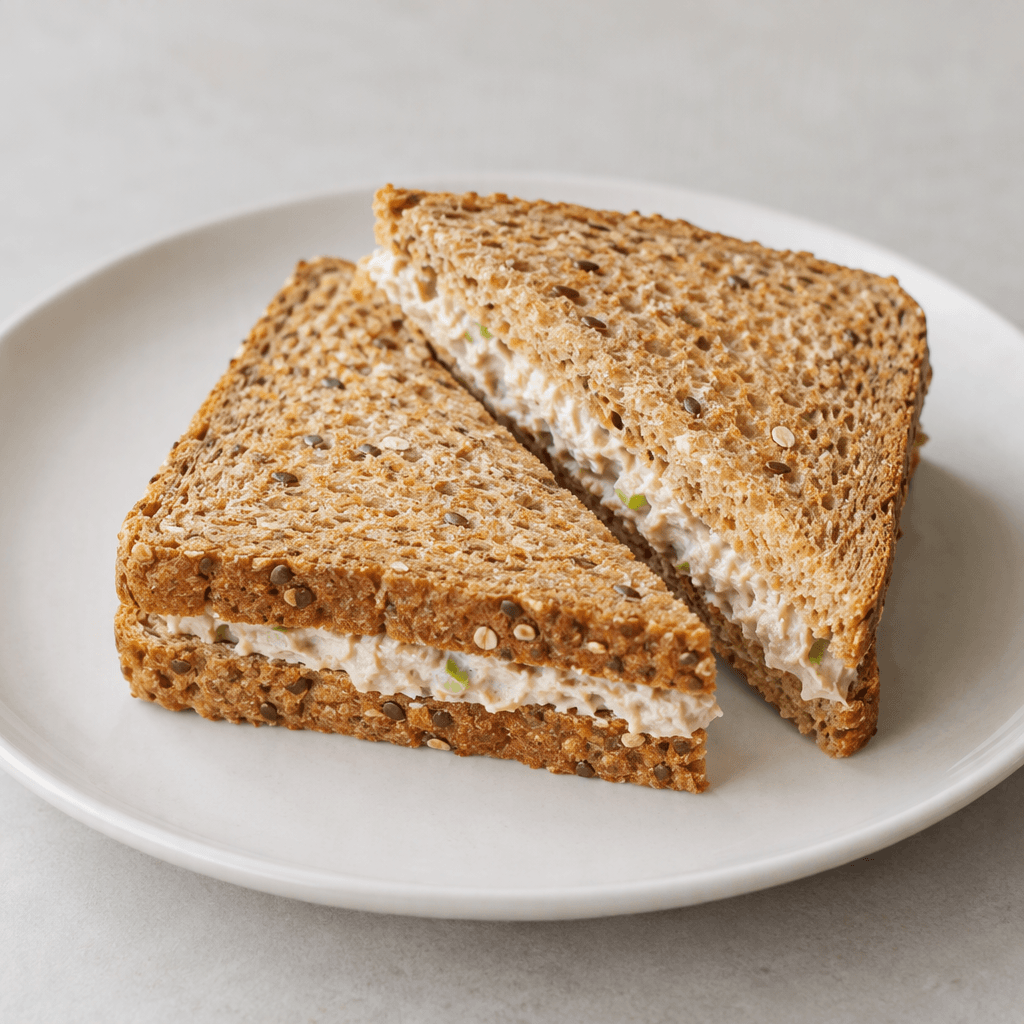
Whole Wheat Bread Sandwich Calories
High in fiber and vitamins, made with whole wheat bread.
In season: Spring · Summer · Autumn · Winter
CALORIES
GI
POTASSIUM
FIBER
Quick answer
1 piece (medium) of Whole Wheat Bread Sandwich (120 g) has 264 calories. That works out to 220 calories per 100 g. It contains 43.2 g of carbs, 10.2 g of protein, 5 g of fat and 6.6 g of fiber. Its 0.7 mg of Manganese covers 31% of the Daily Value. Its glycemic index is 55 (medium), so it raises blood sugar at a moderate pace.
What is Whole Wheat Bread Sandwich?
A whole wheat bread sandwich is made with whole wheat slices, often speckled with bran or grains, wrapped around a filling such as cheese, egg, vegetables or meat. There is no single standard filling, so it can be adapted to what you have on hand. It is commonly packed for lunch, served as a quick breakfast or eaten as a light meal, either as whole slices or cut in half. The bread brings a heartier texture and more fibre than many white-bread options; the overall nutritional profile depends on the filling and spreads. For a lighter, balanced sandwich, add plenty of crunchy vegetables and choose a modest amount of cheese or lean protein.
Whole Wheat Bread Sandwich Nutrition Facts
Selected: 100 g
220
KCAL / 100G
Carbs
36g
· 13% DV
Protein
8.5g
· 17% DV
Fat
4.2g
· 5% DV
Fiber
5.5g
· 20% DV
DV is the share of the daily value covered, on a 2,000 kcal reference diet.
Calories come from: Carbs 67% · Protein 16% · Fat 17%
Whole Wheat Bread Sandwich Vitamins & Minerals
Vitamins
B1
0.22mg · 18% DV
B3
2.3mg · 14% DV
B2
0.12mg · 9% DV
Biotin
2.5µg · 8% DV
Minerals
Manganese
1mg · 43% DV
Selenium
11µg · 20% DV
Sodium
390mg · 17% DV
Phosphorus
90mg · 13% DV
How Nutritious Is Whole Wheat Bread Sandwich?
Nutrient density
Medium
How many vitamins, minerals and how much fiber this food carries per calorie. A high score means a lot of nutrition for few calories.
Satiety score
Medium
An EatBetter score computed from fiber, protein and calorie density. A high score means staying full longer on the same calories.
Both scores are calculated per 100 g and do not change with the selected portion. The satiety score is EatBetter's own calculation, not a clinical measure.
Whole Wheat Bread Sandwich Glycemic Index
GLYCEMIC INDEX
GLYCEMIC LOAD
Accounts for portion size — a more realistic measure than GI alone.
How to Burn Off Whole Wheat Bread Sandwich
To burn the 220 calories in 100 g:
🚶
Walking (5 km/h)
🏃
Running (8 km/h)
🚴
Cycling
🏊
Swimming
Times are calculated with the MET equation for a 70 kg adult. Actual burn varies with your weight, age and pace.
Is Whole Wheat Bread Sandwich Processed?
NOVA 3
Processed
1. Unprocessed
2. Minimally Processed
3. Processed
4. Ultra-Processed
NOVA classifies foods into 4 groups by industrial processing. NOVA 1 (unprocessed) is the healthiest.
Does Whole Wheat Bread Sandwich Contain Allergens?
Contains these allergens:
Which Diets Is Whole Wheat Bread Sandwich Good For?
Vegan
— Not suitable
Vegetarian
✓ Suitable
Gluten-Free
— Not suitable
Dairy-Free
— Not suitable
Mediterranean
✓ Suitable
Paleo
— Not suitable
Whole30
— Not suitable
DASH
— Not suitable
Keto
— Not suitable
Low FODMAP
— Not suitable
Whole Wheat Bread Sandwich Fat Profile
SATURATED
0.7g
MONOUNSATURATED
1.2g
POLYUNSATURATED
1.1g
Omega 6:3 ratio 13:1
Above the ideal 4:1 (13:1).
Compare Whole Wheat Bread Sandwich
Foods Similar to Whole Wheat Bread Sandwich
Frequently Asked Questions About Whole Wheat Bread Sandwich
What can you put in a whole wheat bread sandwich?
A whole wheat bread sandwich works well with egg, chicken, tuna, cheese, or hummus paired with crisp vegetables. Choose fillings that suit each other, and add juicy ingredients such as tomato just before eating to keep the bread from turning soggy.
How do you keep a whole wheat bread sandwich from getting soggy?
Keep wet ingredients and sauces away from the bread in a whole wheat bread sandwich. Put cheese or lettuce between the bread and juicy fillings, pack tomatoes separately, and assemble the sandwich close to serving time.
Can you make a whole wheat bread sandwich ahead of time?
Yes, you can make a whole wheat bread sandwich ahead and refrigerate it in a sealed container. For the best texture, leave watery vegetables and dressing out until serving, especially if the sandwich will sit for several hours.
Is a whole wheat bread sandwich healthy?
A whole wheat bread sandwich can be a balanced meal when it includes vegetables and a filling such as egg, beans, chicken, or cheese. The choice of filling and sauces matters: processed meats and generous amounts of creamy dressing make it less wholesome.
Can you toast a whole wheat bread sandwich?
Yes, a whole wheat bread sandwich can be toasted in a sandwich press or skillet. Fill it with ingredients that warm well, such as cheese and cooked vegetables, then add lettuce or other crisp salad ingredients after toasting.
How long does a whole wheat bread sandwich last in the fridge?
A whole wheat bread sandwich with perishable fillings should be refrigerated promptly and eaten within about a day for the best quality. Keep it sealed, and discard it if it has been left at room temperature for too long or shows signs of spoilage.
Is a whole wheat bread sandwich better than a white bread sandwich?
Often, yes: a whole wheat bread sandwich typically provides more fiber than the same sandwich made with white bread. That advantage can be reduced by fillings high in salt or rich sauces, so compare the whole meal rather than the bread alone.
Can you freeze a whole wheat bread sandwich?
Yes, a whole wheat bread sandwich can be frozen, but fillings such as lettuce, tomato, and cucumber become watery after thawing. Freeze one with cheese or cooked meat instead, then add fresh vegetables after it has thawed.
What is the best way to pack a whole wheat bread sandwich for lunch?
Wrap a whole wheat bread sandwich tightly or place it in a sealed lunch container, and keep it cool if it contains meat, egg, or dairy. Pack wet vegetables and dressing separately when possible, then add them shortly before eating.
Does a whole wheat bread sandwich keep you full?
A whole wheat bread sandwich is more likely to keep you full when the filling includes protein, such as egg, chicken, beans, or cheese, along with vegetables. A sandwich made mostly with bread and a thin spread may leave you hungry sooner.
Have another question about Whole Wheat Bread Sandwich?
Ask the AI nutrition coach — calories, portions, alternatives and more, answered in seconds in the app.

Scan calories with your camera
Instant AI nutrition analysis

Nutrition data compiled from USDA FoodData Central and scientific sources.