

Ready & Packaged Foods
All →Vegetables & Legumes
All →Desserts & Confectionery
All →Meat & Protein
All →Grains & Bakery
All →Beverages
All →Milk & Dairy
All →

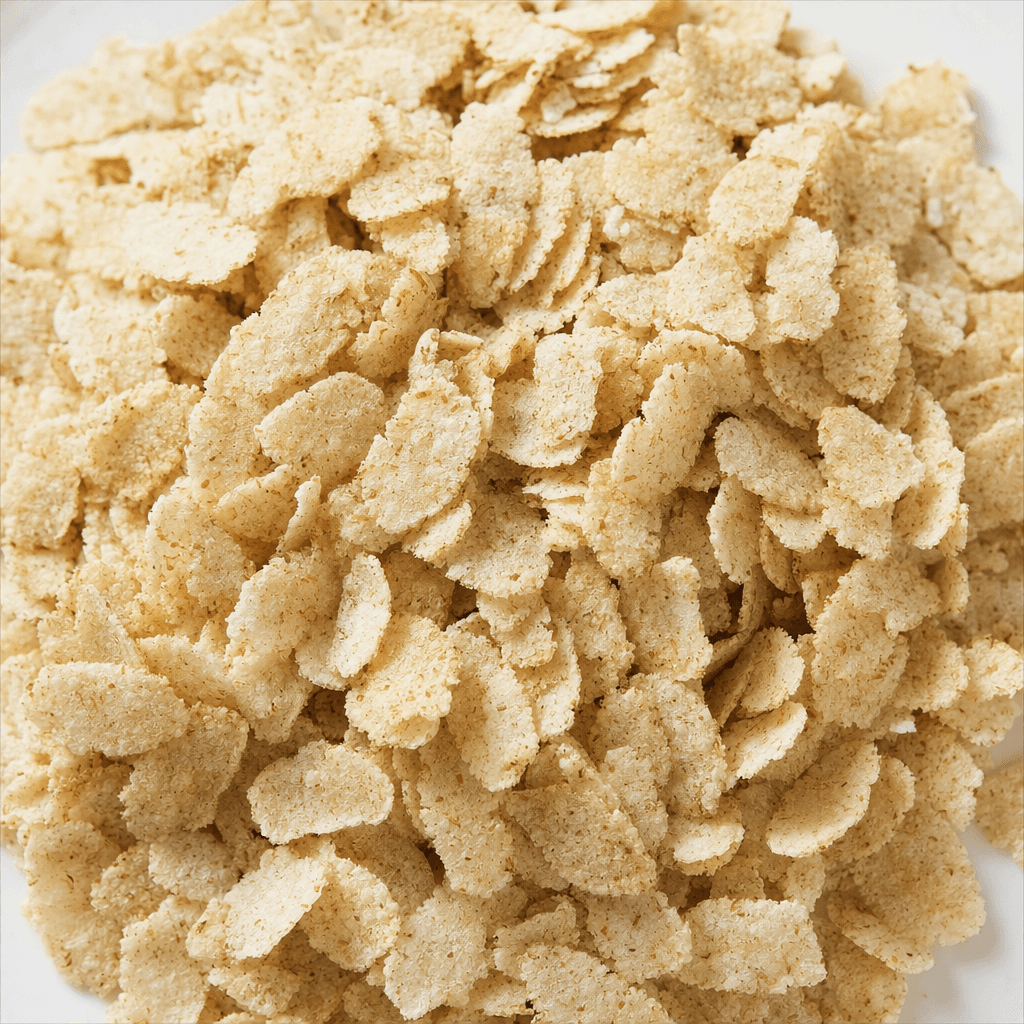
Whole grain rice flakes Calories
Whole grain, contains fiber
CALORIES
GI
POTASSIUM
FIBER
Quick answer
1 cup (medium) of Whole grain rice flakes (30 g) has 110 calories. That works out to 365 calories per 100 g. It contains 23.1 g of carbs, 2.3 g of protein, 0.8 g of fat and 1.3 g of fiber. Its 0.4 mg of Manganese covers 18% of the Daily Value. Its glycemic index is 68 (medium), so it raises blood sugar at a moderate pace.
What is Whole grain rice flakes?
Whole grain rice flakes are made by flattening rice grains while retaining the bran layer. Their mild flavour makes them easy to use as a breakfast cereal with milk or yoghurt, stirred into muesli, or softened into a warm porridge. They can also be added to homemade cereal mixes for a change from oats.
The flakes are mainly a source of carbohydrates, with some fibre from the whole grain; they provide 4.2 g of fibre per 100 g. Add milk just before eating if you prefer a little crunch, or let them soak for a softer texture. For a more filling bowl, pair them with yoghurt, fresh fruit and a small handful of nuts.
Whole grain rice flakes Nutrition Facts
Selected: 100 g
365
KCAL / 100G
Carbs
77g
· 28% DV
Protein
7.5g
· 15% DV
Fat
2.8g
· 4% DV
Fiber
4.2g
· 15% DV
DV is the share of the daily value covered, on a 2,000 kcal reference diet.
Calories come from: Carbs 85% · Protein 8% · Fat 7%
Whole grain rice flakes Vitamins & Minerals
Vitamins
B3
4.2mg · 26% DV
B5
0.9mg · 18% DV
B6
0.28mg · 16% DV
B1
0.18mg · 15% DV
Minerals
Manganese
1mg · 43% DV
Phosphorus
280mg · 40% DV
Magnesium
110mg · 26% DV
Zinc
2mg · 18% DV
How Nutritious Is Whole grain rice flakes?
Nutrient density
Medium
How many vitamins, minerals and how much fiber this food carries per calorie. A high score means a lot of nutrition for few calories.
Satiety score
Medium
An EatBetter score computed from fiber, protein and calorie density. A high score means staying full longer on the same calories.
Both scores are calculated per 100 g and do not change with the selected portion. The satiety score is EatBetter's own calculation, not a clinical measure.
Whole grain rice flakes Glycemic Index
GLYCEMIC INDEX
GLYCEMIC LOAD
Accounts for portion size — a more realistic measure than GI alone.
How to Burn Off Whole grain rice flakes
To burn the 365 calories in 100 g:
🚶
Walking (5 km/h)
🏃
Running (8 km/h)
🚴
Cycling
🏊
Swimming
Times are calculated with the MET equation for a 70 kg adult. Actual burn varies with your weight, age and pace.
Is Whole grain rice flakes Processed?
NOVA 3
Processed
1. Unprocessed
2. Minimally Processed
3. Processed
4. Ultra-Processed
NOVA classifies foods into 4 groups by industrial processing. NOVA 1 (unprocessed) is the healthiest.
Does Whole grain rice flakes Contain Allergens?
Contains these allergens:
Which Diets Is Whole grain rice flakes Good For?
Vegan
✓ Suitable
Vegetarian
✓ Suitable
Gluten-Free
— Not suitable
Dairy-Free
— Not suitable
Mediterranean
✓ Suitable
Paleo
— Not suitable
Whole30
— Not suitable
DASH
— Not suitable
Keto
— Not suitable
Low FODMAP
— Not suitable
Whole grain rice flakes Fat Profile
SATURATED
0.6g
MONOUNSATURATED
0.8g
POLYUNSATURATED
1.1g
Omega 6:3 ratio 33.3:1
Above the ideal 4:1 (33.3:1).
Compare Whole grain rice flakes
Foods Similar to Whole grain rice flakes
Frequently Asked Questions About Whole grain rice flakes
How do you eat whole grain rice flakes?
Whole grain rice flakes can be eaten with milk or yogurt, cooked into a soft porridge, or added to dishes such as soups and patties. If you want a softer texture, soak or briefly cook them; preparation depends on whether the flakes are sold ready to eat.
Can you eat whole grain rice flakes with milk?
Yes, whole grain rice flakes pair well with milk. Mix them with cold milk for a quick bowl, or warm them together for a softer, porridge-like texture. A plant-based drink can also be used.
Do whole grain rice flakes need to be cooked?
Not always. Some whole grain rice flakes are ready to eat, while others are meant to be soaked or cooked until tender. Check the preparation directions on the package, especially before using them in a recipe that depends on their texture.
How do you make porridge with whole grain rice flakes?
To make porridge, simmer whole grain rice flakes with milk or water, stirring until they soften and thicken. Add liquid gradually to control the consistency, then top with fruit, cinnamon, or nuts if desired.
Can whole grain rice flakes replace oats?
Yes, whole grain rice flakes can replace oats in porridge or some baking recipes, but the texture will be different and they may soften faster. Add liquid gradually in porridge, and expect baked goods to be less chewy than oat-based versions.
How should you store whole grain rice flakes?
Store whole grain rice flakes in a tightly sealed container in a cool, dry place. Keep moisture out to preserve their texture, and check for stale or rancid odors if the package has been open for a while.
Can you use whole grain rice flakes in soup?
Yes, whole grain rice flakes can thicken soup. Stir them in near the end of cooking and let them soften; they absorb liquid, so add extra broth or water if the soup becomes thicker than you want.
Are whole grain rice flakes good for babies?
Whole grain rice flakes can be prepared as a soft food for a baby who has started complementary feeding. Cook or soak them until very soft and serve an age-appropriate texture; avoid offering the dry flakes because they can be difficult to manage.
Do whole grain rice flakes raise blood sugar?
Yes, whole grain rice flakes contain carbohydrates and can raise blood sugar. Pairing them with protein-containing foods such as yogurt, milk, or nuts can make a more balanced meal. If you have diabetes, ask your clinician or dietitian how to fit them into your meal plan.
Can whole grain rice flakes be used in baking?
Yes, whole grain rice flakes can be added to homemade bars, cookies, or bread for a distinct, slightly chewy texture. For a softer result, soak them briefly first; for a crunchier texture, mix them in dry.
Have another question about Whole grain rice flakes?
Ask the AI nutrition coach — calories, portions, alternatives and more, answered in seconds in the app.

Scan calories with your camera
Instant AI nutrition analysis

Nutrition data compiled from USDA FoodData Central and scientific sources.