

Ready & Packaged Foods
All →Vegetables & Legumes
All →Desserts & Confectionery
All →Meat & Protein
All →Grains & Bakery
All →Beverages
All →Milk & Dairy
All →

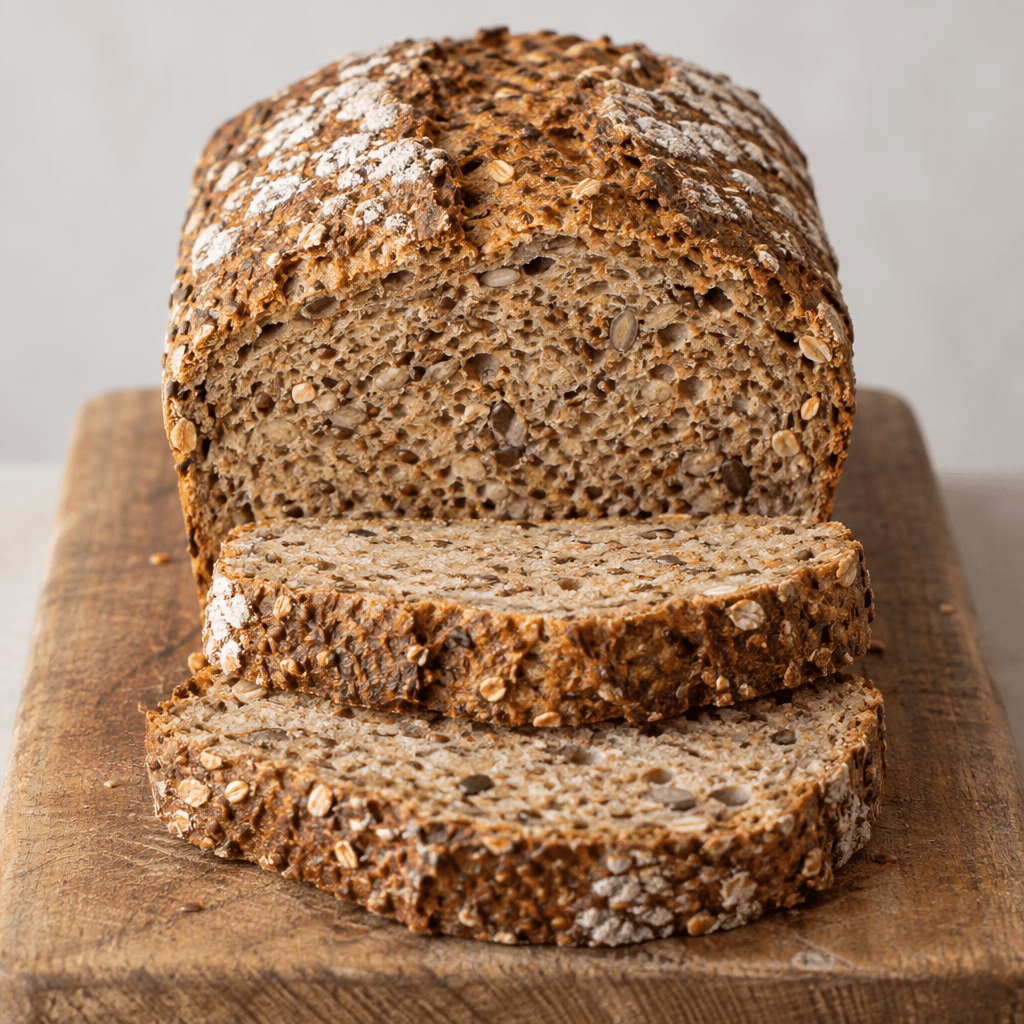
Whole Grain Bread Calories
High fiber, complex carbs, source of vitamins and minerals
In season: Spring · Summer · Autumn · Winter
CALORIES
GI
POTASSIUM
FIBER
Quick answer
1 slice (medium) of Whole Grain Bread (35 g) has 86 calories. That works out to 247 calories per 100 g. It contains 15.2 g of carbs, 3.2 g of protein, 1.2 g of fat and 2.4 g of fiber. Its 0.4 mg of Manganese covers 17% of the Daily Value. Its glycemic index is 50 (medium), so it raises blood sugar at a moderate pace.
What is Whole Grain Bread?
Whole Grain Bread is made with flour that retains the grain’s bran and germ, and is a staple in many food traditions. Some loaves also contain visible grains or seeds, while others are simply made with whole-grain flour.
It is usually denser and heartier than white bread, with a mildly nutty, earthy flavour. Serve it toasted or fresh with eggs, cheese, soup or a sandwich filling; in many places, it is an everyday choice for breakfast and lunch. Whole Grain Bread provides complex carbohydrates and fibre, with 6.8 g of fibre per 100 g. For a lighter topping, try sliced tomato and a little cottage cheese, or pair it with vegetables and a protein-rich filling.
Whole Grain Bread Nutrition Facts
Selected: 100 g
247
KCAL / 100G
Carbs
43.3g
· 16% DV
Protein
9.2g
· 18% DV
Fat
3.4g
· 4% DV
Fiber
6.8g
· 24% DV
DV is the share of the daily value covered, on a 2,000 kcal reference diet.
Calories come from: Carbs 72% · Protein 15% · Fat 13%

Log this food in EatBetter
100,000+ people use it
- Get your daily calorie target
- Snap your meal, log it in seconds
- See every vitamin and mineral

📸 Scan the code to get the app free.

Whole Grain Bread Vitamins & Minerals
Vitamins
B1
0.35mg · 29% DV
B3
3.2mg · 20% DV
B2
0.13mg · 10% DV
B5
0.45mg · 9% DV
Minerals
Manganese
1mg · 43% DV
Selenium
13µg · 24% DV
Magnesium
75mg · 18% DV
Potassium ⭐
230mg · 7% DV
Copper
0mg · 0% DV
How Nutritious Is Whole Grain Bread?
Nutrient density
Medium
How many vitamins, minerals and how much fiber this food carries per calorie. A high score means a lot of nutrition for few calories.
Satiety score
Medium
An EatBetter score computed from fiber, protein and calorie density. A high score means staying full longer on the same calories.
Both scores are calculated per 100 g and do not change with the selected portion. The satiety score is EatBetter's own calculation, not a clinical measure.
Whole Grain Bread Glycemic Index
GLYCEMIC INDEX
GLYCEMIC LOAD
Accounts for portion size — a more realistic measure than GI alone.
How to Burn Off Whole Grain Bread
To burn the 247 calories in 100 g:
🚶
Walking (5 km/h)
🏃
Running (8 km/h)
🚴
Cycling
🏊
Swimming
Times are calculated with the MET equation for a 70 kg adult. Actual burn varies with your weight, age and pace.
Is Whole Grain Bread Processed?
NOVA 3
Processed
1. Unprocessed
2. Minimally Processed
3. Processed
4. Ultra-Processed
NOVA classifies foods into 4 groups by industrial processing. NOVA 1 (unprocessed) is the healthiest.
Does Whole Grain Bread Contain Allergens?
Contains these allergens:
Which Diets Is Whole Grain Bread Good For?
Vegan
✓ Suitable
Vegetarian
✓ Suitable
Gluten-Free
— Not suitable
Dairy-Free
— Not suitable
Mediterranean
✓ Suitable
Paleo
— Not suitable
Whole30
— Not suitable
DASH
— Not suitable
Keto
— Not suitable
Low FODMAP
— Not suitable
Whole Grain Bread Fat Profile
SATURATED
0.6g
MONOUNSATURATED
0.7g
POLYUNSATURATED
1.2g
Omega 6:3 ratio 9:1
Above the ideal 4:1 (9:1).
Compare Whole Grain Bread
Foods Similar to Whole Grain Bread
Frequently Asked Questions About Whole Grain Bread
Is whole grain bread good for you?
Yes, whole grain bread can be a nutritious everyday choice. It contains the bran and germ of the grain, unlike bread made only with refined flour, and works well with protein-rich toppings such as eggs, nut butter, or hummus.
Is whole grain bread good for weight loss?
Yes, whole grain bread can fit into a weight-loss plan. Its fiber may help you feel satisfied, especially when you pair a slice with protein or vegetables rather than relying on bread alone for a meal.
Can people with diabetes eat whole grain bread?
Yes, people with diabetes can eat whole grain bread, but it still raises blood glucose because it contains carbohydrates. Pairing it with protein and vegetables may make a meal more filling; portion needs vary, so ask your diabetes care professional if you need individual guidance.
What is the difference between whole grain bread and whole wheat bread?
Whole wheat bread is made from the whole wheat kernel, while whole grain bread can use whole wheat or other intact grains, such as oats or rye. Whole wheat bread is therefore one kind of whole grain bread, but the terms are not always interchangeable.
How can you tell if whole grain bread is really whole grain?
Look for whole grain flour or whole wheat flour near the beginning of the ingredient list. A dark color, visible seeds, or the words “multigrain” on the front do not prove that the loaf is made mostly from whole grains.
How should you store whole grain bread?
Keep whole grain bread in a bread box or a closed paper bag in a cool, dry place. If your kitchen is warm or humid, freeze the loaf instead; refrigerating bread can make it stale faster.
Can you freeze whole grain bread?
Yes, whole grain bread freezes well. Slice it before freezing and seal the slices in a freezer-safe bag so you can take out just what you need; toast slices straight from frozen or let them thaw at room temperature.
Does toasting whole grain bread make it less healthy?
No, toasting whole grain bread does not remove its fiber. It mainly dries and browns the surface; avoid burning it, and remember that toppings such as butter or jam change the overall meal more than light toasting does.
Can whole grain bread cause bloating?
Yes, whole grain bread can cause bloating in some people because its fiber and fermentable carbohydrates may increase gas, especially if you suddenly eat more of it. Increase fiber gradually and drink enough fluids; persistent symptoms deserve medical advice.
Can you bake whole grain bread that rises as well as white bread?
Yes, whole grain bread can rise well, though it is often denser than white bread because bran interferes with gluten development. A blend of whole grain and bread flour, adequate kneading, and enough rising time can produce a lighter loaf.
Have another question about Whole Grain Bread?
Ask the AI nutrition coach — calories, portions, alternatives and more, answered in seconds in the app.

Scan calories with your camera
Instant AI nutrition analysis

Nutrition data compiled from USDA FoodData Central and scientific sources.