

Ready & Packaged Foods
All →Vegetables & Legumes
All →Desserts & Confectionery
All →Meat & Protein
All →Grains & Bakery
All →Beverages
All →Milk & Dairy
All →

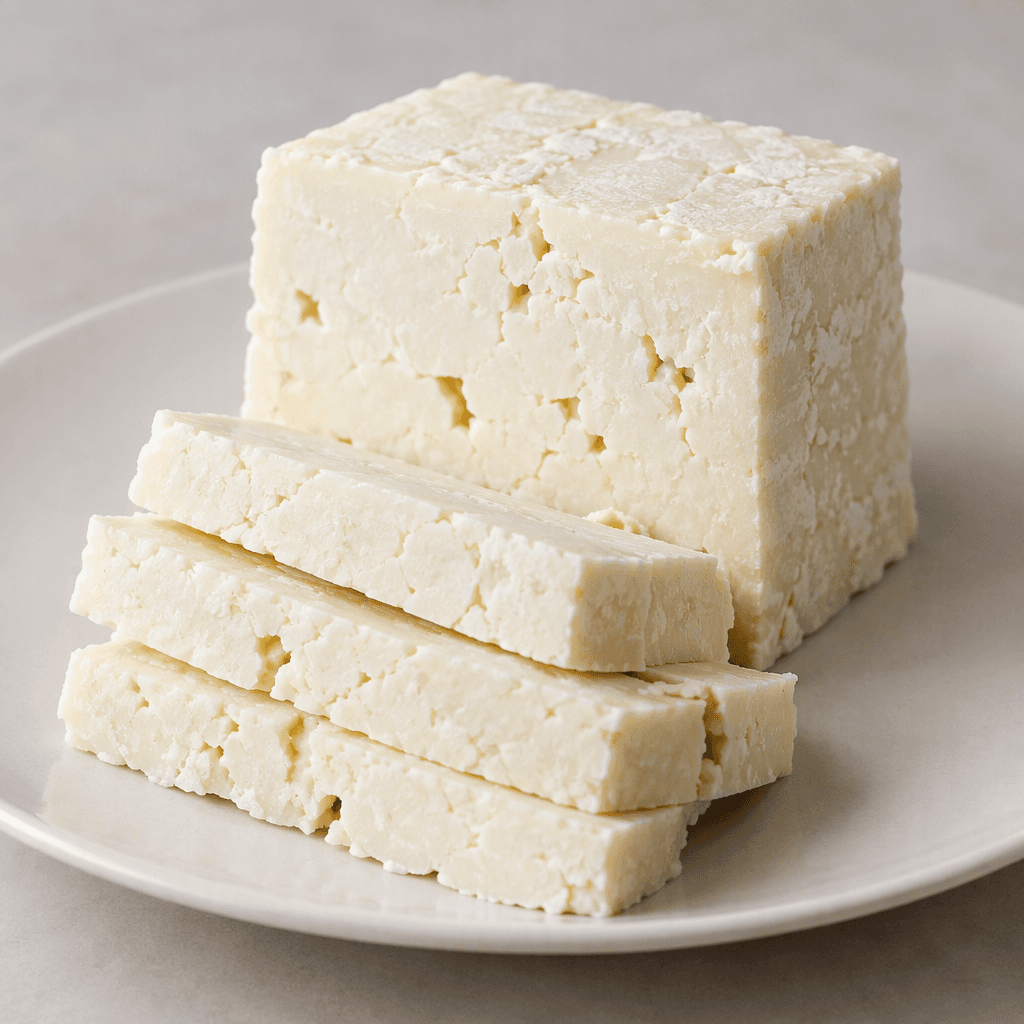
White cheese, full fat, aged Calories
Rich in protein and calcium, full fat, aged, common in Mediterranean and Turkish cuisine
In season: Spring · Summer · Autumn · Winter
CALORIES
GI
POTASSIUM
FIBER
Quick answer
1 slice (medium) of White cheese, full fat, aged (40 g) has 116 calories. That works out to 290 calories per 100 g. It contains 0.8 g of carbs, 7 g of protein, 9.2 g of fat and 0 g of fiber. Its 0.6 µg of B12 covers 25% of the Daily Value. Its glycemic index is 30 (low), so it raises blood sugar slowly.
What is White cheese, full fat, aged?
White cheese, full fat, aged is a firm, brined white cheese common in Turkish and Mediterranean cooking. Its flavour becomes more pronounced as it ages, while the texture stays compact and may crumble slightly when cut. It is usually sliced for the table or crumbled into other dishes.
In Turkey, it is a familiar breakfast cheese, served with bread, olives, tomatoes and cucumber, and also used in börek and salads. Elsewhere, it works well on a mezze plate or alongside fresh vegetables and bread. It provides protein and calcium, but is also rich in fat. For a lighter meal, use a smaller portion and pair it with plenty of vegetables.
White cheese, full fat, aged Nutrition Facts
Selected: 100 g
290
KCAL / 100G
Carbs
2g
· 1% DV
Protein
17.5g
· 35% DV
Fat
23g
· 29% DV
Fiber
0g
· 0% DV
DV is the share of the daily value covered, on a 2,000 kcal reference diet.
Calories come from: Carbs 3% · Protein 25% · Fat 72%
White cheese, full fat, aged Vitamins & Minerals
Vitamins
B12
1.5µg · 63% DV
B2
0.36mg · 28% DV
Vitamin A
220µg · 24% DV
Biotin
2.5µg · 8% DV
Minerals
Sodium
1200mg · 52% DV
Calcium
480mg · 48% DV
Phosphorus
330mg · 47% DV
Zinc
2mg · 18% DV
How Nutritious Is White cheese, full fat, aged?
Nutrient density
High
How many vitamins, minerals and how much fiber this food carries per calorie. A high score means a lot of nutrition for few calories.
Satiety score
Medium
An EatBetter score computed from fiber, protein and calorie density. A high score means staying full longer on the same calories.
Both scores are calculated per 100 g and do not change with the selected portion. The satiety score is EatBetter's own calculation, not a clinical measure.
White cheese, full fat, aged Glycemic Index
GLYCEMIC INDEX
GLYCEMIC LOAD
Accounts for portion size — a more realistic measure than GI alone.
How to Burn Off White cheese, full fat, aged
To burn the 290 calories in 100 g:
🚶
Walking (5 km/h)
🏃
Running (8 km/h)
🚴
Cycling
🏊
Swimming
Times are calculated with the MET equation for a 70 kg adult. Actual burn varies with your weight, age and pace.
Is White cheese, full fat, aged Processed?
NOVA 3
Processed
1. Unprocessed
2. Minimally Processed
3. Processed
4. Ultra-Processed
NOVA classifies foods into 4 groups by industrial processing. NOVA 1 (unprocessed) is the healthiest.
Does White cheese, full fat, aged Contain Allergens?
Contains these allergens:
Which Diets Is White cheese, full fat, aged Good For?
Vegan
— Not suitable
Vegetarian
✓ Suitable
Gluten-Free
✓ Suitable
Dairy-Free
— Not suitable
Mediterranean
✓ Suitable
Paleo
— Not suitable
Whole30
— Not suitable
DASH
— Not suitable
Keto
✓ Suitable
Low FODMAP
— Not suitable
White cheese, full fat, aged Fat Profile
SATURATED
14.5g
MONOUNSATURATED
6.2g
POLYUNSATURATED
0.4g
Omega 6:3 ratio 3.1:1
Below the ideal 4:1 — a good omega balance.
Compare White cheese, full fat, aged
Foods Similar to White cheese, full fat, aged
Frequently Asked Questions About White cheese, full fat, aged
How should you store aged full-fat white cheese?
Store aged full-fat white cheese in the refrigerator, covered and submerged in its brine. Use a clean utensil to take out a portion, then close the container promptly. If the cheese came without brine, keep it tightly wrapped so its surface does not dry out.
Can you freeze aged full-fat white cheese?
Yes, aged full-fat white cheese can be frozen, but thawing often makes it more crumbly and watery. Freeze it in portions and use the thawed cheese in cooked dishes, pies, or omelets rather than expecting it to keep its original slicing texture.
Is aged full-fat white cheese the same as feta?
No, aged full-fat white cheese is not necessarily the same as feta. Both can be brined white cheeses, but their milk blends, production traditions, flavor, and texture can differ. They can often substitute for each other in recipes, though you may need to adjust the salt.
How do you make aged full-fat white cheese less salty?
Soak a piece of aged full-fat white cheese in cold water to draw out some salt. Taste it after a short soak and change the water if needed; leaving it submerged too long can also wash out its characteristic flavor and soften its texture.
What does aged full-fat white cheese taste and feel like?
Aged full-fat white cheese typically has a tangy, savory flavor and a firmer, more crumbly texture than fresh white cheese. Its exact sharpness and saltiness vary by producer and aging method, so taste a small piece before adding extra salt to a dish.
Can you cook aged full-fat white cheese?
Yes, aged full-fat white cheese works well in baked pies, omelets, stuffed vegetables, and savory pastries. It tends to soften and crumble when heated rather than stretch like mozzarella, so combine it with other ingredients instead of relying on it for a melted-cheese topping.
How is aged full-fat white cheese made?
Aged full-fat white cheese is made by coagulating milk, draining the curds, salting them, and letting the cheese mature, often in brine. Milk type and production details vary, and the aging period develops its firmer texture and more pronounced flavor.
Can aged full-fat white cheese replace feta in a recipe?
Yes, aged full-fat white cheese can usually replace feta in salads, pastries, and baked dishes. The result may taste milder or saltier depending on the cheese, so taste it first and reduce any added salt in the recipe if necessary.
How can you tell if aged full-fat white cheese has gone bad?
Discard aged full-fat white cheese if it develops a slimy surface, unusual discoloration, a foul smell, or visible mold. A change in brine alone may not prove spoilage, but if the cheese itself smells or looks abnormal, do not taste it to check.
Is aged full-fat white cheese safe to eat during pregnancy?
Yes, aged full-fat white cheese can be eaten during pregnancy if it is made from pasteurized milk and has been stored safely. If the milk is unpasteurized or its status is unclear, avoid it; ask your healthcare professional if you need advice for your specific pregnancy.
Have another question about White cheese, full fat, aged?
Ask the AI nutrition coach — calories, portions, alternatives and more, answered in seconds in the app.

Scan calories with your camera
Instant AI nutrition analysis

Nutrition data compiled from USDA FoodData Central and scientific sources.