

Ready & Packaged Foods
All →Vegetables & Legumes
All →Desserts & Confectionery
All →Meat & Protein
All →Grains & Bakery
All →Beverages
All →Milk & Dairy
All →

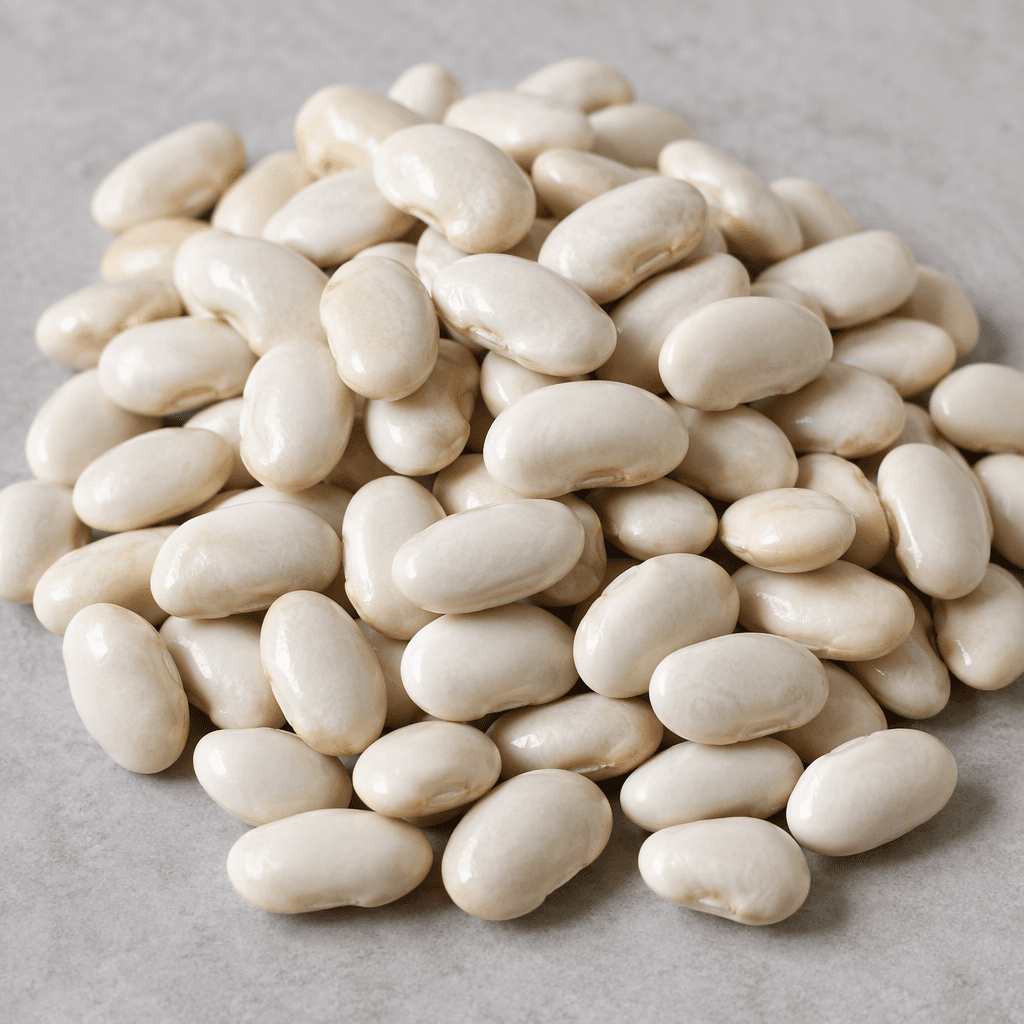
White Beans (Raw) Calories
High in protein and fiber, rich in B vitamins and minerals
In season: Autumn · Winter
CALORIES
GI
POTASSIUM
FIBER
Quick answer
½ cup (medium) of White Beans (Raw) (90 g) has 300 calories. That works out to 333 calories per 100 g. It contains 54 g of carbs, 21.1 g of protein, 0.7 g of fat and 20.9 g of fiber. Its 349.2 µg of Folate covers 87% of the Daily Value. Its glycemic index is 30 (low), so it raises blood sugar slowly.
What is White Beans (Raw)?
Raw white beans are mature beans that have been dried for storage. They are a pantry staple in many cuisines, including the Turkish home-style stew tradition; soak them before cooking, then simmer until tender. They should not be eaten uncooked. Once cooked, the beans turn soft and creamy, holding their shape in soups, stews and tomato-based dishes. In Turkey, kuru fasulye is often served with rice, pickles or a fresh salad; elsewhere, white beans also pair well with herbs, olive oil and vegetables. They provide substantial protein and fibre, with very little fat. For a lighter meal, use a modest amount of oil and serve with plenty of vegetables.
White Beans (Raw) Nutrition Facts
Selected: 100 g
333
KCAL / 100G
Carbs
60g
· 22% DV
Protein
23.4g
· 47% DV
Fat
0.8g
· 1% DV
Fiber
23.2g
· 83% DV
DV is the share of the daily value covered, on a 2,000 kcal reference diet.
Calories come from: Carbs 70% · Protein 27% · Fat 3%
White Beans (Raw) Vitamins & Minerals
Vitamins
Folate
388µg · 97% DV
B1
0.5mg · 42% DV
B6
0.4mg · 24% DV
B5
0.9mg · 18% DV
Minerals
Copper
1mg · 111% DV
Phosphorus
410mg · 59% DV
Iron
10mg · 56% DV
Potassium ⭐
1795mg · 53% DV
How Nutritious Is White Beans (Raw)?
Nutrient density
Very high
How many vitamins, minerals and how much fiber this food carries per calorie. A high score means a lot of nutrition for few calories.
Satiety score
High
An EatBetter score computed from fiber, protein and calorie density. A high score means staying full longer on the same calories.
Both scores are calculated per 100 g and do not change with the selected portion. The satiety score is EatBetter's own calculation, not a clinical measure.
White Beans (Raw) Glycemic Index
GLYCEMIC INDEX
GLYCEMIC LOAD
Accounts for portion size — a more realistic measure than GI alone.
How to Burn Off White Beans (Raw)
To burn the 333 calories in 100 g:
🚶
Walking (5 km/h)
🏃
Running (8 km/h)
🚴
Cycling
🏊
Swimming
Times are calculated with the MET equation for a 70 kg adult. Actual burn varies with your weight, age and pace.
Is White Beans (Raw) Processed?
NOVA 1
Unprocessed
1. Unprocessed
2. Minimally Processed
3. Processed
4. Ultra-Processed
NOVA classifies foods into 4 groups by industrial processing. NOVA 1 (unprocessed) is the healthiest.
Does White Beans (Raw) Contain Allergens?
No known major allergens
Which Diets Is White Beans (Raw) Good For?
Vegan
✓ Suitable
Vegetarian
✓ Suitable
Gluten-Free
✓ Suitable
Dairy-Free
— Not suitable
Mediterranean
✓ Suitable
Paleo
— Not suitable
Whole30
— Not suitable
DASH
— Not suitable
Keto
— Not suitable
Low FODMAP
— Not suitable
White Beans (Raw) Fat Profile
SATURATED
0.2g
MONOUNSATURATED
0.1g
POLYUNSATURATED
0.4g
Omega 6:3 ratio 4:1
Below the ideal 4:1 — a good omega balance.
Compare White Beans (Raw)
Foods Similar to White Beans (Raw)
Frequently Asked Questions About White Beans (Raw)
Can you eat raw white beans?
No. Raw or undercooked white beans can contain lectins that cause nausea, vomiting, and diarrhoea. Soak dried beans if desired, then cook them thoroughly in fresh water; do not taste them before they are fully cooked.
How long should white beans soak before cooking?
Soak dried white beans overnight, or until they have visibly swollen. If they will be soaking for an extended period, keep them in the refrigerator. Drain and rinse them before cooking to remove compounds released into the soaking water.
Can you cook white beans without soaking them?
Yes, you can cook dried white beans without soaking, but they usually take longer to soften and may cook less evenly. Sort and rinse the beans first, then simmer them until completely tender; add extra water as needed.
How do you cook white beans in a pressure cooker?
Put rinsed, soaked white beans in the pressure cooker and cover them with fresh water, following the cooker’s instructions and fill limits. Let the pressure release safely before checking tenderness, and add acidic ingredients after the beans soften.
Can you cook white beans in a slow cooker?
It is safer to boil dried white beans on the stovetop before finishing them in a slow cooker. Some slow cookers may not heat beans enough to destroy lectins, so do not rely on a slow cooker alone for raw dried beans.
Should you add salt when cooking white beans?
Yes, you can salt white beans while they cook; salt does not automatically stop them from softening. If your beans remain firm, their age, hard water, or acidic ingredients added too early are more likely reasons.
Why are my white beans still hard after cooking?
Old white beans can take much longer to soften, and hard water or acidic ingredients such as tomatoes can make the problem worse. Cook the beans in plain water until tender, then add tomato, vinegar, or lemon.
What is the difference between cannellini, navy, and Great Northern beans?
They are different types of white beans with distinct sizes and textures. Cannellini beans are large and kidney-shaped, navy beans are small and round, and Great Northern beans are medium-sized; they can often substitute for one another, though the result will differ.
How should you store dried white beans?
Keep dried white beans in a tightly sealed container in a cool, dry, dark place. Moisture encourages mold and pests, while heat and light can reduce quality; keep the container away from the stove and direct sunlight.
Can you freeze soaked white beans?
Yes. Drain and dry soaked white beans, then freeze them in an airtight container or freezer bag. You can cook them from frozen, though they may take longer to become tender; freezing is also a handy way to prepare beans ahead.
Have another question about White Beans (Raw)?
Ask the AI nutrition coach — calories, portions, alternatives and more, answered in seconds in the app.

Scan calories with your camera
Instant AI nutrition analysis

Nutrition data compiled from USDA FoodData Central and scientific sources.