

Ready & Packaged Foods
All →Vegetables & Legumes
All →Desserts & Confectionery
All →Meat & Protein
All →Grains & Bakery
All →Beverages
All →Milk & Dairy
All →

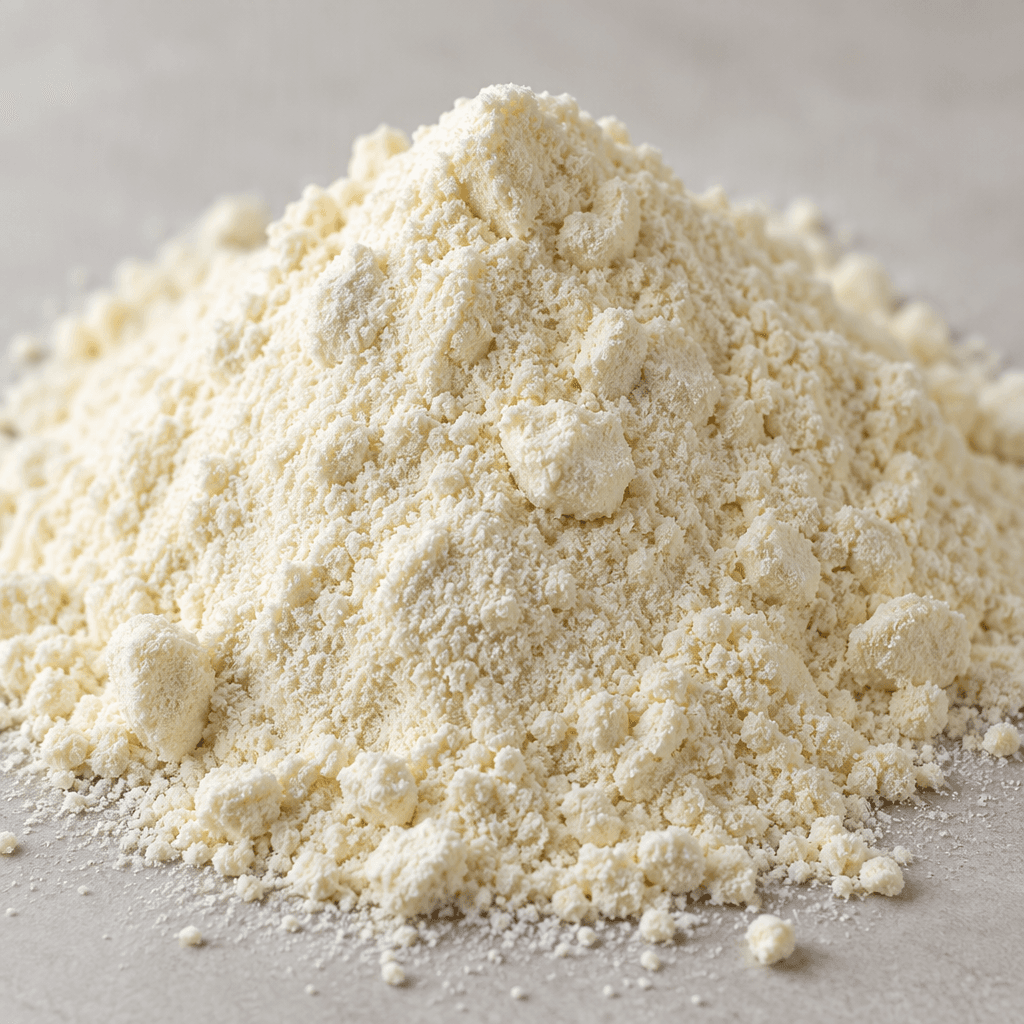
Whey Protein (SSN) Calories
High protein, muscle growth, fast absorption
CALORIES · 100 G
GI
POTASSIUM · 100 G
FIBER · 100 G
Quick answer
1 serving (medium) of Whey Protein (SSN) (30 g) has 117 calories. That works out to 390 calories per 100 g. It contains 2.4 g of carbs, 23.4 g of protein, 1.5 g of fat and 0.3 g of fiber. Its 0.4 mg of B2 covers 28% of the Daily Value. Its glycemic index is 30 (low), so it raises blood sugar slowly.
Whey Protein (SSN) Nutrition Facts
Selected: 1 serving (medium) · 30 g
117
KCAL / 30G
Carbs
2.4g
· 1% DV
Protein
23.4g
· 47% DV
Fat
1.5g
· 2% DV
Fiber
0.3g
· 1% DV
DV is the share of the daily value covered, on a 2,000 kcal reference diet.
Calories come from: Carbs 8% · Protein 80% · Fat 12%
Whey Protein (SSN) nutrition facts table · 1 serving (medium) (30 g)
| Nutrient | Amount | % DV |
|---|---|---|
| Calories | 117 kcal | |
| Total fat | 1.5 g | 2% |
| Saturated fat | 0.75 g | 4% |
| Trans fat | 0 g | |
| Sodium | 54 mg | 2% |
| Total carbohydrate | 2.4 g | 1% |
| Fiber | 0.3 g | 1% |
| Protein | 23.4 g | 47% |
Calories: Calories measure energy. Average daily need is 2,000 kcal. Excess calories are stored as fat, too few cause weight loss.
Carbs: Your body's primary energy source. The brain runs exclusively on carbs. Daily need: 275g.
Protein: Essential for muscle repair and cell growth. Daily need: 50g. Keeps you full and boosts metabolism.
Fat: Needed for hormone production and vitamin absorption. Daily need: 78g. Limit saturated fats, choose unsaturated.
Fiber: Critical for digestive health and satiety. Daily need: 28g. Stabilizes blood sugar, lowers cholesterol.

Log this food in EatBetter
100,000+ people use it
- Get your daily calorie target
- Snap your meal, log it in seconds
- See every vitamin and mineral

📸 Scan the code to get the app free.

How Many Calories in 1 Serving of Whey Protein (SSN)?
| Serving | Amount | Calories |
|---|---|---|
| 1 serving (medium) | 30 g | 117 kcal |
| 1 slice (thin) | 10 g | 39 kcal |
| 1 serving (small) | 20 g | 78 kcal |
| 2 tablespoon (medium) | 20 g | 78 kcal |
| 1 serving (large) | 40 g | 156 kcal |
| 1 cup (large) | 90 g | 351 kcal |
| 100 g | 100 g | 390 kcal |
| 1 pack (jumbo) | 500 g | 1950 kcal |
Calculated from 390 calories per 100 g.
Frequently Asked Questions About Whey Protein (SSN)
When should you take Whey Protein (SSN)?
Take Whey Protein (SSN) whenever it conveniently helps you meet your protein needs; there is no single required time. Many people use it after training or as a quick snack, but a protein-containing meal can serve the same purpose.
Can Whey Protein (SSN) help you lose weight?
Whey Protein (SSN) may make a meal or snack more filling because it provides protein, but it does not cause weight loss on its own. Using it in place of a less filling snack may help some people manage their overall food intake.
Can you take Whey Protein (SSN) before a workout?
Yes, you can take Whey Protein (SSN) before a workout if it sits comfortably in your stomach. It is a convenient protein source, but it is not a substitute for the carbohydrates and fluids that may help fuel exercise.
Does Whey Protein (SSN) cause acne?
Whey Protein (SSN) may coincide with acne flare-ups for some people, but it is not established as a cause for everyone. If you notice a repeated pattern after using it, stop for a while and see whether your skin changes.
Can Whey Protein (SSN) cause bloating or gas?
Yes, Whey Protein (SSN) can cause bloating or gas in some people, particularly if they have trouble digesting lactose or react to another ingredient. Try a smaller serving or stop using it if symptoms persist.
Is it safe to drink Whey Protein (SSN) every day?
For most healthy adults, Whey Protein (SSN) can be used daily as a supplement when taken according to its serving directions. It should complement a varied diet rather than crowd out meals or other protein sources.
Can Whey Protein (SSN) replace a meal?
No, Whey Protein (SSN) alone is not a balanced meal replacement. It supplies protein, but a meal also provides a wider range of foods and nutrients; use the shake as a supplement or snack instead.
Is Whey Protein (SSN) a complete protein?
Whey protein is generally considered a complete protein because it contains all nine essential amino acids. Whey Protein (SSN) is made from whey, though the exact formulation and other ingredients can vary by product version.
Can people with lactose intolerance use Whey Protein (SSN)?
Some people with lactose intolerance tolerate certain whey products, while others get symptoms; the lactose content depends on the product type. Check the Whey Protein (SSN) label, and avoid it if it reliably triggers symptoms.
Does Whey Protein (SSN) need to be refrigerated after opening?
No, Whey Protein (SSN) powder usually does not need refrigeration after opening. Keep the container tightly closed in a cool, dry place, and use a dry scoop to prevent moisture from getting into the powder.
Whey Protein (SSN) Vitamins & Minerals
Vitamins
B2
0.36mg · 28% DV
B12
0.6µg · 25% DV
B1
0.15mg · 13% DV
B5
0.6mg · 12% DV
Minerals
Phosphorus
120mg · 17% DV
Calcium
150mg · 15% DV
Magnesium
24mg · 6% DV
Selenium
2.4µg · 4% DV
Potassium ⭐
105mg · 3% DV
Sodium
54mg · 2% DV
Whey Protein (SSN) Glycemic Index
GLYCEMIC INDEX
GLYCEMIC LOAD
Accounts for portion size — a more realistic measure than GI alone.
How to Burn Off Whey Protein (SSN)
To burn the 117 calories in 1 serving (medium) (30 g):
🚶
Walking (5 km/h)
🏃
Running (8 km/h)
🚴
Cycling
🏊
Swimming
Times are calculated with the MET equation for a 70 kg adult. Actual burn varies with your weight, age and pace.
What is Whey Protein (SSN)?
Whey protein (SSN) is a powdered supplement made from whey, the liquid separated from milk during cheesemaking. It is usually sold flavoured and mixed into water or milk, though it can also be stirred into foods such as porridge or yoghurt.
Many people have it after a workout, while others use it as a convenient addition to breakfast or a snack. The flavour ranges from mildly milky to quite sweet, and the powder can turn lumpy if it is not mixed well. It is notably high in protein, with 78 g per 100 g. Mix it with water for a lighter drink, or add fruit to balance a sweet flavour.
How Nutritious Is Whey Protein (SSN)?
Nutrient density
High
How many vitamins, minerals and how much fiber this food carries per calorie. A high score means a lot of nutrition for few calories.
Satiety score
Medium
An EatBetter score computed from fiber, protein and calorie density. A high score means staying full longer on the same calories.
Both scores are calculated per 100 g and do not change with the selected portion. The satiety score is EatBetter's own calculation, not a clinical measure.
Is Whey Protein (SSN) Processed?
NOVA 3
Processed
1. Unprocessed
2. Minimally Processed
3. Processed
4. Ultra-Processed
NOVA classifies foods into 4 groups by industrial processing. NOVA 1 (unprocessed) is the healthiest.
Does Whey Protein (SSN) Contain Allergens?
Contains these allergens:
Which Diets Is Whey Protein (SSN) Good For?
Vegan
— Not suitable
Vegetarian
✓ Suitable
Gluten-Free
— Not suitable
Dairy-Free
— Not suitable
Mediterranean
✓ Suitable
Paleo
✓ Suitable
Whole30
— Not suitable
DASH
— Not suitable
Keto
— Not suitable
Low FODMAP
— Not suitable
Whey Protein (SSN) Fat Profile
SATURATED
0.75g
MONOUNSATURATED
0.36g
POLYUNSATURATED
0.12g
Omega 6:3 ratio 1.5:1
Below the ideal 4:1 — a good omega balance.
Compare Whey Protein (SSN)
Foods Similar to Whey Protein (SSN)
Have another question about Whey Protein (SSN)?
Ask the AI nutrition coach — calories, portions, alternatives and more, answered in seconds in the app.

Scan calories with your camera
Instant AI nutrition analysis

Nutrition data compiled from USDA FoodData Central and scientific sources.