

Ready & Packaged Foods
All →Vegetables & Legumes
All →Desserts & Confectionery
All →Meat & Protein
All →Grains & Bakery
All →Beverages
All →Milk & Dairy
All →

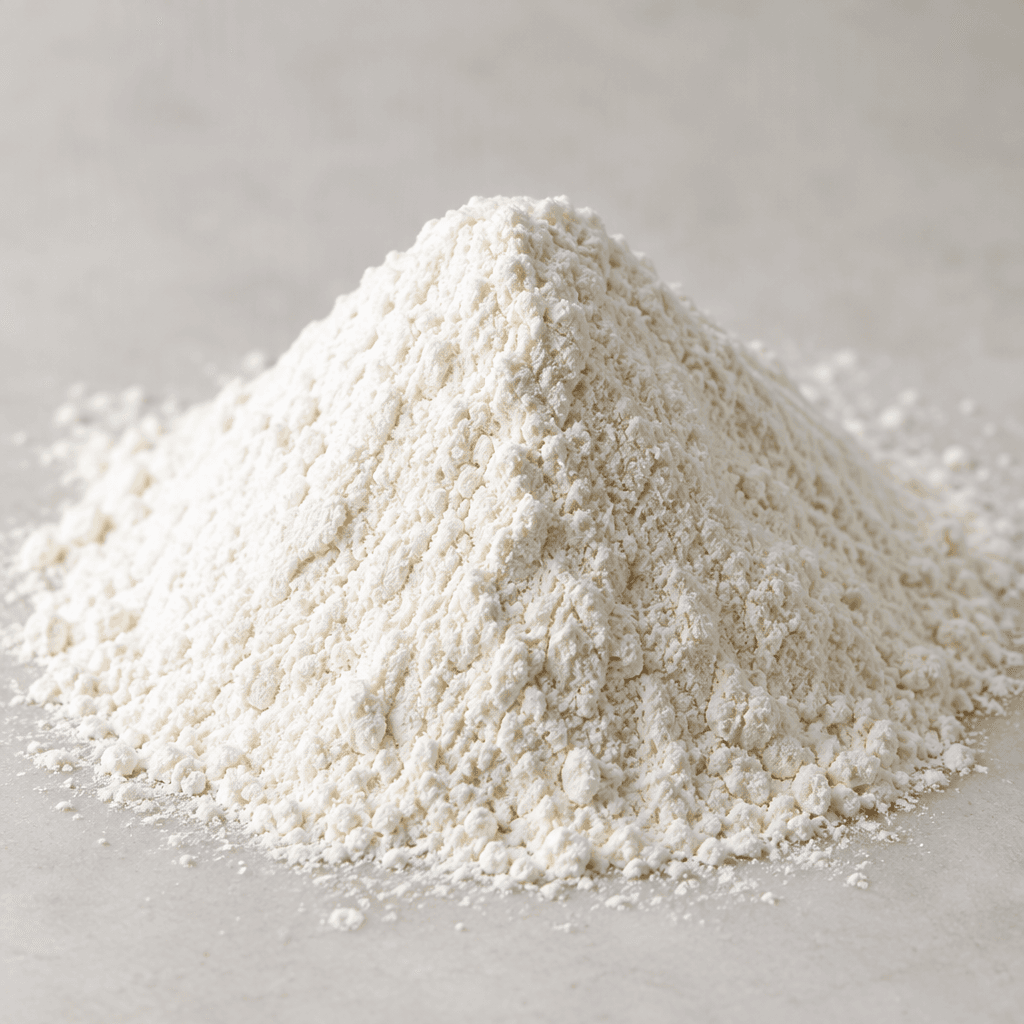
Whey protein isolate powder Calories
Very high protein, low fat and carbs, very low lactose
In season: Spring · Summer · Autumn · Winter
CALORIES
GI
POTASSIUM
FIBER
Quick answer
1 slice (medium) of Whey protein isolate powder (30 g) has 111 calories. That works out to 370 calories per 100 g. It contains 0.9 g of carbs, 25.5 g of protein, 0.3 g of fat and 0 g of fiber. Its 0.1 mg of B2 covers 10% of the Daily Value. Its glycemic index is 30 (low), so it raises blood sugar slowly.
What is Whey protein isolate powder?
Whey protein isolate powder is a concentrated dairy protein made from whey, the liquid separated during cheesemaking. It is sold as a fine powder, with very little fat and carbohydrate compared with many other protein powders; plain versions have a mild, milky taste, while flavoured ones vary. It is commonly shaken with water or milk after exercise, or stirred into smoothies, oats and yoghurt. In the US and elsewhere, it is also an easy way to add protein to a snack without much preparation. Use it to complement meals rather than treating it as a meal by itself; mixing it with water keeps the drink lighter, while milk makes it creamier.
Whey protein isolate powder Nutrition Facts
Selected: 100 g
370
KCAL / 100G
Carbs
3g
· 1% DV
Protein
85g
· 170% DV
Fat
1g
· 1% DV
Fiber
0g
· 0% DV
DV is the share of the daily value covered, on a 2,000 kcal reference diet.
Calories come from: Carbs 3% · Protein 94% · Fat 3%
Whey protein isolate powder Vitamins & Minerals
Vitamins
B2
0.45mg · 35% DV
B5
1.5mg · 30% DV
B12
0.6µg · 25% DV
Biotin
2µg · 7% DV
Minerals
Selenium
7µg · 13% DV
Calcium
120mg · 12% DV
Zinc
1mg · 9% DV
Phosphorus
65mg · 9% DV
How Nutritious Is Whey protein isolate powder?
Nutrient density
Very high
How many vitamins, minerals and how much fiber this food carries per calorie. A high score means a lot of nutrition for few calories.
Satiety score
Low
An EatBetter score computed from fiber, protein and calorie density. A high score means staying full longer on the same calories.
Both scores are calculated per 100 g and do not change with the selected portion. The satiety score is EatBetter's own calculation, not a clinical measure.
Whey protein isolate powder Glycemic Index
GLYCEMIC INDEX
GLYCEMIC LOAD
Accounts for portion size — a more realistic measure than GI alone.
How to Burn Off Whey protein isolate powder
To burn the 370 calories in 100 g:
🚶
Walking (5 km/h)
🏃
Running (8 km/h)
🚴
Cycling
🏊
Swimming
Times are calculated with the MET equation for a 70 kg adult. Actual burn varies with your weight, age and pace.
Is Whey protein isolate powder Processed?
NOVA 3
Processed
1. Unprocessed
2. Minimally Processed
3. Processed
4. Ultra-Processed
NOVA classifies foods into 4 groups by industrial processing. NOVA 1 (unprocessed) is the healthiest.
Does Whey protein isolate powder Contain Allergens?
Contains these allergens:
Which Diets Is Whey protein isolate powder Good For?
Vegan
— Not suitable
Vegetarian
✓ Suitable
Gluten-Free
✓ Suitable
Dairy-Free
— Not suitable
Mediterranean
✓ Suitable
Paleo
✓ Suitable
Whole30
— Not suitable
DASH
— Not suitable
Keto
✓ Suitable
Low FODMAP
— Not suitable
Whey protein isolate powder Fat Profile
SATURATED
0.7g
MONOUNSATURATED
0.2g
POLYUNSATURATED
0.1g
Omega 6:3 ratio 1:1
Below the ideal 4:1 — a good omega balance.
Compare Whey protein isolate powder
Foods Similar to Whey protein isolate powder
Frequently Asked Questions About Whey protein isolate powder
What is the difference between whey protein isolate powder and whey concentrate?
Whey protein isolate powder is filtered more extensively than whey concentrate, so it generally contains a higher proportion of protein and less fat, carbohydrate, and lactose. Both are dairy-derived whey proteins.
Does whey protein isolate powder help build muscle?
Yes, whey protein isolate powder supplies protein that supports muscle repair and growth. Building muscle also requires resistance training and adequate food overall; the powder alone will not build muscle.
Should you take whey protein isolate powder before or after a workout?
Either timing works: you can take whey protein isolate powder before or after a workout. The useful point is to include it when it helps you meet your protein needs, rather than treating the post-workout window as essential.
Is whey protein isolate powder lactose-free?
No, whey protein isolate powder is not necessarily completely lactose-free, though it usually contains much less lactose than whey concentrate. Some people with lactose intolerance tolerate it better, but individual reactions vary.
Can whey protein isolate powder help with weight loss?
It can make it easier to add protein to a meal or snack, which may help with fullness. Whey protein isolate powder does not cause weight loss by itself; replacing a snack with it differs from simply adding it.
Can you take whey protein isolate powder on rest days?
Yes, you can use whey protein isolate powder on rest days if it helps meet your protein needs. Muscles recover between workouts too, so protein intake does not need to be limited to training days.
Can you bake or cook with whey protein isolate powder?
Yes, whey protein isolate powder can be added to pancakes, muffins, and other recipes. Heat does not remove its protein, but it can make baked goods dry or firm, so adjust the liquid and avoid using too much.
Is whey protein isolate powder better mixed with water or milk?
Either works: water makes whey protein isolate powder lighter, while milk makes it creamier and adds more nutrients. Choose water for a thinner shake or milk for a richer one, and shake well to reduce clumps.
Can whey protein isolate powder cause bloating or stomach discomfort?
Yes, whey protein isolate powder can cause bloating or stomach discomfort in some people, even though it is low in lactose. A large serving, sweeteners, or dairy sensitivity may contribute; try a smaller amount and note how you feel.
Is whey protein isolate powder safe for people with kidney disease?
People with kidney disease should ask their doctor or dietitian before using whey protein isolate powder. Their appropriate protein intake can depend on kidney function and treatment, so a general serving recommendation may not suit them.
Have another question about Whey protein isolate powder?
Ask the AI nutrition coach — calories, portions, alternatives and more, answered in seconds in the app.

Scan calories with your camera
Instant AI nutrition analysis

Nutrition data compiled from USDA FoodData Central and scientific sources.