

Ready & Packaged Foods
All →Vegetables & Legumes
All →Desserts & Confectionery
All →Meat & Protein
All →Grains & Bakery
All →Beverages
All →Milk & Dairy
All →

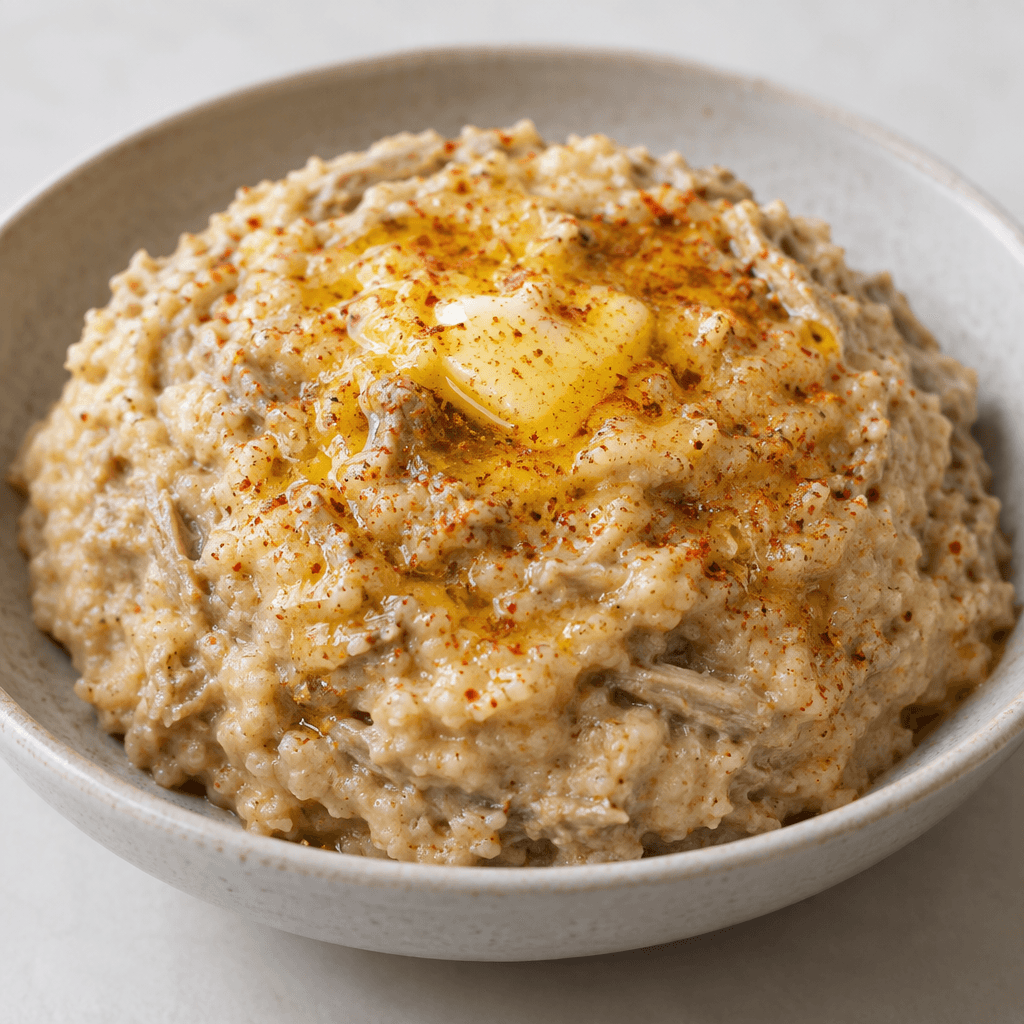
Wheat keşkek Calories
Traditional long-cooked wheat-based dish
In season: Spring · Summer · Autumn · Winter
CALORIES
GI
POTASSIUM
FIBER
Quick answer
1 cup (medium) of Wheat keşkek (240 g) has 283 calories. That works out to 118 calories per 100 g. It contains 57.8 g of carbs, 8.6 g of protein, 1.9 g of fat and 6.5 g of fiber. Its 1.6 mg of Manganese covers 68% of the Daily Value. Its glycemic index is 52 (medium), so it raises blood sugar at a moderate pace.
What is Wheat keşkek?
Wheat keşkek is a traditional Turkish and Anatolian dish of wheat cooked slowly in water or stock until soft, then beaten or mashed into a thick, creamy porridge. It may include meat, though meatless versions are also made. Often prepared in large pots for weddings, religious holidays and community gatherings, it has a smooth consistency with some grainy texture; melted butter and red pepper are common toppings.
In Turkey, it is usually served hot as part of a celebratory meal, either on its own or alongside meat and other dishes. Its nutritional character comes mainly from wheat: it is rich in carbohydrates and provides some fibre, while the basic preparation is relatively low in fat. For a lighter serving, use less butter or choose a meatless version, and pair it with a crisp salad.
Wheat keşkek Nutrition Facts
Selected: 100 g
118
KCAL / 100G
Carbs
24.1g
· 9% DV
Protein
3.6g
· 7% DV
Fat
0.8g
· 1% DV
Fiber
2.7g
· 10% DV
DV is the share of the daily value covered, on a 2,000 kcal reference diet.
Calories come from: Carbs 82% · Protein 12% · Fat 6%
Wheat keşkek Vitamins & Minerals
Vitamins
B3
1.2mg · 8% DV
B1
0.08mg · 7% DV
Biotin
2µg · 7% DV
B6
0.09mg · 5% DV
Minerals
Manganese
1mg · 43% DV
Selenium
12µg · 22% DV
Phosphorus
96mg · 14% DV
Zinc
1mg · 9% DV
How Nutritious Is Wheat keşkek?
Nutrient density
Medium
How many vitamins, minerals and how much fiber this food carries per calorie. A high score means a lot of nutrition for few calories.
Satiety score
Medium
An EatBetter score computed from fiber, protein and calorie density. A high score means staying full longer on the same calories.
Both scores are calculated per 100 g and do not change with the selected portion. The satiety score is EatBetter's own calculation, not a clinical measure.
Wheat keşkek Glycemic Index
GLYCEMIC INDEX
GLYCEMIC LOAD
Accounts for portion size — a more realistic measure than GI alone.
How to Burn Off Wheat keşkek
To burn the 118 calories in 100 g:
🚶
Walking (5 km/h)
🏃
Running (8 km/h)
🚴
Cycling
🏊
Swimming
Times are calculated with the MET equation for a 70 kg adult. Actual burn varies with your weight, age and pace.
Is Wheat keşkek Processed?
NOVA 2
Minimally Processed
1. Unprocessed
2. Minimally Processed
3. Processed
4. Ultra-Processed
NOVA classifies foods into 4 groups by industrial processing. NOVA 1 (unprocessed) is the healthiest.
Does Wheat keşkek Contain Allergens?
Contains these allergens:
Which Diets Is Wheat keşkek Good For?
Vegan
✓ Suitable
Vegetarian
✓ Suitable
Gluten-Free
— Not suitable
Dairy-Free
— Not suitable
Mediterranean
✓ Suitable
Paleo
— Not suitable
Whole30
— Not suitable
DASH
— Not suitable
Keto
— Not suitable
Low FODMAP
— Not suitable
Wheat keşkek Fat Profile
SATURATED
0.14g
MONOUNSATURATED
0.09g
POLYUNSATURATED
0.34g
Omega 6:3 ratio 10.3:1
Above the ideal 4:1 (10.3:1).
Compare Wheat keşkek
Foods Similar to Wheat keşkek
Frequently Asked Questions About Wheat keşkek
What is wheat keşkek?
Wheat keşkek is a traditional dish of wheat cooked until very soft, then mashed or beaten into a thick, creamy mixture. It is often prepared with meat and finished with melted butter and red pepper.
How do you make wheat keşkek?
To make wheat keşkek, cook hulled wheat slowly in plenty of water or stock until completely tender. Add cooked, shredded meat if using, then beat or mash the mixture until thick and cohesive; serve with a butter-and-pepper topping.
What kind of wheat is used for wheat keşkek?
Wheat keşkek is usually made with hulled whole wheat, often sold as wheat for aşure or keşkek. Bulgur is a different, cracked product and generally will not give the dish its characteristic soft, mashed texture.
Why is wheat keşkek served at Turkish weddings?
Wheat keşkek is a traditional communal dish at Turkish weddings and other celebrations. Preparing it in large quantities—and, traditionally, beating the cooked wheat together—makes the cooking itself part of the shared occasion.
Can you make wheat keşkek without meat?
Yes, wheat keşkek can be made without meat. Cook the wheat in water or vegetable stock until it is very soft, then mash it thoroughly and season it; a butter-and-pepper topping is a common finishing touch.
What should you serve with wheat keşkek?
Serve wheat keşkek with something fresh or tangy, such as salad, pickles, or yogurt. These sides balance its rich, soft texture, while grilled or roasted vegetables can make a satisfying accompaniment to a meatless version.
Can you freeze wheat keşkek?
Yes, wheat keşkek can be frozen in airtight, meal-sized containers once it has cooled. Thaw it in the refrigerator and reheat gently with a splash of water or stock, stirring because the wheat thickens as it cools.
Why does wheat keşkek turn out too firm?
Wheat keşkek stays firm when the wheat has not cooked long enough to soften fully before it is mashed. Soak the hulled wheat beforehand, keep it covered with enough liquid while cooking, and wait until the grains crush easily.
Is wheat keşkek the same as wheat porridge?
No, wheat keşkek is not simply wheat porridge. Its grains are cooked until very soft and then beaten or mashed, often with meat, to create a thick, cohesive dish rather than a bowl of separate grains in liquid.
How do you get wheat keşkek creamy?
For creamy wheat keşkek, cook the wheat until its grains are thoroughly tender, then beat or mash it while it is still hot. Add warm cooking liquid gradually if needed; the goal is a cohesive texture, not intact, separate grains.
Have another question about Wheat keşkek?
Ask the AI nutrition coach — calories, portions, alternatives and more, answered in seconds in the app.

Scan calories with your camera
Instant AI nutrition analysis

Nutrition data compiled from USDA FoodData Central and scientific sources.