

Ready & Packaged Foods
All →Vegetables & Legumes
All →Desserts & Confectionery
All →Meat & Protein
All →Grains & Bakery
All →Beverages
All →Milk & Dairy
All →

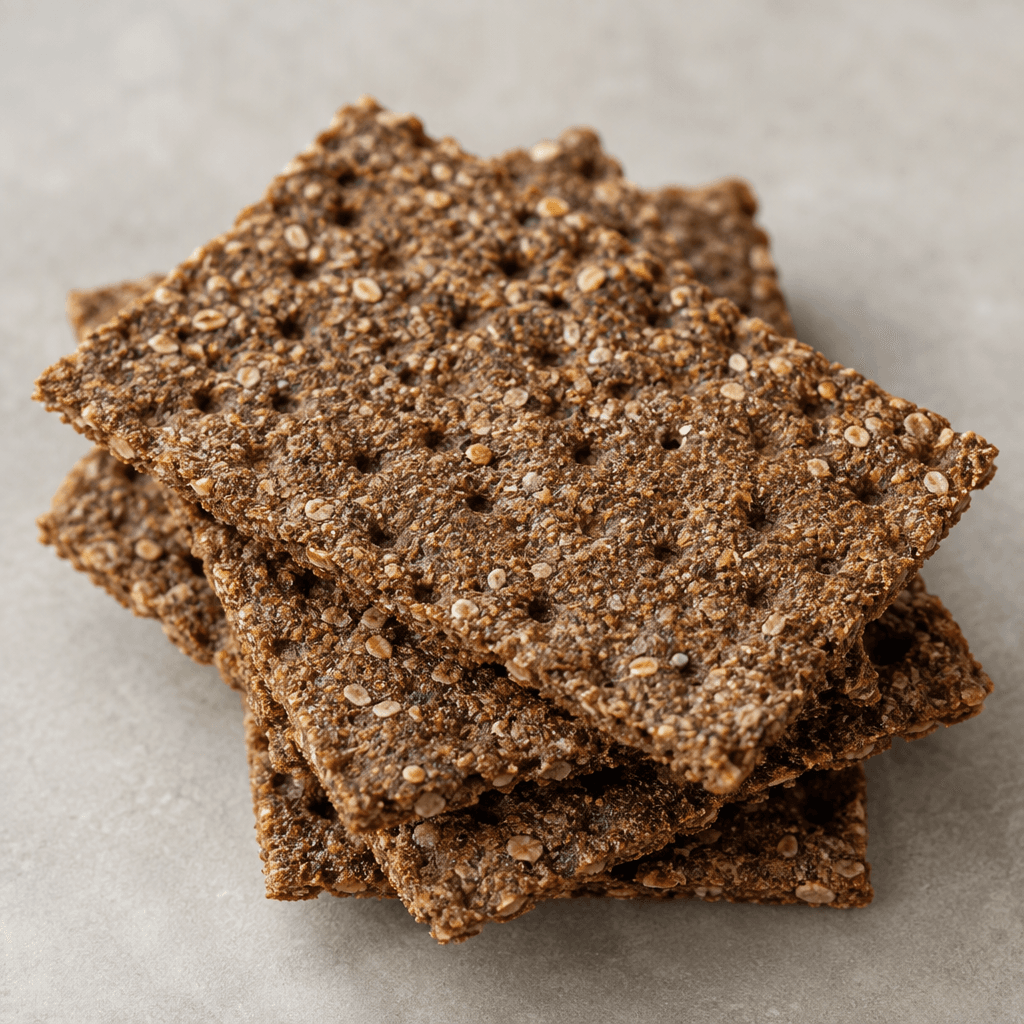
Wasa bread Calories
Rye-based, high fiber, low fat, crispbread
In season: Spring · Summer · Autumn · Winter
CALORIES
GI
POTASSIUM
FIBER
Quick answer
1 slice (medium) of Wasa bread (12 g) has 41 calories. That works out to 340 calories per 100 g. It contains 8 g of carbs, 1.1 g of protein, 0.2 g of fat and 1.8 g of fiber. Its 0.3 mg of Manganese covers 11% of the Daily Value. Its glycemic index is 45 (medium), so it raises blood sugar at a moderate pace.
What is Wasa bread?
Wasa bread is a Swedish-style crispbread, traditionally made mainly with rye. Thin, dry and deeply crisp, its rough, hole-speckled surface has a pleasantly toasty, earthy flavour. It is quite different from a soft loaf and works well as a base for toppings.
In Sweden it is a familiar everyday bread, served with cheese, fish, or other savoury toppings; elsewhere, it also makes an easy breakfast or snack with spreads, sliced vegetables, or nut butter. It is high in fibre and low in fat. For a more filling bite, pair a slice with protein-rich toppings and fresh vegetables, and add them just before eating to keep the crispbread crunchy.
Wasa bread Nutrition Facts
Selected: 100 g
340
KCAL / 100G
Carbs
67g
· 24% DV
Protein
9g
· 18% DV
Fat
1.5g
· 2% DV
Fiber
15g
· 54% DV
DV is the share of the daily value covered, on a 2,000 kcal reference diet.
Calories come from: Carbs 84% · Protein 11% · Fat 5%
Wasa bread Vitamins & Minerals
Vitamins
B1
0.35mg · 29% DV
B3
3.2mg · 20% DV
B6
0.3mg · 18% DV
B2
0.14mg · 11% DV
Minerals
Manganese
2mg · 87% DV
Selenium
18µg · 33% DV
Phosphorus
220mg · 31% DV
Zinc
2mg · 18% DV
How Nutritious Is Wasa bread?
Nutrient density
Medium
How many vitamins, minerals and how much fiber this food carries per calorie. A high score means a lot of nutrition for few calories.
Satiety score
Medium
An EatBetter score computed from fiber, protein and calorie density. A high score means staying full longer on the same calories.
Both scores are calculated per 100 g and do not change with the selected portion. The satiety score is EatBetter's own calculation, not a clinical measure.
Wasa bread Glycemic Index
GLYCEMIC INDEX
GLYCEMIC LOAD
Accounts for portion size — a more realistic measure than GI alone.
How to Burn Off Wasa bread
To burn the 340 calories in 100 g:
🚶
Walking (5 km/h)
🏃
Running (8 km/h)
🚴
Cycling
🏊
Swimming
Times are calculated with the MET equation for a 70 kg adult. Actual burn varies with your weight, age and pace.
Is Wasa bread Processed?
NOVA 3
Processed
1. Unprocessed
2. Minimally Processed
3. Processed
4. Ultra-Processed
NOVA classifies foods into 4 groups by industrial processing. NOVA 1 (unprocessed) is the healthiest.
Does Wasa bread Contain Allergens?
Contains these allergens:
Which Diets Is Wasa bread Good For?
Vegan
✓ Suitable
Vegetarian
✓ Suitable
Gluten-Free
— Not suitable
Dairy-Free
— Not suitable
Mediterranean
✓ Suitable
Paleo
— Not suitable
Whole30
— Not suitable
DASH
— Not suitable
Keto
— Not suitable
Low FODMAP
— Not suitable
Wasa bread Fat Profile
SATURATED
0.3g
MONOUNSATURATED
0.2g
POLYUNSATURATED
0.8g
Omega 6:3 ratio 5.6:1
Above the ideal 4:1 (5.6:1).
Compare Wasa bread
Foods Similar to Wasa bread
Frequently Asked Questions About Wasa bread
What is Wasa bread made of?
Classic Wasa bread is a crispbread usually made mainly with rye flour or whole grains, while other varieties may include wheat, seeds, or additional ingredients. The recipe varies by product, so the name of the variety matters.
Is Wasa bread really bread, or is it a cracker?
Wasa bread is crispbread: a thin, dry baked bread with a cracker-like crunch. It is traditionally made from grains such as rye and dried until crisp, rather than being a soft, risen loaf.
What do you put on Wasa bread?
Wasa bread works well with cheese, eggs, hummus, avocado, or smoked fish. Add moist toppings shortly before eating so the crispbread stays crunchy, or serve it alongside soup and salads as a crisp accompaniment.
Is Wasa bread good for weight loss?
Wasa bread does not cause weight loss by itself, but its crunchy, fiber-rich texture can make a snack more filling for some people. Choose satisfying toppings such as egg or cottage cheese rather than relying on sweet spreads.
Can people with diabetes eat Wasa bread?
People with diabetes can include Wasa bread, but its effect on blood glucose varies with the variety, portion, and rest of the meal. Pairing it with protein and vegetables can make a more balanced snack; follow your personal meal plan.
How is Wasa bread different from regular rye bread?
Wasa bread is baked and dried into thin, crunchy sheets, while regular rye bread is soft and moist. Both can be rye-based, but they differ in texture, how they are served, and how much you may eat in one sitting.
How should you store Wasa bread after opening?
Seal Wasa bread tightly and keep it in a cool, dry cupboard. Moisture quickly takes away its signature crunch, so avoid storing the open packet near steam, a kettle, or a damp countertop.
Can you freeze Wasa bread?
You can freeze Wasa bread, but it usually offers little advantage because unopened crispbread keeps well in a dry cupboard. If you freeze it, protect it from moisture and let it return to room temperature while still wrapped.
Why is Wasa bread so dry and crunchy?
Wasa bread is intentionally baked and dried to make crispbread, so its dry crunch is normal rather than a sign that it has gone stale. Keep it sealed after opening to preserve that texture.
Where does Wasa bread come from?
Wasa bread comes from Sweden, where crispbread has a long tradition. Its thin, shelf-stable form was practical to store and serve, and today it is commonly eaten with toppings or alongside meals.
Have another question about Wasa bread?
Ask the AI nutrition coach — calories, portions, alternatives and more, answered in seconds in the app.

Scan calories with your camera
Instant AI nutrition analysis

Nutrition data compiled from USDA FoodData Central and scientific sources.