

Ready & Packaged Foods
All →Vegetables & Legumes
All →Desserts & Confectionery
All →Meat & Protein
All →Grains & Bakery
All →Beverages
All →Milk & Dairy
All →

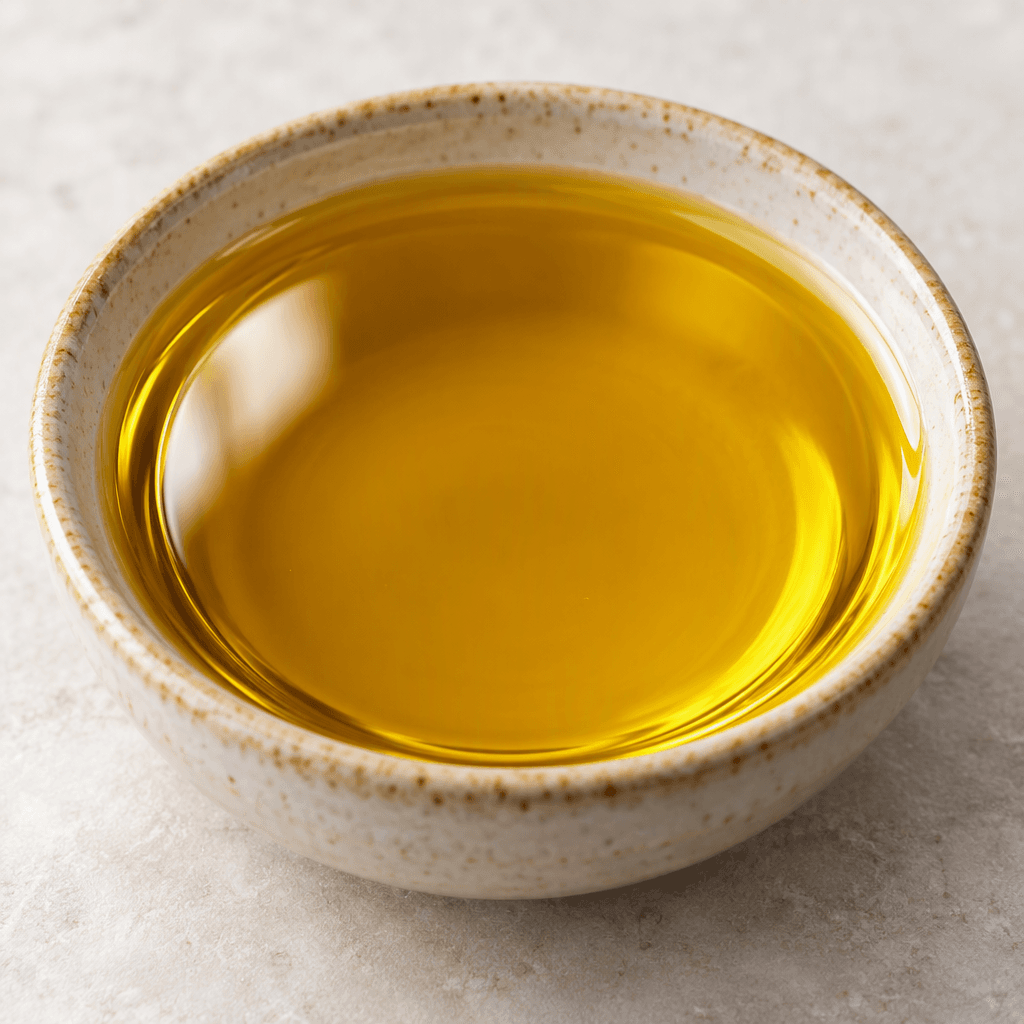
Walnut Oil Calories
Rich in omega-3, heart-healthy oil
In season: Autumn · Winter
CALORIES
GI
POTASSIUM
FIBER
Quick answer
1 tablespoon (medium) of Walnut Oil (14 g) has 119 calories. That works out to 884 calories per 100 g. It contains 0 g of carbs, 0 g of protein, 13.5 g of fat and 0 g of fiber. Its 2.8 mg of Vitamin E covers 19% of the Daily Value. Its glycemic index is 0 (low), so it raises blood sugar slowly.
What is Walnut Oil?
Walnut oil is a golden, fluid oil made from pressed walnuts, with a gently sweet, nutty aroma. It appears in European cooking, especially in parts of France, and is also used by home cooks elsewhere as a finishing oil. Its delicate flavour works well in salad dressings, over roasted vegetables, or stirred into a sauce just before serving; high heat can mute its character, so it is usually not the first choice for frying.
Almost all of its energy comes from fat, and it contains omega-3 fats. A little goes a long way: try it with leafy greens, lentils, or cheese, or blend it with a milder oil for a less pronounced walnut flavour.
Walnut Oil Nutrition Facts
Selected: 100 g
884
KCAL / 100G
Carbs
0g
· 0% DV
Protein
0g
· 0% DV
Fat
100g
· 128% DV
Fiber
0g
· 0% DV
DV is the share of the daily value covered, on a 2,000 kcal reference diet.
Calories come from: Carbs 0% · Protein 0% · Fat 100%
Walnut Oil Vitamins & Minerals
Vitamins
Vitamin E
20.6mg · 137% DV
Vitamin K
15µg · 13% DV
Vitamin A
0µg · 0% DV
B1
0mg · 0% DV
Minerals
Calcium
0mg · 0% DV
Iron
0mg · 0% DV
Magnesium
0mg · 0% DV
Zinc
0mg · 0% DV
How Nutritious Is Walnut Oil?
Nutrient density
Medium
How many vitamins, minerals and how much fiber this food carries per calorie. A high score means a lot of nutrition for few calories.
Satiety score
Low
An EatBetter score computed from fiber, protein and calorie density. A high score means staying full longer on the same calories.
Both scores are calculated per 100 g and do not change with the selected portion. The satiety score is EatBetter's own calculation, not a clinical measure.
Walnut Oil Glycemic Index
GLYCEMIC INDEX
GLYCEMIC LOAD
Accounts for portion size — a more realistic measure than GI alone.
How to Burn Off Walnut Oil
To burn the 884 calories in 100 g:
🚶
Walking (5 km/h)
🏃
Running (8 km/h)
🚴
Cycling
🏊
Swimming
Times are calculated with the MET equation for a 70 kg adult. Actual burn varies with your weight, age and pace.
Is Walnut Oil Processed?
NOVA 2
Minimally Processed
1. Unprocessed
2. Minimally Processed
3. Processed
4. Ultra-Processed
NOVA classifies foods into 4 groups by industrial processing. NOVA 1 (unprocessed) is the healthiest.
Does Walnut Oil Contain Allergens?
No known major allergens
Which Diets Is Walnut Oil Good For?
Vegan
✓ Suitable
Vegetarian
✓ Suitable
Gluten-Free
✓ Suitable
Dairy-Free
— Not suitable
Mediterranean
✓ Suitable
Paleo
✓ Suitable
Whole30
— Not suitable
DASH
— Not suitable
Keto
✓ Suitable
Low FODMAP
— Not suitable
Walnut Oil Fat Profile
SATURATED
9.5g
MONOUNSATURATED
22.8g
POLYUNSATURATED
63.3g
Omega 6:3 ratio 5.1:1
Above the ideal 4:1 (5.1:1).
Compare Walnut Oil
Foods Similar to Walnut Oil
Frequently Asked Questions About Walnut Oil
Does walnut oil need to be refrigerated after opening?
Refrigeration is a good way to slow walnut oil from going rancid after opening. Keep the bottle tightly sealed and away from light; the oil may turn cloudy or thicken in the fridge, then return to normal as it warms.
What does walnut oil taste like?
Walnut oil has a smooth, mildly sweet, nutty flavor, often more noticeable in unheated dishes. Use it to finish salads, roasted vegetables, grains, or soups when you want a distinct walnut aroma rather than a neutral oil.
Can walnut oil be used for frying?
No, walnut oil is a poor choice for deep-frying. Its delicate flavor and fats are less suited to prolonged high heat, so use a more heat-stable cooking oil for frying and add walnut oil to the finished dish instead.
Is walnut oil healthier than olive oil?
Neither oil is universally healthier: walnut oil provides plant-based omega-3 ALA, while olive oil is rich in monounsaturated fats. Both can fit into a balanced diet; choose based on the flavor and cooking method, and use walnut oil mainly without high heat.
Can you bake with walnut oil instead of vegetable oil?
Yes, walnut oil can replace vegetable oil in many cakes and quick breads, but its nutty flavor will come through. It works especially well with apple, pear, chocolate, and spice; use another oil if you want a neutral taste.
How can you tell if walnut oil has gone rancid?
Rancid walnut oil often smells stale, waxy, or like old nuts, and its taste may become bitter or unpleasant. Discard it if the smell or flavor has changed noticeably; storing it cool, dark, and sealed helps prevent this.
Is walnut oil suitable for salad dressing?
Yes, walnut oil is especially well suited to salad dressing because it does not need to be heated and its nutty flavor pairs well with leafy greens, pears, apples, and blue cheese. Balance its richness with a little vinegar or citrus.
Does walnut oil contain the same omega-3 as fish oil?
No, walnut oil mainly supplies alpha-linolenic acid (ALA), a plant-based omega-3. Fish oil supplies the long-chain omega-3 fats EPA and DHA, which the body does not make from ALA in large amounts.
Can walnut oil be used on hair or skin?
Walnut oil is sometimes applied to skin or hair as an emollient, but it is not a proven treatment for a skin or hair condition. Test a small area first, and avoid applying it if you have a walnut allergy.
Can walnut oil be frozen?
Yes, walnut oil can be frozen to slow oxidation, though refrigeration is usually more convenient for everyday use. It may become cloudy or thicker while cold; let it return to room temperature before using, without heating it directly.
Have another question about Walnut Oil?
Ask the AI nutrition coach — calories, portions, alternatives and more, answered in seconds in the app.

Scan calories with your camera
Instant AI nutrition analysis

Nutrition data compiled from USDA FoodData Central and scientific sources.