

Ready & Packaged Foods
All →Vegetables & Legumes
All →Desserts & Confectionery
All →Meat & Protein
All →Grains & Bakery
All →Beverages
All →Milk & Dairy
All →

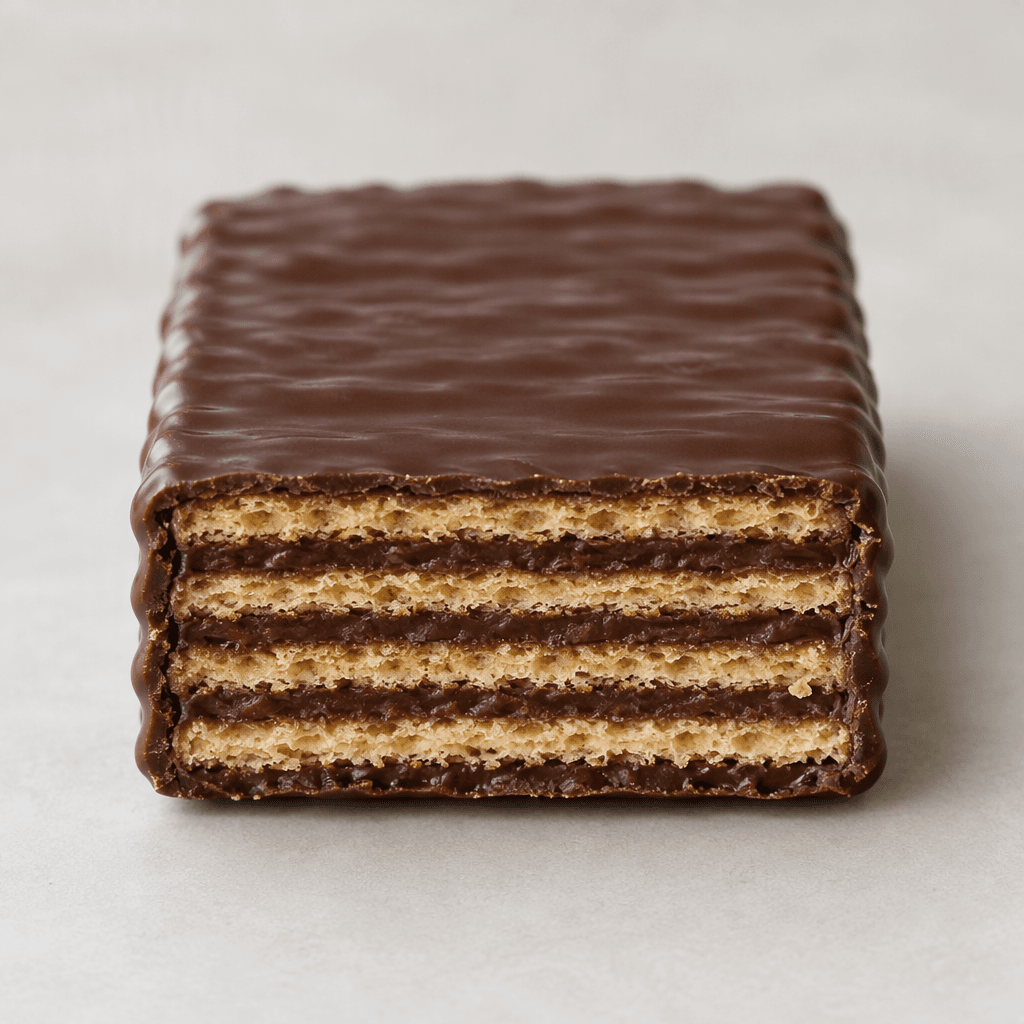
Chocolate Wafer Calories
Crispy wafer, chocolate coated
CALORIES
GI
POTASSIUM
FIBER
Quick answer
1 piece (medium) of Chocolate Wafer (22 g) has 114 calories. That works out to 520 calories per 100 g. It contains 13.6 g of carbs, 1.4 g of protein, 5.9 g of fat and 0.6 g of fiber. Its 0 mg of Copper covers 5% of the Daily Value. Its glycemic index is 65 (high), so it raises blood sugar quickly.
What is Chocolate Wafer?
Chocolate Wafer is a packaged sweet made with thin, crisp wafer layers, chocolate-flavoured cream between them and a smooth chocolate coating. Its light, brittle layers contrast with the richer coating, so it has both a delicate crunch and a pronounced chocolate taste.
It is usually enjoyed as a quick snack or small treat, often alongside tea or coffee. Nutritionally, it is energy-dense and provides mostly carbohydrates and fat; 100 g contains 520 calories. If you want a lighter snack, have one piece rather than eating from the pack, and pair it with unsweetened tea or coffee.
Chocolate Wafer Nutrition Facts
Selected: 100 g
520
KCAL / 100G
Carbs
62g
· 23% DV
Protein
6.2g
· 12% DV
Fat
27g
· 35% DV
Fiber
2.8g
· 10% DV
DV is the share of the daily value covered, on a 2,000 kcal reference diet.
Calories come from: Carbs 48% · Protein 5% · Fat 47%
Chocolate Wafer Vitamins & Minerals
Vitamins
B2
0.18mg · 14% DV
B12
0.2µg · 8% DV
B1
0.08mg · 7% DV
Biotin
2.1µg · 7% DV
Minerals
Phosphorus
110mg · 16% DV
Iron
2mg · 11% DV
Magnesium
38mg · 9% DV
Zinc
1mg · 9% DV
How Nutritious Is Chocolate Wafer?
Nutrient density
Low
How many vitamins, minerals and how much fiber this food carries per calorie. A high score means a lot of nutrition for few calories.
Satiety score
Low
An EatBetter score computed from fiber, protein and calorie density. A high score means staying full longer on the same calories.
Both scores are calculated per 100 g and do not change with the selected portion. The satiety score is EatBetter's own calculation, not a clinical measure.
Chocolate Wafer Glycemic Index
GLYCEMIC INDEX
GLYCEMIC LOAD
Accounts for portion size — a more realistic measure than GI alone.
How to Burn Off Chocolate Wafer
To burn the 520 calories in 100 g:
🚶
Walking (5 km/h)
🏃
Running (8 km/h)
🚴
Cycling
🏊
Swimming
Times are calculated with the MET equation for a 70 kg adult. Actual burn varies with your weight, age and pace.
Is Chocolate Wafer Processed?
NOVA 3
Processed
1. Unprocessed
2. Minimally Processed
3. Processed
4. Ultra-Processed
NOVA classifies foods into 4 groups by industrial processing. NOVA 1 (unprocessed) is the healthiest.
Does Chocolate Wafer Contain Allergens?
Contains these allergens:
Which Diets Is Chocolate Wafer Good For?
Vegan
— Not suitable
Vegetarian
✓ Suitable
Gluten-Free
— Not suitable
Dairy-Free
— Not suitable
Mediterranean
— Not suitable
Paleo
— Not suitable
Whole30
— Not suitable
DASH
— Not suitable
Keto
— Not suitable
Low FODMAP
— Not suitable
Chocolate Wafer Fat Profile
SATURATED
14.5g
MONOUNSATURATED
8.2g
POLYUNSATURATED
2.1g
Omega 6:3 ratio 24:1
Above the ideal 4:1 (24:1).
Compare Chocolate Wafer
Foods Similar to Chocolate Wafer
Frequently Asked Questions About Chocolate Wafer
What is a chocolate wafer made of?
A chocolate wafer has thin, crisp wafer sheets layered with chocolate cream and usually a chocolate coating on the outside. The exact ingredients and proportions vary by product, but that layered filling-and-wafer structure is what distinguishes it from a plain chocolate bar.
How do you keep a chocolate wafer crisp?
Keep a chocolate wafer sealed in a dry, cool place after opening. Moist air softens the wafer layers, while heat can soften the coating. An airtight container helps protect the crunch, especially if the original wrapper no longer closes securely.
Can you freeze a chocolate wafer?
Yes, you can freeze a chocolate wafer, but condensation during thawing may soften its crisp layers or affect the chocolate coating. Wrap it airtight, then let it thaw while still wrapped so moisture collects on the packaging rather than on the wafer.
Why does a chocolate wafer turn white?
A chocolate wafer can develop a pale, dusty-looking coating when cocoa butter or sugar rises to the chocolate surface after temperature or humidity changes. This is called chocolate bloom; it can affect appearance and texture, but by itself does not mean the wafer is spoiled.
How is a chocolate wafer different from a chocolate bar?
A chocolate wafer contains crisp, thin wafer layers and a creamy filling beneath its chocolate coating; a chocolate bar is usually solid chocolate throughout. That layered structure makes a wafer lighter and crunchier to bite, while a bar has a denser chocolate texture.
Does a chocolate wafer melt in hot weather?
Yes, the chocolate coating on a chocolate wafer can soften or melt in warm conditions, even while the wafer inside remains intact. Keep it out of direct sun and hot cars, and allow a softened piece to cool before handling to reduce smudging.
How long does a chocolate wafer stay fresh after opening?
A chocolate wafer is at its best while the wrapper is sealed; after opening, air and humidity gradually dull its crunch. Close the package tightly or move the pieces to an airtight container, and use the printed date as a guide for the unopened product.
Can you make a chocolate wafer at home?
Yes, you can make a homemade chocolate wafer by layering thin wafer sheets with chocolate spread or ganache, then coating the outside with melted chocolate. Chill it until the coating sets, and cut it with a sharp knife to keep the layers from crumbling.
What goes well with a chocolate wafer?
A chocolate wafer pairs well with coffee, tea, or a glass of milk because the drink balances its sweet coating and crisp texture. It can also be crumbled over ice cream, but add it just before serving so the wafer does not turn soggy.
Is a chocolate wafer safe to eat after its best-before date?
A best-before date mainly indicates when an unopened chocolate wafer is expected to retain its best quality, not a guaranteed safety cutoff. If the package is damaged, the wafer smells unusual, or there are signs of moisture or spoilage, discard it rather than tasting it.
Have another question about Chocolate Wafer?
Ask the AI nutrition coach — calories, portions, alternatives and more, answered in seconds in the app.

Scan calories with your camera
Instant AI nutrition analysis

Nutrition data compiled from USDA FoodData Central and scientific sources.