

Ready & Packaged Foods
All →Vegetables & Legumes
All →Desserts & Confectionery
All →Meat & Protein
All →Grains & Bakery
All →Beverages
All →Milk & Dairy
All →

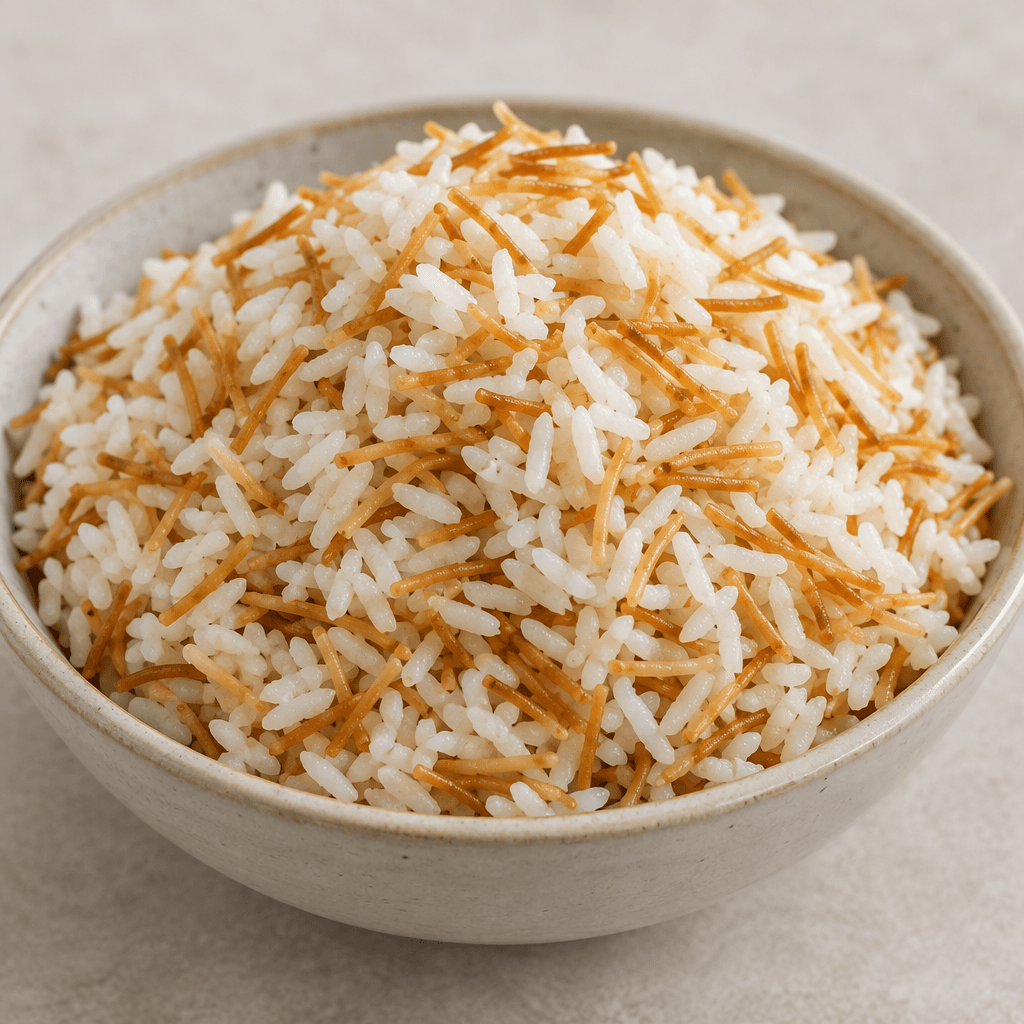
Vermicelli Pilaf Calories
Toasted vermicelli cooked as pilaf
In season: Spring · Summer · Autumn · Winter
CALORIES
GI
POTASSIUM
FIBER
Quick answer
1 serving (medium) of Vermicelli Pilaf (150 g) has 255 calories. That works out to 170 calories per 100 g. It contains 47.3 g of carbs, 6.9 g of protein, 4.8 g of fat and 2.1 g of fiber. Its 7.5 µg of Selenium covers 14% of the Daily Value. Its glycemic index is 60 (medium), so it raises blood sugar at a moderate pace.
What is Vermicelli Pilaf?
Vermicelli Pilaf is a Turkish-style rice pilaf made by briefly toasting short, thin vermicelli in oil or butter, then cooking it with rice and water or stock. The toasted strands lend the rice a savoury, nutty note, while careful cooking keeps the grains fluffy and distinct. It is a familiar home-cooked side dish in Turkey rather than a meal in itself.
It is commonly served alongside meat dishes, beans or vegetables, and a spoonful of yoghurt is a welcome addition. The dish is mainly a source of carbohydrates, with a modest amount of protein. For a more balanced plate, pair it with vegetables and a protein-rich main; using less butter or oil can make the pilaf lighter.
Vermicelli Pilaf Nutrition Facts
Selected: 100 g
170
KCAL / 100G
Carbs
31.5g
· 11% DV
Protein
4.6g
· 9% DV
Fat
3.2g
· 4% DV
Fiber
1.4g
· 5% DV
DV is the share of the daily value covered, on a 2,000 kcal reference diet.
Calories come from: Carbs 73% · Protein 11% · Fat 16%
Vermicelli Pilaf Vitamins & Minerals
Vitamins
B1
0.07mg · 6% DV
B3
0.7mg · 4% DV
B5
0.2mg · 4% DV
Biotin
1.2µg · 4% DV
Minerals
Selenium
5µg · 9% DV
Iron
1mg · 6% DV
Sodium
120mg · 5% DV
Phosphorus
38mg · 5% DV
How Nutritious Is Vermicelli Pilaf?
Nutrient density
Low
How many vitamins, minerals and how much fiber this food carries per calorie. A high score means a lot of nutrition for few calories.
Satiety score
Medium
An EatBetter score computed from fiber, protein and calorie density. A high score means staying full longer on the same calories.
Both scores are calculated per 100 g and do not change with the selected portion. The satiety score is EatBetter's own calculation, not a clinical measure.
Vermicelli Pilaf Glycemic Index
GLYCEMIC INDEX
GLYCEMIC LOAD
Accounts for portion size — a more realistic measure than GI alone.
How to Burn Off Vermicelli Pilaf
To burn the 170 calories in 100 g:
🚶
Walking (5 km/h)
🏃
Running (8 km/h)
🚴
Cycling
🏊
Swimming
Times are calculated with the MET equation for a 70 kg adult. Actual burn varies with your weight, age and pace.
Is Vermicelli Pilaf Processed?
NOVA 3
Processed
1. Unprocessed
2. Minimally Processed
3. Processed
4. Ultra-Processed
NOVA classifies foods into 4 groups by industrial processing. NOVA 1 (unprocessed) is the healthiest.
Does Vermicelli Pilaf Contain Allergens?
Contains these allergens:
Which Diets Is Vermicelli Pilaf Good For?
Vegan
— Not suitable
Vegetarian
✓ Suitable
Gluten-Free
— Not suitable
Dairy-Free
— Not suitable
Mediterranean
— Not suitable
Paleo
— Not suitable
Whole30
— Not suitable
DASH
— Not suitable
Keto
— Not suitable
Low FODMAP
— Not suitable
Vermicelli Pilaf Fat Profile
SATURATED
0.6g
MONOUNSATURATED
1.1g
POLYUNSATURATED
1.3g
Omega 6:3 ratio 42:1
Above the ideal 4:1 (42:1).
Compare Vermicelli Pilaf
Foods Similar to Vermicelli Pilaf
Frequently Asked Questions About Vermicelli Pilaf
What is vermicelli pilaf made of?
Vermicelli pilaf is usually made with rice and short pasta strands, browned in fat before being cooked together. The vermicelli may be thin or rice-shaped, depending on the regional style; broth, butter, or oil can add flavor.
How do you toast vermicelli for vermicelli pilaf without burning it?
Toast the vermicelli over medium-low heat, stirring often, until evenly golden before adding the rice or liquid. It can turn from browned to burnt quickly, so keep the pan moving and add the next ingredients as soon as it reaches the desired color.
Is vermicelli pilaf the same as rice pilaf?
Vermicelli pilaf is a type of rice pilaf that includes toasted pasta strands, which add a nutty flavor and a different texture. Plain rice pilaf does not include vermicelli, although recipes and names vary across cuisines.
Can you make vermicelli pilaf with orzo?
Yes, orzo works well in vermicelli pilaf because it has a similar small, rice-like shape to some types of vermicelli. Brown it gently before cooking it with the rice, and avoid stirring the pilaf while it simmers.
Why is my vermicelli pilaf crunchy?
Vermicelli pilaf is often crunchy when it has not absorbed enough liquid or the cooking time was too short. Add a little hot water, cover the pan, and continue cooking gently; let it rest covered once the rice is tender.
Can vermicelli pilaf be made in a rice cooker?
Yes, vermicelli pilaf can be made in a rice cooker, but toast the vermicelli in a pan first for its signature browned flavor. Transfer it with the rice and liquid to the cooker, then use the regular white-rice setting.
Can you use broth instead of water in vermicelli pilaf?
Yes, broth can replace water in vermicelli pilaf and gives the rice and toasted pasta a more savory taste. Use unsalted or lightly salted broth when possible, since seasoned broth can make the finished pilaf too salty.
Can vermicelli pilaf be frozen?
Yes, vermicelli pilaf can be frozen in airtight, meal-sized portions. The rice may be softer after thawing, so reheat it covered with a splash of water or broth to restore moisture and separate the grains gently with a fork.
What can you add to vermicelli pilaf to make it more flavorful?
You can add sautéed onion, toasted nuts, herbs, or a little broth to vermicelli pilaf. Keep additions modest so they do not overpower the browned vermicelli, and fold delicate herbs in after cooking rather than simmering them with the rice.
How do you reheat vermicelli pilaf without drying it out?
Reheat vermicelli pilaf covered with a small splash of water in a saucepan over low heat, or use a covered microwave-safe dish. Stir gently once it is hot; uncovering it during reheating lets steam escape and dries out the rice.
Have another question about Vermicelli Pilaf?
Ask the AI nutrition coach — calories, portions, alternatives and more, answered in seconds in the app.

Scan calories with your camera
Instant AI nutrition analysis

Nutrition data compiled from USDA FoodData Central and scientific sources.