

Ready & Packaged Foods
All →Vegetables & Legumes
All →Desserts & Confectionery
All →Meat & Protein
All →Grains & Bakery
All →Beverages
All →Milk & Dairy
All →

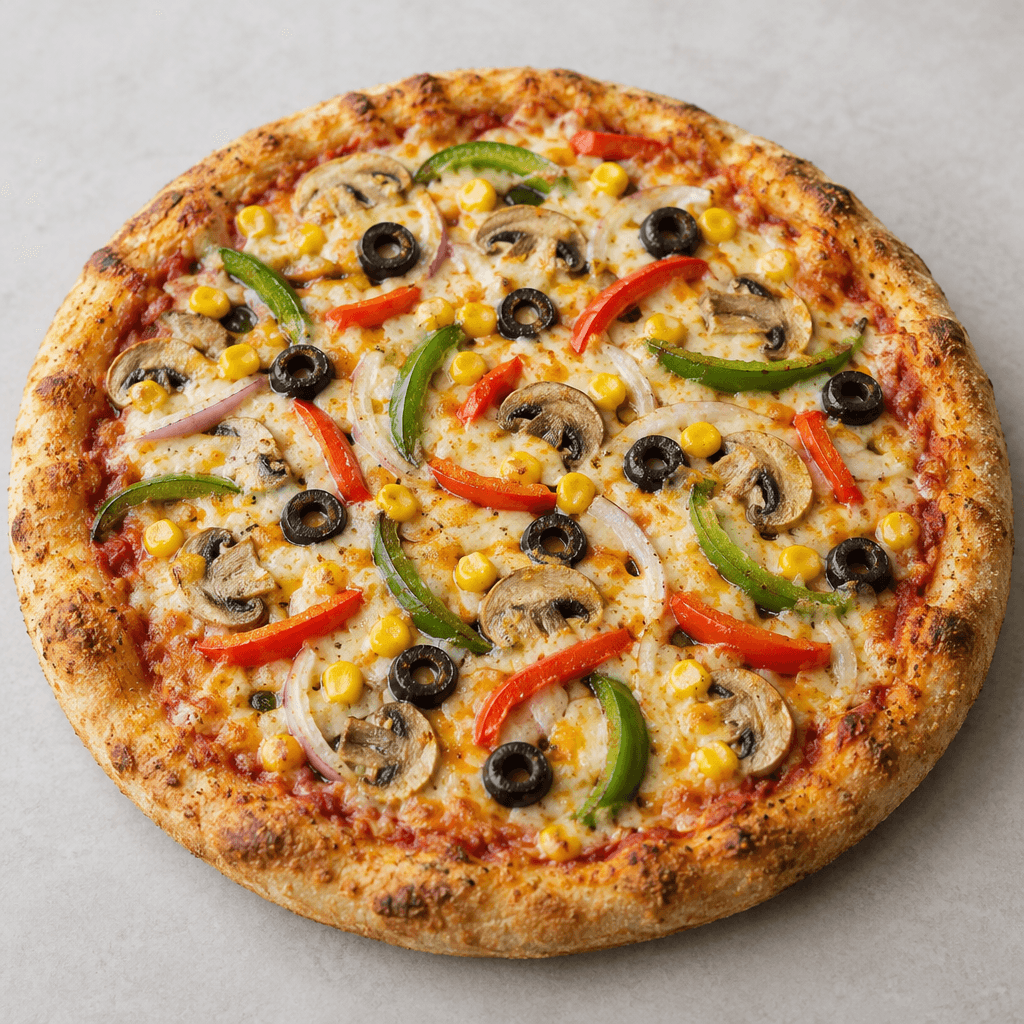
Vegetable Pizza Calories
Vegetable, oven-baked, cheese, tomato sauce pizza
In season: Spring · Summer · Autumn · Winter
CALORIES
GI
POTASSIUM
FIBER
Quick answer
1 slice (medium) of Vegetable Pizza (80 g) has 168 calories. That works out to 210 calories per 100 g. It contains 23.2 g of carbs, 6.4 g of protein, 5.6 g of fat and 2 g of fiber. Its 336 mg of Sodium covers 15% of the Daily Value. Its glycemic index is 65 (medium), so it raises blood sugar at a moderate pace.
What is Vegetable Pizza?
Vegetable Pizza is made by topping pizza dough with tomato sauce, cheese and vegetables such as peppers, onions, mushrooms, olives or sweetcorn, then baking it until the crust is browned and the cheese melts. It draws on the Italian tradition of pizza, but is now a familiar casual meal around the world, made at home or ordered from restaurants and takeaways.
The crust is tender inside with a lightly crisp edge, while tangy tomato and savoury cheese balance the sweetness of the vegetables. Serve it hot by the slice, often with a green salad; chilli oil or herbs can add extra flavour. The dough and cheese make it filling, while the vegetables contribute some fibre. For a lighter meal, choose a thinner crust and pair a smaller portion with salad.
Vegetable Pizza Nutrition Facts
Selected: 100 g
210
KCAL / 100G
Carbs
29g
· 11% DV
Protein
8g
· 16% DV
Fat
7g
· 9% DV
Fiber
2.5g
· 9% DV
DV is the share of the daily value covered, on a 2,000 kcal reference diet.
Calories come from: Carbs 55% · Protein 15% · Fat 30%
Vegetable Pizza Vitamins & Minerals
Vitamins
B3
2.1mg · 13% DV
B2
0.15mg · 12% DV
Vitamin A
90µg · 10% DV
B1
0.12mg · 10% DV
Minerals
Sodium
420mg · 18% DV
Phosphorus
95mg · 14% DV
Selenium
7µg · 13% DV
Calcium
110mg · 11% DV
How Nutritious Is Vegetable Pizza?
Nutrient density
Medium
How many vitamins, minerals and how much fiber this food carries per calorie. A high score means a lot of nutrition for few calories.
Satiety score
Medium
An EatBetter score computed from fiber, protein and calorie density. A high score means staying full longer on the same calories.
Both scores are calculated per 100 g and do not change with the selected portion. The satiety score is EatBetter's own calculation, not a clinical measure.
Vegetable Pizza Glycemic Index
GLYCEMIC INDEX
GLYCEMIC LOAD
Accounts for portion size — a more realistic measure than GI alone.
How to Burn Off Vegetable Pizza
To burn the 210 calories in 100 g:
🚶
Walking (5 km/h)
🏃
Running (8 km/h)
🚴
Cycling
🏊
Swimming
Times are calculated with the MET equation for a 70 kg adult. Actual burn varies with your weight, age and pace.
Is Vegetable Pizza Processed?
NOVA 3
Processed
1. Unprocessed
2. Minimally Processed
3. Processed
4. Ultra-Processed
NOVA classifies foods into 4 groups by industrial processing. NOVA 1 (unprocessed) is the healthiest.
Does Vegetable Pizza Contain Allergens?
Contains these allergens:
Which Diets Is Vegetable Pizza Good For?
Vegan
— Not suitable
Vegetarian
✓ Suitable
Gluten-Free
— Not suitable
Dairy-Free
— Not suitable
Mediterranean
✓ Suitable
Paleo
— Not suitable
Whole30
— Not suitable
DASH
— Not suitable
Keto
— Not suitable
Low FODMAP
— Not suitable
Vegetable Pizza Fat Profile
SATURATED
2.6g
MONOUNSATURATED
2.2g
POLYUNSATURATED
1g
Omega 6:3 ratio 15:1
Above the ideal 4:1 (15:1).
Compare Vegetable Pizza
Foods Similar to Vegetable Pizza
Frequently Asked Questions About Vegetable Pizza
What toppings are usually on a vegetable pizza?
A vegetable pizza commonly has tomato sauce, melted cheese, bell peppers, onions, mushrooms, olives, and sometimes sweetcorn. Toppings vary by recipe, so check what is included if you are ordering; vegetables such as zucchini or spinach are also popular additions.
How do you make vegetable pizza at home?
To make vegetable pizza, spread tomato sauce over pizza dough, add cheese and prepared vegetables, then bake in a hot oven until the crust is browned and the cheese melts. Pat vegetables dry first so excess moisture does not soften the base.
What vegetables go best on a vegetable pizza?
Bell peppers, mushrooms, onions, olives, and sweetcorn work especially well on vegetable pizza because they bring a mix of savory and sweet flavors. Use a few toppings rather than piling them on; too much moisture can leave the center of the pizza soggy.
How do you keep vegetable pizza from getting soggy?
To keep vegetable pizza from getting soggy, drain or briefly cook moisture-heavy toppings such as mushrooms before adding them. Dry washed vegetables thoroughly, use a moderate amount of tomato sauce, and avoid crowding the dough with too many toppings.
Is vegetable pizza healthy?
Vegetable pizza provides vegetables, but it also includes dough and cheese, so it is not automatically a balanced meal. Pairing a slice or two with a fresh salad adds variety, while choosing a sensible portion helps keep the meal from becoming overly filling.
What goes well with vegetable pizza?
A crisp green salad, roasted vegetables, or a light soup pairs well with vegetable pizza. These sides complement the savory toppings without making the meal as heavy as serving it with another bread-based dish or fried food.
How long does vegetable pizza last in the fridge?
Vegetable pizza leftovers can be kept in a covered container in the refrigerator and are best eaten within a few days. Reheat slices in an oven or skillet for a firmer crust; do not leave cooked pizza sitting at room temperature for extended periods.
Can you freeze vegetable pizza?
Yes, vegetable pizza freezes well when wrapped or sealed in portions. Freeze slices separately first if you want to remove them one at a time, then reheat from thawed or frozen in an oven until hot throughout and crisp at the edges.
Why does vegetable pizza sometimes have a watery center?
A watery center on vegetable pizza usually comes from vegetables releasing moisture as they bake, especially mushrooms or zucchini, or from too much sauce. Pre-cooking wet toppings and drying them well helps the crust cook through instead of turning soft.
Can you reheat vegetable pizza in a pan?
Yes, a skillet is a good way to reheat vegetable pizza while keeping its bottom crisp. Warm a slice over medium-low heat and cover the pan briefly so the cheese melts; avoid high heat, which can burn the crust before the topping warms.
Have another question about Vegetable Pizza?
Ask the AI nutrition coach — calories, portions, alternatives and more, answered in seconds in the app.

Scan calories with your camera
Instant AI nutrition analysis

Nutrition data compiled from USDA FoodData Central and scientific sources.