

Ready & Packaged Foods
All →Vegetables & Legumes
All →Desserts & Confectionery
All →Meat & Protein
All →Grains & Bakery
All →Beverages
All →Milk & Dairy
All →

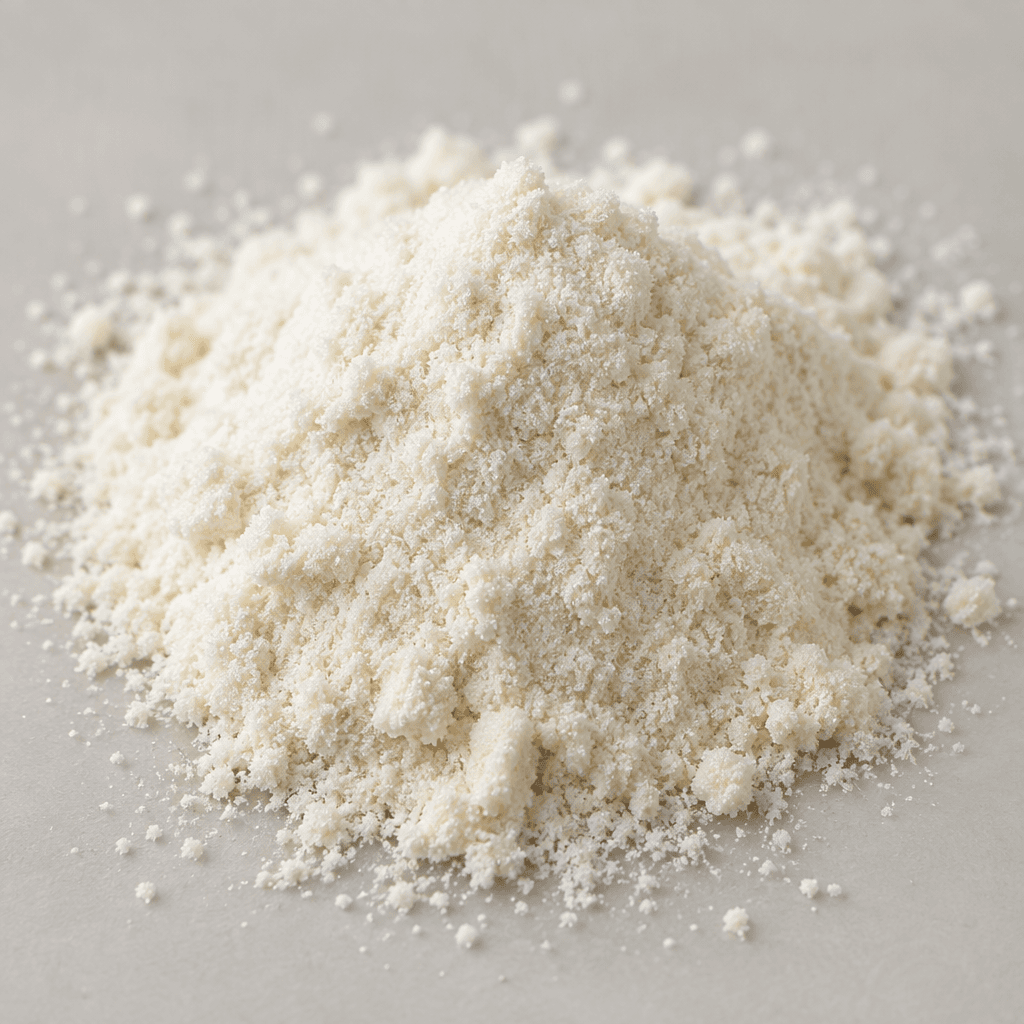
Vanillin Calories
Synthetic flavor, sweetener, very low nutritional value
CALORIES
GI
POTASSIUM
FIBER
Quick answer
1 teaspoon (medium) of Vanillin (4 g) has 15 calories. That works out to 380 calories per 100 g. It contains 3.8 g of carbs, 0 g of protein, 0 g of fat and 0 g of fiber. Its glycemic index is 80 (high), so it raises blood sugar quickly.
What is Vanillin?
Vanillin is the aroma compound responsible for vanilla’s familiar scent. The fine white powder sold for cooking is usually made synthetically; it is not the same as vanilla extract, which has a more complex flavour from the vanilla bean. Vanillin supplies a clear vanilla note, rather than sweetness on its own.
It is widely used in home baking and packaged desserts, stirred into cake or cookie batter, custards, puddings and sometimes warm drinks. Because its aroma is concentrated, a small amount is usually enough. Nutritionally, it offers little beyond carbohydrate and contributes little in typical recipe portions. Use it where a straightforward vanilla flavour is wanted, or pair it with cocoa, fruit or dairy-based desserts.
Vanillin Nutrition Facts
Selected: 100 g
380
KCAL / 100G
Carbs
95g
· 35% DV
Protein
0g
· 0% DV
Fat
0g
· 0% DV
Fiber
0g
· 0% DV
DV is the share of the daily value covered, on a 2,000 kcal reference diet.
Calories come from: Carbs 100% · Protein 0% · Fat 0%
Vanillin Vitamins & Minerals
Vitamins
Vitamin A
0µg · 0% DV
B1
0mg · 0% DV
B2
0mg · 0% DV
B3
0mg · 0% DV
Minerals
Calcium
1mg · 0% DV
Iron
0mg · 0% DV
Magnesium
1mg · 0% DV
Zinc
0mg · 0% DV
How Nutritious Is Vanillin?
Nutrient density
Low
How many vitamins, minerals and how much fiber this food carries per calorie. A high score means a lot of nutrition for few calories.
Satiety score
Low
An EatBetter score computed from fiber, protein and calorie density. A high score means staying full longer on the same calories.
Both scores are calculated per 100 g and do not change with the selected portion. The satiety score is EatBetter's own calculation, not a clinical measure.
Vanillin Glycemic Index
GLYCEMIC INDEX
GLYCEMIC LOAD
Accounts for portion size — a more realistic measure than GI alone.
How to Burn Off Vanillin
To burn the 380 calories in 100 g:
🚶
Walking (5 km/h)
🏃
Running (8 km/h)
🚴
Cycling
🏊
Swimming
Times are calculated with the MET equation for a 70 kg adult. Actual burn varies with your weight, age and pace.
Is Vanillin Processed?
NOVA 4
Ultra-Processed
1. Unprocessed
2. Minimally Processed
3. Processed
4. Ultra-Processed
NOVA classifies foods into 4 groups by industrial processing. NOVA 1 (unprocessed) is the healthiest.
Does Vanillin Contain Allergens?
No known major allergens
Which Diets Is Vanillin Good For?
Vegan
✓ Suitable
Vegetarian
✓ Suitable
Gluten-Free
✓ Suitable
Dairy-Free
— Not suitable
Mediterranean
✓ Suitable
Paleo
✓ Suitable
Whole30
— Not suitable
DASH
— Not suitable
Keto
— Not suitable
Low FODMAP
— Not suitable
Vanillin Fat Profile
SATURATED
0g
MONOUNSATURATED
0g
POLYUNSATURATED
0g
Compare Vanillin
Foods Similar to Vanillin
Frequently Asked Questions About Vanillin
What is vanillin?
Vanillin is the main aroma compound associated with vanilla and is used to give foods a vanilla-like flavor. It occurs naturally in vanilla beans, but much of the vanillin used in food is made commercially.
Is vanillin the same as vanilla?
No. Vanillin is one component of vanilla’s aroma, while vanilla beans and vanilla extract contain a broader mix of flavor compounds. That is why vanillin usually tastes simpler than a full vanilla product.
Is vanillin natural or synthetic?
Vanillin can be naturally derived from vanilla or produced synthetically. This product is described as a synthetic flavor, so it is not the same as vanilla powder made directly from vanilla beans.
Is vanillin safe to eat?
Yes, food-grade vanillin is generally safe when used in the small amounts called for in recipes. Using too much can make food taste harsh or artificial, so measure it rather than adding it freely.
How do you use vanillin in baking?
Add vanillin to cake, cookie, custard, or other dessert mixtures to give them a vanilla-like aroma. Mix it thoroughly through the batter or filling, and follow the recipe or package directions for the amount.
What can I use instead of vanillin?
Vanilla extract or the seeds from a vanilla bean can replace vanillin in many recipes. Extract adds liquid, while vanilla bean gives a fuller flavor; account for those differences when adapting the recipe.
Does vanillin taste exactly like vanilla extract?
No. Vanillin gives a recognizable vanilla-like note, but vanilla extract contains additional flavor compounds that create more depth and complexity. Vanillin works well for a straightforward aroma, but it will not fully reproduce extract.
Can you add vanillin to coffee or tea?
Yes, a small amount of vanillin can flavor coffee or tea. Stir it in thoroughly, especially in a hot drink, and start with a little because an excess can overpower the drink.
How should vanillin be stored after opening?
Keep vanillin tightly sealed in a cool, dry place away from moisture and strong odors. A damp or poorly closed container can cause clumping and weaken its aroma; follow any storage directions on the package.
Does vanillin dissolve in water?
Vanillin dissolves only sparingly in cool water, so it may not disperse evenly in a cold drink. It is more suitable for mixing into a warm preparation or a batter where it can be distributed throughout.
Have another question about Vanillin?
Ask the AI nutrition coach — calories, portions, alternatives and more, answered in seconds in the app.

Scan calories with your camera
Instant AI nutrition analysis

Nutrition data compiled from USDA FoodData Central and scientific sources.