

Ready & Packaged Foods
All →Vegetables & Legumes
All →Desserts & Confectionery
All →Meat & Protein
All →Grains & Bakery
All →Beverages
All →Milk & Dairy
All →

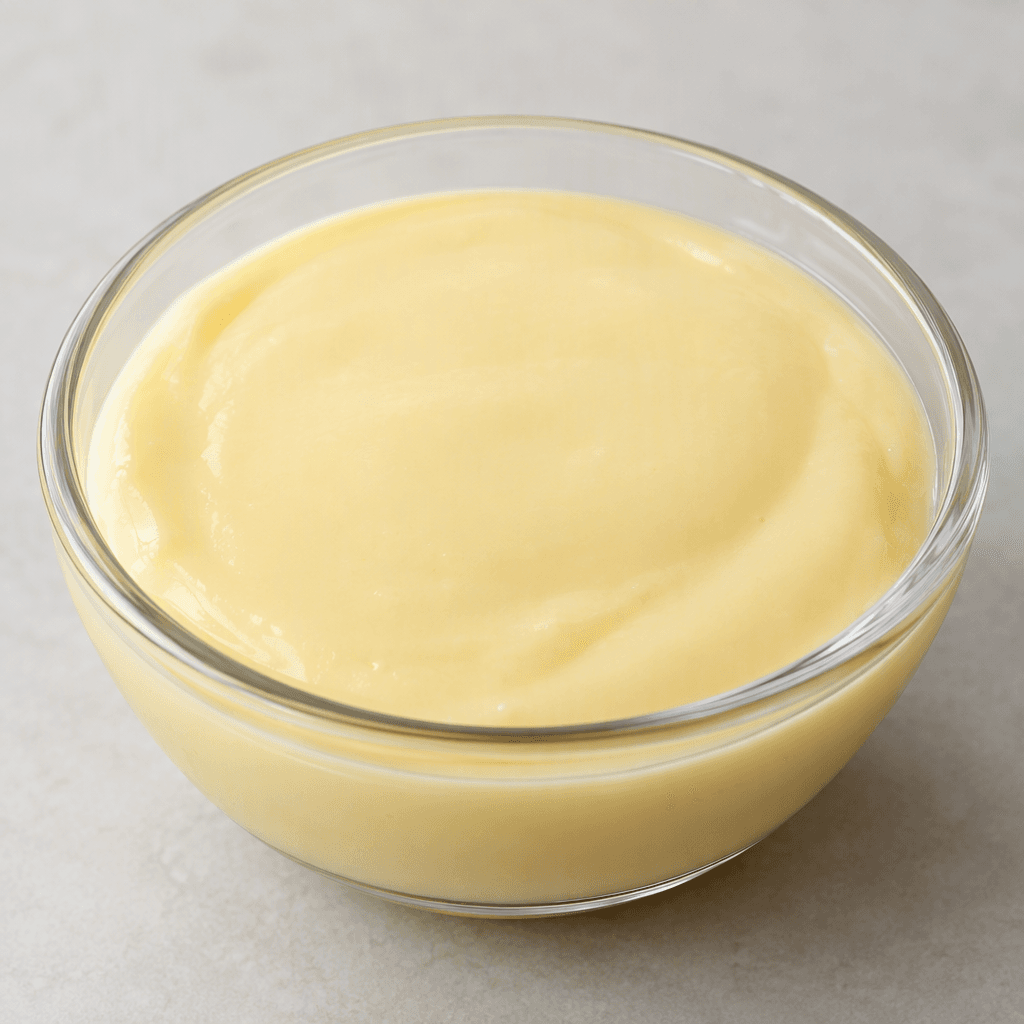
Vanilla pudding Calories
Sweet, creamy, vanilla-flavored, soft
In season: Spring · Summer · Autumn · Winter
CALORIES
GI
POTASSIUM
FIBER
Quick answer
1 cup (medium) of Vanilla pudding (150 g) has 165 calories. That works out to 110 calories per 100 g. It contains 29.3 g of carbs, 4.8 g of protein, 3.8 g of fat and 0.2 g of fiber. Its 0.5 µg of B12 covers 19% of the Daily Value. Its glycemic index is 65 (medium), so it raises blood sugar at a moderate pace.
What is Vanilla pudding?
Vanilla pudding is a soft, milk-based dessert, usually thickened with starch and flavoured with vanilla. In the United States it is a familiar home-style sweet, made on the stove or from a mix; versions elsewhere may be sold ready to eat or prepared from a packet.
Its smooth, creamy texture and gentle sweetness make it a popular chilled dessert, served in a bowl or layered with fruit, biscuits or cake. It is mainly a source of carbohydrates, with a little protein and very little fibre. For a lighter-feeling serving, pair a modest bowl with fresh berries or sliced fruit.
Vanilla pudding Nutrition Facts
Selected: 100 g
110
KCAL / 100G
Carbs
19.5g
· 7% DV
Protein
3.2g
· 6% DV
Fat
2.5g
· 3% DV
Fiber
0.1g
· 0% DV
DV is the share of the daily value covered, on a 2,000 kcal reference diet.
Calories come from: Carbs 69% · Protein 11% · Fat 20%
Vanilla pudding Vitamins & Minerals
Vitamins
B12
0.3µg · 13% DV
B2
0.15mg · 12% DV
Biotin
2µg · 7% DV
B5
0.3mg · 6% DV
Minerals
Calcium
110mg · 11% DV
Phosphorus
80mg · 11% DV
Iodine
7µg · 5% DV
Selenium
2µg · 4% DV
How Nutritious Is Vanilla pudding?
Nutrient density
Low
How many vitamins, minerals and how much fiber this food carries per calorie. A high score means a lot of nutrition for few calories.
Satiety score
Low
An EatBetter score computed from fiber, protein and calorie density. A high score means staying full longer on the same calories.
Both scores are calculated per 100 g and do not change with the selected portion. The satiety score is EatBetter's own calculation, not a clinical measure.
Vanilla pudding Glycemic Index
GLYCEMIC INDEX
GLYCEMIC LOAD
Accounts for portion size — a more realistic measure than GI alone.
How to Burn Off Vanilla pudding
To burn the 110 calories in 100 g:
🚶
Walking (5 km/h)
🏃
Running (8 km/h)
🚴
Cycling
🏊
Swimming
Times are calculated with the MET equation for a 70 kg adult. Actual burn varies with your weight, age and pace.
Is Vanilla pudding Processed?
NOVA 3
Processed
1. Unprocessed
2. Minimally Processed
3. Processed
4. Ultra-Processed
NOVA classifies foods into 4 groups by industrial processing. NOVA 1 (unprocessed) is the healthiest.
Does Vanilla pudding Contain Allergens?
Contains these allergens:
Which Diets Is Vanilla pudding Good For?
Vegan
— Not suitable
Vegetarian
✓ Suitable
Gluten-Free
— Not suitable
Dairy-Free
— Not suitable
Mediterranean
✓ Suitable
Paleo
— Not suitable
Whole30
— Not suitable
DASH
— Not suitable
Keto
— Not suitable
Low FODMAP
— Not suitable
Vanilla pudding Fat Profile
SATURATED
1.5g
MONOUNSATURATED
0.7g
POLYUNSATURATED
0.1g
Omega 6:3 ratio 5:1
Above the ideal 4:1 (5:1).
Compare Vanilla pudding
Foods Similar to Vanilla pudding
Frequently Asked Questions About Vanilla pudding
What is vanilla pudding made of?
Vanilla pudding is usually made with milk, sugar, a thickener such as cornstarch, and vanilla. Some recipes add egg yolks for a richer texture. The ingredients are heated together until thick, then the pudding is chilled or served warm.
Is vanilla pudding the same as custard?
No, vanilla pudding and custard are usually thickened differently. American-style vanilla pudding typically relies on starch, while custard is generally thickened with eggs. The names and recipes vary by country, so some versions can be quite similar.
Why is my vanilla pudding runny?
Vanilla pudding is often runny because it was not heated long enough for the starch to thicken, or because too much milk was added. Bring the mixture to a gentle boil while whisking, then let it cool; it will firm up further in the refrigerator.
How do you make instant vanilla pudding?
Instant vanilla pudding is usually made by whisking the mix with cold milk until it thickens. Use the amount and method stated on the package, since mixes differ; chilling it afterward helps the texture set and makes it easier to portion.
Can vanilla pudding be used as a pie filling?
Yes, vanilla pudding can fill a pie, especially a chilled pie with a baked crust. Let the pudding cool until thick before adding it, then refrigerate the assembled pie so the filling sets; fresh fruit or whipped cream can go on top.
Why does vanilla pudding form a skin?
Vanilla pudding forms a skin when its surface cools and dries in contact with air. To prevent it, press plastic wrap directly onto the surface while it chills, or stir the pudding occasionally as it cools before serving.
How long does vanilla pudding last in the fridge?
Vanilla pudding keeps for about 3 days in the refrigerator when covered and kept cold. Use a clean spoon each time, and discard it if it develops an off smell, unusual appearance, or an unexpectedly separated texture.
Can you freeze vanilla pudding?
Yes, you can freeze vanilla pudding, but thawing may make it watery or grainy because the texture can separate. Freeze it in small airtight portions, thaw it in the refrigerator, and stir well before eating; it is usually best fresh.
Can vanilla pudding replace vanilla pudding mix in a cake recipe?
Not reliably: prepared vanilla pudding adds moisture, while dry pudding mix contributes concentrated starch, sugar, and flavor. If a cake recipe calls for the dry mix, substituting prepared pudding can change the batter’s proportions and leave the cake dense or underbaked.
Can vanilla pudding be served warm?
Yes, vanilla pudding can be served warm, though it is also commonly chilled. For a warm serving, spoon it into heat-safe bowls soon after cooking; avoid reheating it aggressively, which can make the texture uneven.
Have another question about Vanilla pudding?
Ask the AI nutrition coach — calories, portions, alternatives and more, answered in seconds in the app.

Scan calories with your camera
Instant AI nutrition analysis

Nutrition data compiled from USDA FoodData Central and scientific sources.