

Ready & Packaged Foods
All →Vegetables & Legumes
All →Desserts & Confectionery
All →Meat & Protein
All →Grains & Bakery
All →Beverages
All →Milk & Dairy
All →

Vanilla Calories
Natural flavor, antioxidant, low calorie
In season: Spring · Summer · Autumn · Winter
CALORIES
GI
POTASSIUM
FIBER
Quick answer
1 teaspoon (medium) of Vanilla (2 g) has 6 calories. That works out to 288 calories per 100 g. It contains 0.3 g of carbs, 0 g of protein, 0 g of fat and 0 g of fiber. Its glycemic index is 15 (low), so it raises blood sugar slowly.
What is Vanilla?
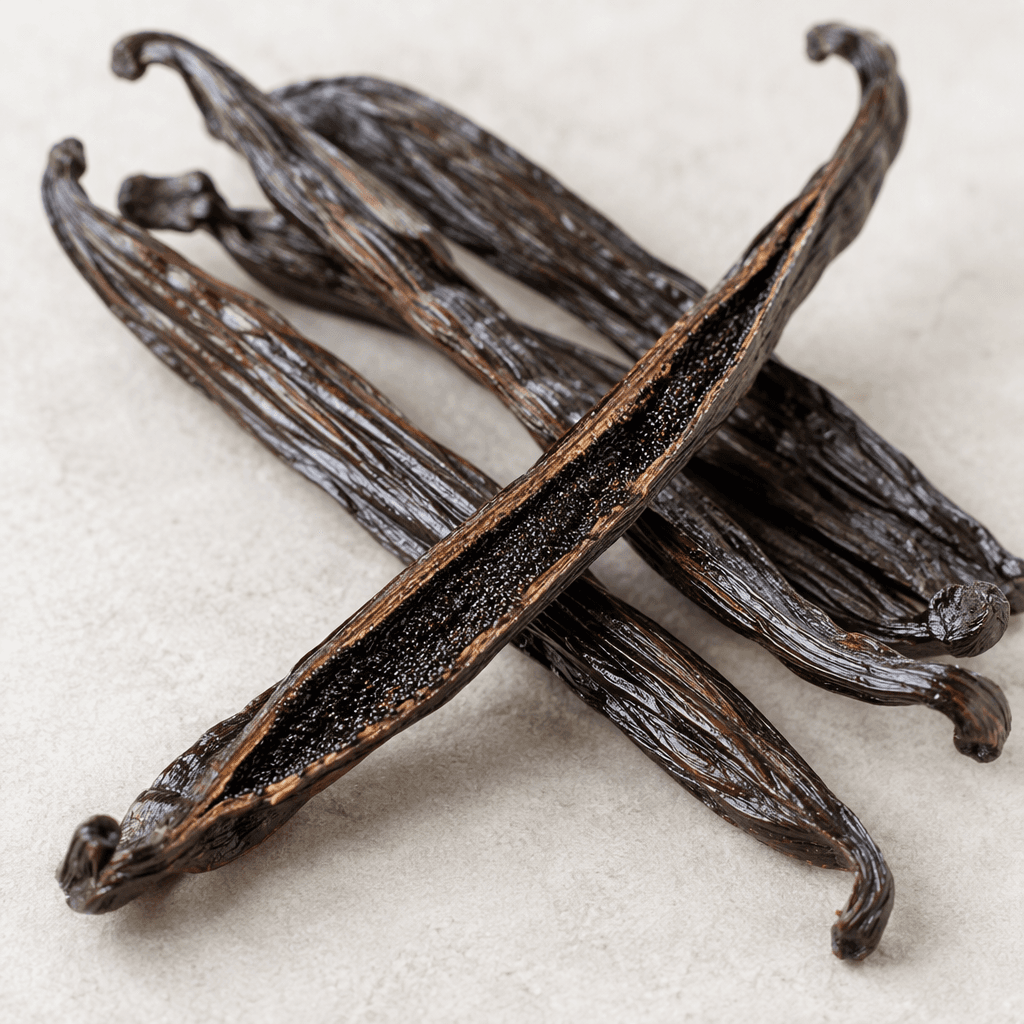
Vanilla comes from the cured fruit of a tropical orchid. The long, dark pods hold tiny fragrant seeds, which can be scraped into a mixture; vanilla extract is another way to use the same distinctive flavour. The plant originated in Mexico, though vanilla is now grown in several tropical regions.
Its sweet, rounded aroma works especially well in custards, cakes, biscuits, ice cream and drinks. In many kitchens, a pod is split and its seeds are stirred into milk, cream or batter; the pod can also infuse sugar. Vanilla contains very little fat, and because it is usually used sparingly, it contributes more aroma than bulk to a dish. Pair it with fruit, chocolate or coffee, or use a lighter hand with added sugar so its flavour can stand out.
Vanilla Nutrition Facts
Selected: 100 g
288
KCAL / 100G
Carbs
12.7g
· 5% DV
Protein
0.1g
· 0% DV
Fat
0.1g
· 0% DV
Fiber
0g
· 0% DV
DV is the share of the daily value covered, on a 2,000 kcal reference diet.
Calories come from: Carbs 98% · Protein 1% · Fat 1%
Vanilla Vitamins & Minerals
Vitamins
B1
0.01mg · 1% DV
B2
0.01mg · 1% DV
B3
0.1mg · 1% DV
B6
0.01mg · 1% DV
Minerals
Potassium ⭐
148mg · 4% DV
Magnesium
12mg · 3% DV
Calcium
11mg · 1% DV
Phosphorus
6mg · 1% DV
How Nutritious Is Vanilla?
Nutrient density
Low
How many vitamins, minerals and how much fiber this food carries per calorie. A high score means a lot of nutrition for few calories.
Satiety score
Low
An EatBetter score computed from fiber, protein and calorie density. A high score means staying full longer on the same calories.
Both scores are calculated per 100 g and do not change with the selected portion. The satiety score is EatBetter's own calculation, not a clinical measure.
Vanilla Glycemic Index
GLYCEMIC INDEX
GLYCEMIC LOAD
Accounts for portion size — a more realistic measure than GI alone.
How to Burn Off Vanilla
To burn the 288 calories in 100 g:
🚶
Walking (5 km/h)
🏃
Running (8 km/h)
🚴
Cycling
🏊
Swimming
Times are calculated with the MET equation for a 70 kg adult. Actual burn varies with your weight, age and pace.
Is Vanilla Processed?
NOVA 2
Minimally Processed
1. Unprocessed
2. Minimally Processed
3. Processed
4. Ultra-Processed
NOVA classifies foods into 4 groups by industrial processing. NOVA 1 (unprocessed) is the healthiest.
Does Vanilla Contain Allergens?
No known major allergens
Which Diets Is Vanilla Good For?
Vegan
✓ Suitable
Vegetarian
✓ Suitable
Gluten-Free
✓ Suitable
Dairy-Free
— Not suitable
Mediterranean
✓ Suitable
Paleo
✓ Suitable
Whole30
— Not suitable
DASH
— Not suitable
Keto
✓ Suitable
Low FODMAP
— Not suitable
Vanilla Fat Profile
SATURATED
0.03g
MONOUNSATURATED
0.01g
POLYUNSATURATED
0.01g
Compare Vanilla
Foods Similar to Vanilla
Frequently Asked Questions About Vanilla
How do you use a vanilla bean?
Split the vanilla bean lengthwise and scrape out the tiny seeds with the back of a knife. Stir the seeds into batter, custard, or warm milk, and steep the pod too for extra flavor; remove it before serving.
What is the difference between vanilla and vanillin?
Vanilla comes from the cured fruit of an orchid, while vanillin is its main aroma compound and can also be made from other sources. Products flavored with vanillin may taste simpler than those made with whole vanilla beans or vanilla extract.
How is vanilla extract made?
Vanilla extract is made by steeping cured vanilla beans in a mixture of alcohol and water. The liquid draws out the beans’ aroma compounds; homemade versions need several weeks of steeping before their flavor becomes pronounced.
Why is vanilla so expensive?
Vanilla is expensive because its flowers often need to be pollinated by hand, and the harvested pods take time and careful work to cure. These labor-intensive steps make real vanilla costlier than flavoring made with synthetic vanillin.
How should you store vanilla beans?
Store vanilla beans in an airtight container in a cool, dark place. Avoid the refrigerator, where moisture can encourage mold and the beans may dry out; if a pod becomes stiff, briefly steep it in warm liquid to soften it.
What is the difference between vanilla extract and vanilla essence?
Vanilla extract is made by infusing vanilla beans in alcohol and water; vanilla essence is often a synthetic or imitation flavoring. The names are not always used consistently, so check the ingredients if you want an extract made from actual vanilla beans.
Can you eat a whole vanilla bean?
You can eat the tiny seeds inside a vanilla bean, and the pod itself is safe to use for flavoring. The outer pod is tough and fibrous, so cooks usually steep it in liquid or sugar and remove it rather than eat it whole.
How do you make vanilla sugar?
To make vanilla sugar, mix the scraped seeds from a vanilla bean into sugar and add the empty pod to the container. Keep it sealed; the pod continues to perfume the sugar and can be reused until its aroma fades.
Where does vanilla come from?
Vanilla comes from the cured pods of tropical climbing orchids, originally native to Mexico. Madagascar is now a major source, alongside other tropical regions; the pods are harvested green and develop their familiar aroma during curing.
What can you use instead of vanilla extract?
A vanilla bean can replace vanilla extract: use its scraped seeds for a rich aroma, and steep the pod in liquid when the recipe allows. Vanilla flavoring or vanillin can also work, though the finished flavor may be less complex.
Have another question about Vanilla?
Ask the AI nutrition coach — calories, portions, alternatives and more, answered in seconds in the app.

Scan calories with your camera
Instant AI nutrition analysis

Nutrition data compiled from USDA FoodData Central and scientific sources.