

Ready & Packaged Foods
All →Vegetables & Legumes
All →Desserts & Confectionery
All →Meat & Protein
All →Grains & Bakery
All →Beverages
All →Milk & Dairy
All →

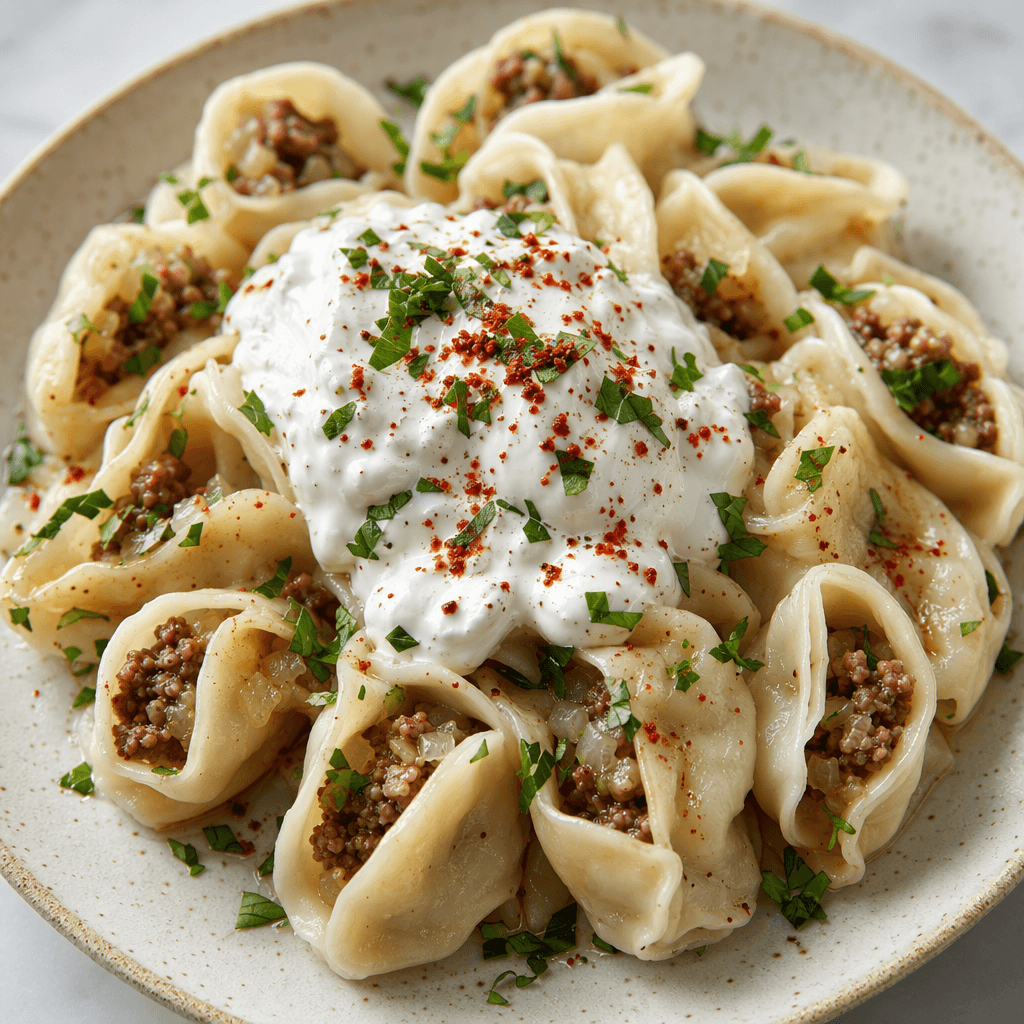
Uzbek manti Calories
Traditional Uzbek manti, thin dough parcels filled with spiced minced meat.
In season: Spring · Summer · Autumn · Winter
CALORIES
GI
POTASSIUM
FIBER
Quick answer
4 piece (medium) of Uzbek manti (120 g) has 252 calories. That works out to 210 calories per 100 g. It contains 32.4 g of carbs, 10.2 g of protein, 9 g of fat and 1.9 g of fiber. Its 0.5 µg of B12 covers 19% of the Daily Value. Its glycemic index is 65 (medium), so it raises blood sugar at a moderate pace.
What is Uzbek manti?
Uzbek manti are Central Asian dumplings made by wrapping seasoned minced meat and onion in thin dough, then steaming the pleated parcels. The wrappers turn tender while the filling stays juicy and savoury. In Uzbekistan and across the region, they’re commonly served hot as a substantial meal, often with yogurt or a tangy dairy topping, herbs and a little chilli or melted butter. For English-speaking tables, a crisp salad or pickled vegetables make a fresh contrast.
With meat inside, they provide protein, while the dough makes them a filling, carbohydrate-containing dish. Keep the meal lighter by using a modest amount of topping and adding plenty of vegetables.
Uzbek manti Nutrition Facts
Selected: 100 g
210
KCAL / 100G
Carbs
27g
· 10% DV
Protein
8.5g
· 17% DV
Fat
7.5g
· 10% DV
Fiber
1.6g
· 6% DV
DV is the share of the daily value covered, on a 2,000 kcal reference diet.
Calories come from: Carbs 52% · Protein 16% · Fat 32%
Uzbek manti Vitamins & Minerals
Vitamins
B12
0.38µg · 16% DV
B3
2.1mg · 13% DV
B1
0.13mg · 11% DV
B2
0.11mg · 8% DV
Minerals
Sodium
320mg · 14% DV
Selenium
7µg · 13% DV
Phosphorus
78mg · 11% DV
Zinc
1mg · 9% DV
How Nutritious Is Uzbek manti?
Nutrient density
Medium
How many vitamins, minerals and how much fiber this food carries per calorie. A high score means a lot of nutrition for few calories.
Satiety score
Medium
An EatBetter score computed from fiber, protein and calorie density. A high score means staying full longer on the same calories.
Both scores are calculated per 100 g and do not change with the selected portion. The satiety score is EatBetter's own calculation, not a clinical measure.
Uzbek manti Glycemic Index
GLYCEMIC INDEX
GLYCEMIC LOAD
Accounts for portion size — a more realistic measure than GI alone.
How to Burn Off Uzbek manti
To burn the 210 calories in 100 g:
🚶
Walking (5 km/h)
🏃
Running (8 km/h)
🚴
Cycling
🏊
Swimming
Times are calculated with the MET equation for a 70 kg adult. Actual burn varies with your weight, age and pace.
Is Uzbek manti Processed?
NOVA 3
Processed
1. Unprocessed
2. Minimally Processed
3. Processed
4. Ultra-Processed
NOVA classifies foods into 4 groups by industrial processing. NOVA 1 (unprocessed) is the healthiest.
Does Uzbek manti Contain Allergens?
Contains these allergens:
Which Diets Is Uzbek manti Good For?
Vegan
— Not suitable
Vegetarian
— Not suitable
Gluten-Free
— Not suitable
Dairy-Free
— Not suitable
Mediterranean
✓ Suitable
Paleo
— Not suitable
Whole30
— Not suitable
DASH
— Not suitable
Keto
— Not suitable
Low FODMAP
— Not suitable
Uzbek manti Fat Profile
SATURATED
2.3g
MONOUNSATURATED
2.7g
POLYUNSATURATED
0.35g
Omega 6:3 ratio 3.1:1
Below the ideal 4:1 — a good omega balance.
Compare Uzbek manti
Foods Similar to Uzbek manti
Frequently Asked Questions About Uzbek manti
What is Uzbek manti?
Uzbek manti are large, pleated dough parcels traditionally filled with minced meat and onion, then steamed. They are a Central Asian dish and are often served hot with sour cream or yogurt.
Is Uzbek manti steamed or boiled?
Uzbek manti is traditionally steamed, not boiled. Arrange the parcels with space between them in an oiled steamer so the dough cooks through without sticking to the rack or to one another.
What meat goes into Uzbek manti?
Uzbek manti is commonly filled with minced lamb or beef, onion, and seasoning. The onion helps keep the filling moist; some recipes also include small pieces of fat for a richer result.
How is Uzbek manti different from Turkish manti?
Uzbek manti is usually larger and steamed, while Turkish manti is often smaller and boiled. Turkish manti is commonly served with garlicky yogurt and a spiced butter sauce; Uzbek manti may come with sour cream or yogurt.
How do you fold Uzbek manti?
To fold Uzbek manti, place filling in the center of each dough square, bring opposite corners together, and pinch the seams closed. Keep the filling away from the edges so the dough seals securely during steaming.
Can you make Uzbek manti without a steamer?
Yes, you can make Uzbek manti without a dedicated steamer. Set a heatproof rack or perforated insert over a pot of gently simmering water, lightly oil it, and arrange the parcels above the water with the lid on.
What sauce is served with Uzbek manti?
Uzbek manti is often served with sour cream, and plain yogurt is a practical alternative. A little black pepper or fresh herbs can be added, but the filling itself is usually seasoned before cooking.
Can Uzbek manti be made with pumpkin?
Yes, pumpkin-filled Uzbek manti is a traditional variation. Cut the pumpkin into small pieces and combine it with onion and seasoning before filling the dough; this version has a sweeter, vegetable-based filling than the meat one.
Can you freeze Uzbek manti?
Yes, freeze Uzbek manti before cooking for the best texture. Freeze the parcels separately on a tray first, then transfer them to a sealed bag; steam them from frozen rather than thawing them.
How do you reheat leftover Uzbek manti?
Reheat leftover Uzbek manti gently in a steamer until hot throughout. This restores moisture to the dough better than prolonged microwave heating; keep leftovers covered in the refrigerator and use them within a few days.
Have another question about Uzbek manti?
Ask the AI nutrition coach — calories, portions, alternatives and more, answered in seconds in the app.

Scan calories with your camera
Instant AI nutrition analysis

Nutrition data compiled from USDA FoodData Central and scientific sources.