

Ready & Packaged Foods
All →Vegetables & Legumes
All →Desserts & Confectionery
All →Meat & Protein
All →Grains & Bakery
All →Beverages
All →Milk & Dairy
All →

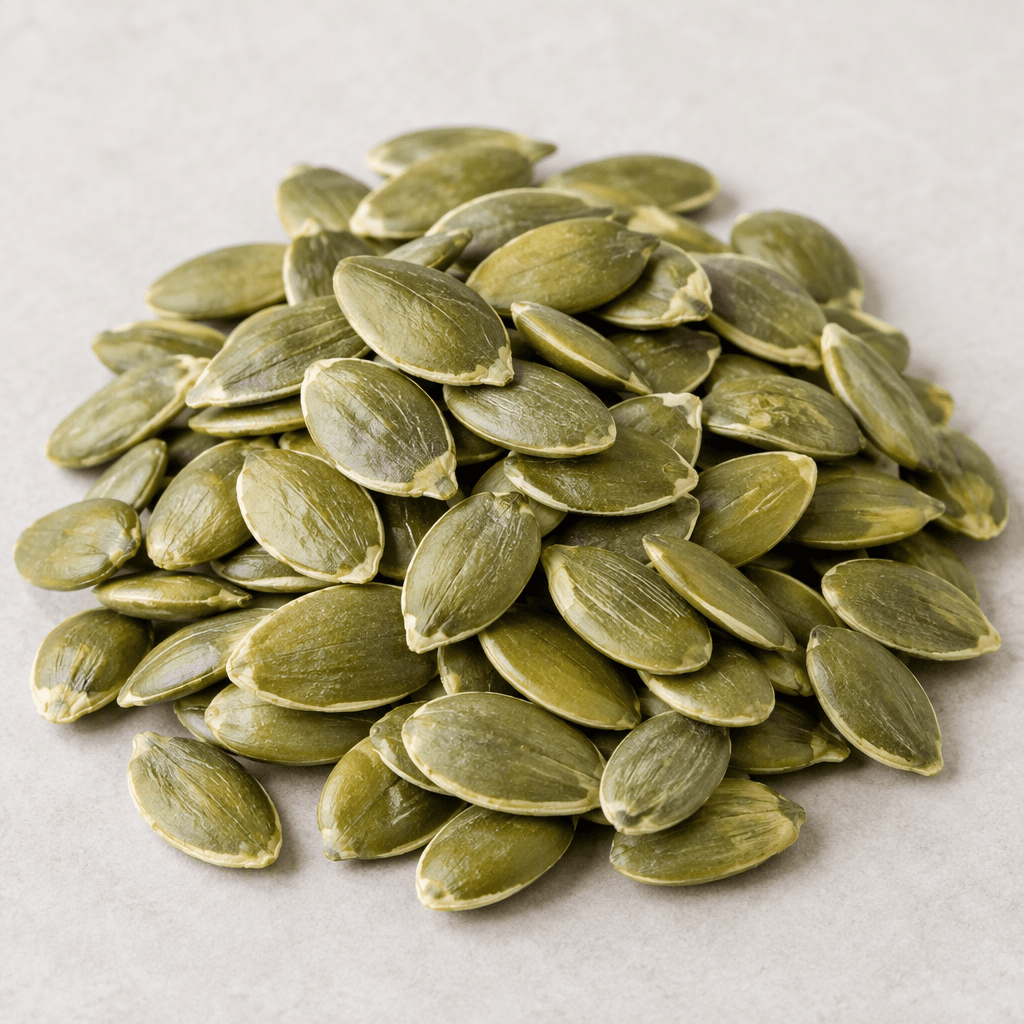
Unsalted pumpkin seeds Calories
Rich in magnesium and zinc, contains healthy fats
In season: Autumn
CALORIES
GI
POTASSIUM
FIBER
Quick answer
1 ounce (medium) of Unsalted pumpkin seeds (28 g) has 157 calories. That works out to 560 calories per 100 g. It contains 2.8 g of carbs, 8.4 g of protein, 13.7 g of fat and 1.7 g of fiber. Its 1.3 mg of Manganese covers 55% of the Daily Value. Its glycemic index is 10 (low), so it raises blood sugar slowly.
What is Unsalted pumpkin seeds?
Unsalted pumpkin seeds are the edible kernels of pumpkins, prepared without added salt. Their gently nutty flavour and crisp bite make them an easy snack, and they can also be stirred into dishes for extra crunch.
Enjoy them on their own, scatter them over salads, porridge or yoghurt, or blend them into sauces and spreads. They provide protein and mostly unsaturated fats, along with magnesium and zinc; 100 g contains 30 g of protein. Since they are energy-dense, a small handful is often enough. Toasting them briefly in a dry pan can bring out their flavour without adding salt.
Unsalted pumpkin seeds Nutrition Facts
Selected: 100 g
560
KCAL / 100G
Carbs
10g
· 4% DV
Protein
30g
· 60% DV
Fat
49g
· 63% DV
Fiber
6g
· 21% DV
DV is the share of the daily value covered, on a 2,000 kcal reference diet.
Calories come from: Carbs 7% · Protein 20% · Fat 73%
Unsalted pumpkin seeds Vitamins & Minerals
Vitamins
B3
4.99mg · 31% DV
B1
0.27mg · 23% DV
B5
0.75mg · 15% DV
Vitamin E
2.2mg · 15% DV
Minerals
Manganese
5mg · 217% DV
Phosphorus
1233mg · 176% DV
Magnesium
592mg · 141% DV
Copper
1mg · 111% DV
How Nutritious Is Unsalted pumpkin seeds?
Nutrient density
Very high
How many vitamins, minerals and how much fiber this food carries per calorie. A high score means a lot of nutrition for few calories.
Satiety score
High
An EatBetter score computed from fiber, protein and calorie density. A high score means staying full longer on the same calories.
Both scores are calculated per 100 g and do not change with the selected portion. The satiety score is EatBetter's own calculation, not a clinical measure.
Unsalted pumpkin seeds Glycemic Index
GLYCEMIC INDEX
GLYCEMIC LOAD
Accounts for portion size — a more realistic measure than GI alone.
How to Burn Off Unsalted pumpkin seeds
To burn the 560 calories in 100 g:
🚶
Walking (5 km/h)
🏃
Running (8 km/h)
🚴
Cycling
🏊
Swimming
Times are calculated with the MET equation for a 70 kg adult. Actual burn varies with your weight, age and pace.
Is Unsalted pumpkin seeds Processed?
NOVA 2
Minimally Processed
1. Unprocessed
2. Minimally Processed
3. Processed
4. Ultra-Processed
NOVA classifies foods into 4 groups by industrial processing. NOVA 1 (unprocessed) is the healthiest.
Does Unsalted pumpkin seeds Contain Allergens?
No known major allergens
Which Diets Is Unsalted pumpkin seeds Good For?
Vegan
✓ Suitable
Vegetarian
✓ Suitable
Gluten-Free
✓ Suitable
Dairy-Free
— Not suitable
Mediterranean
✓ Suitable
Paleo
✓ Suitable
Whole30
— Not suitable
DASH
— Not suitable
Keto
✓ Suitable
Low FODMAP
— Not suitable
Unsalted pumpkin seeds Fat Profile
SATURATED
8.7g
MONOUNSATURATED
16g
POLYUNSATURATED
21g
Omega 6:3 ratio 200:1
Above the ideal 4:1 (200:1).
Compare Unsalted pumpkin seeds
Foods Similar to Unsalted pumpkin seeds
Frequently Asked Questions About Unsalted pumpkin seeds
What are unsalted pumpkin seeds good for?
Unsalted pumpkin seeds provide magnesium, zinc, protein and unsaturated fats, which support normal body functions such as muscle and immune function. They are a nutritious food, but they do not treat or prevent a disease on their own.
Can you eat unsalted pumpkin seeds raw?
Yes, unsalted pumpkin seeds can be eaten raw or roasted. Raw seeds have a milder flavour and softer bite, while roasting brings out a nuttier taste. If the seeds are sold shelled, they are ready to eat straight from the packet.
Are the shells of unsalted pumpkin seeds edible?
Yes, the shells of whole pumpkin seeds are edible, though they can be tough and fibrous. Green, shelled kernels—often called pepitas—have already had the shell removed. If a shell feels difficult to chew, spit it out rather than swallowing it.
How do you roast unsalted pumpkin seeds?
Spread unsalted pumpkin seeds in a single layer in a dry skillet or on a baking tray. Cook over moderate heat, stirring or turning them often so they brown evenly without burning. They become crispier as they cool, so take them off the heat once fragrant.
How should you store unsalted pumpkin seeds?
Keep unsalted pumpkin seeds in an airtight container in a cool, dry place, away from sunlight and heat. Their natural oils can turn rancid over time. For longer storage, refrigerate them in a sealed container and check for an off smell before eating.
How can you eat unsalted pumpkin seeds?
Add unsalted pumpkin seeds to salads, oatmeal, soups, yoghurt or baked goods for crunch. You can also blend them into sauces or sprinkle them over roasted vegetables. Lightly toasting the seeds first gives them a stronger, nuttier flavour.
Do unsalted pumpkin seeds cause weight gain?
Unsalted pumpkin seeds do not automatically cause weight gain, but they are energy-dense, so large handfuls can add up quickly. Serve some in a small bowl instead of snacking from the packet, which makes it easier to notice how much you eat.
Do unsalted pumpkin seeds need to be soaked?
No, unsalted pumpkin seeds do not need to be soaked before eating or roasting. Soaking is optional and may soften them, but you must dry them thoroughly before roasting to help them crisp up and avoid steaming.
Can unsalted pumpkin seeds help you sleep?
Unsalted pumpkin seeds contain nutrients involved in normal body processes, but eating them has not been shown to reliably improve sleep. They are fine as an evening snack; if they feel heavy on your stomach, eat them earlier or have a smaller portion.
Are unsalted pumpkin seeds good for prostate health?
Unsalted pumpkin seeds are nutritious, but they are not a proven treatment or prevention for prostate problems. Eating them cannot replace medical assessment or evidence-based care if you have urinary symptoms or concerns about your prostate.
Have another question about Unsalted pumpkin seeds?
Ask the AI nutrition coach — calories, portions, alternatives and more, answered in seconds in the app.

Scan calories with your camera
Instant AI nutrition analysis

Nutrition data compiled from USDA FoodData Central and scientific sources.