

Ready & Packaged Foods
All →Vegetables & Legumes
All →Desserts & Confectionery
All →Meat & Protein
All →Grains & Bakery
All →Beverages
All →Milk & Dairy
All →

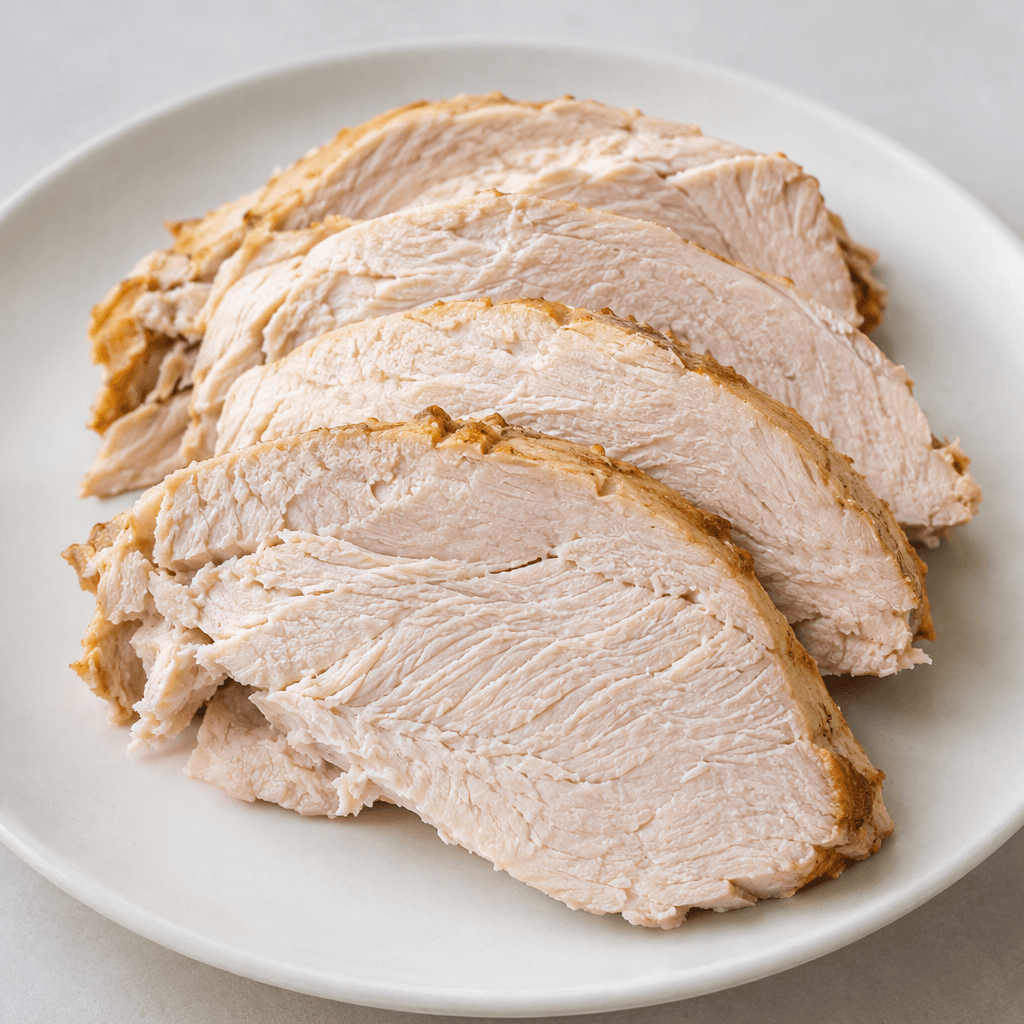
Turkey Calories
Lean protein, low fat, source of B vitamins
In season: Autumn · Winter
CALORIES
GI
POTASSIUM
FIBER
Quick answer
1 piece (medium) of Turkey (120 g) has 162 calories. That works out to 135 calories per 100 g. It contains 0 g of carbs, 34.8 g of protein, 1.8 g of fat and 0 g of fiber. Its 1.8 µg of B12 covers 75% of the Daily Value. Its glycemic index is 0 (low), so it raises blood sugar slowly.
What is Turkey?
Turkey is the lean, pale meat of a large domesticated bird, commonly sold as breast or thigh cuts, whole birds, and sliced deli meat. In North America it is closely associated with Thanksgiving and other holiday roasts, while elsewhere it is used much like chicken in everyday meals, from sandwiches to casseroles.
Its flavour is mild and savoury, with a firm, fibrous texture; breast meat can turn dry if overcooked. Roast it with vegetables, grill or pan-cook slices, or add cooked leftovers to soups and salads. Turkey is a protein-rich, low-fat choice: 100 grams provides 29 grams of protein. Pair it with vegetables and a moist sauce, or choose thigh meat when you want a less lean, more tender result.
Turkey Nutrition Facts
Selected: 100 g
135
KCAL / 100G
Carbs
0g
· 0% DV
Protein
29g
· 58% DV
Fat
1.5g
· 2% DV
Fiber
0g
· 0% DV
DV is the share of the daily value covered, on a 2,000 kcal reference diet.
Calories come from: Carbs 0% · Protein 90% · Fat 10%
Turkey Vitamins & Minerals
Vitamins
B12
1.5µg · 63% DV
B3
7.8mg · 49% DV
B6
0.7mg · 41% DV
B2
0.23mg · 18% DV
Minerals
Selenium
27µg · 49% DV
Phosphorus
210mg · 30% DV
Zinc
2mg · 18% DV
Potassium ⭐
250mg · 7% DV
How Nutritious Is Turkey?
Nutrient density
Very high
How many vitamins, minerals and how much fiber this food carries per calorie. A high score means a lot of nutrition for few calories.
Satiety score
Medium
An EatBetter score computed from fiber, protein and calorie density. A high score means staying full longer on the same calories.
Both scores are calculated per 100 g and do not change with the selected portion. The satiety score is EatBetter's own calculation, not a clinical measure.
Turkey Glycemic Index
GLYCEMIC INDEX
GLYCEMIC LOAD
Accounts for portion size — a more realistic measure than GI alone.
How to Burn Off Turkey
To burn the 135 calories in 100 g:
🚶
Walking (5 km/h)
🏃
Running (8 km/h)
🚴
Cycling
🏊
Swimming
Times are calculated with the MET equation for a 70 kg adult. Actual burn varies with your weight, age and pace.
Is Turkey Processed?
NOVA 1
Unprocessed
1. Unprocessed
2. Minimally Processed
3. Processed
4. Ultra-Processed
NOVA classifies foods into 4 groups by industrial processing. NOVA 1 (unprocessed) is the healthiest.
Does Turkey Contain Allergens?
No known major allergens
Which Diets Is Turkey Good For?
Vegan
— Not suitable
Vegetarian
— Not suitable
Gluten-Free
✓ Suitable
Dairy-Free
— Not suitable
Mediterranean
✓ Suitable
Paleo
✓ Suitable
Whole30
— Not suitable
DASH
— Not suitable
Keto
✓ Suitable
Low FODMAP
— Not suitable
Turkey Fat Profile
SATURATED
0.4g
MONOUNSATURATED
0.4g
POLYUNSATURATED
0.4g
Omega 6:3 ratio 6:1
Above the ideal 4:1 (6:1).
Compare Turkey
Foods Similar to Turkey
Frequently Asked Questions About Turkey
How do you cook turkey breast without drying it out?
Cook turkey breast just until it is fully done, then let it rest before slicing. Because the lean meat dries out when overcooked, covering it during cooking or using a marinade can help it stay moist.
How do you thaw a turkey safely?
Thaw turkey in the refrigerator, allowing it to stay cold as it defrosts. Avoid leaving it on the counter, where the outside can warm while the center is still frozen; cook it promptly once thawed.
How can you tell when turkey is cooked?
Check the thickest part with a food thermometer; it should reach a safe internal temperature, with no raw-looking meat near the bone. Color alone is not a reliable way to tell whether turkey is fully cooked.
Should you wash turkey before cooking it?
No, do not wash raw turkey. Rinsing can splash harmful bacteria onto nearby surfaces; cook the meat directly and thoroughly wash your hands, utensils, and cutting board after handling it.
How long does cooked turkey last in the fridge?
Cooked turkey usually keeps for 3–4 days in a covered container in the refrigerator. Refrigerate it promptly after the meal, and discard it if it develops an off smell or a sticky texture.
How do you keep a whole turkey moist while roasting?
Roast the turkey without letting it cook longer than needed, and shield the breast if it browns faster than the rest. Resting the bird before carving helps its juices settle instead of running onto the cutting board.
Is turkey healthier than chicken?
Neither is automatically healthier in every preparation. Turkey and chicken are both sources of protein, and lean cuts of either can fit into a balanced diet; skin, added fat, salt, and cooking method change the comparison.
Can you eat turkey that is pink after cooking?
Sometimes cooked turkey can remain slightly pink, so color by itself cannot confirm whether it is safe. Use a food thermometer in the thickest part rather than relying on appearance.
How long can raw turkey stay in the fridge before cooking?
Keep raw turkey refrigerated and cook it within 1–2 days of purchase. Store it sealed on the lowest shelf so juices cannot drip onto other foods; freeze it if you will not cook it in time.
What is the best way to season turkey?
Salt, pepper, herbs, garlic, and citrus all work well with turkey. Season it under the skin when possible so the flavor reaches the meat, and use a marinade or herb butter to add moisture as well as taste.
Have another question about Turkey?
Ask the AI nutrition coach — calories, portions, alternatives and more, answered in seconds in the app.

Scan calories with your camera
Instant AI nutrition analysis

Nutrition data compiled from USDA FoodData Central and scientific sources.