

Ready & Packaged Foods
All →Vegetables & Legumes
All →Desserts & Confectionery
All →Meat & Protein
All →Grains & Bakery
All →Beverages
All →Milk & Dairy
All →

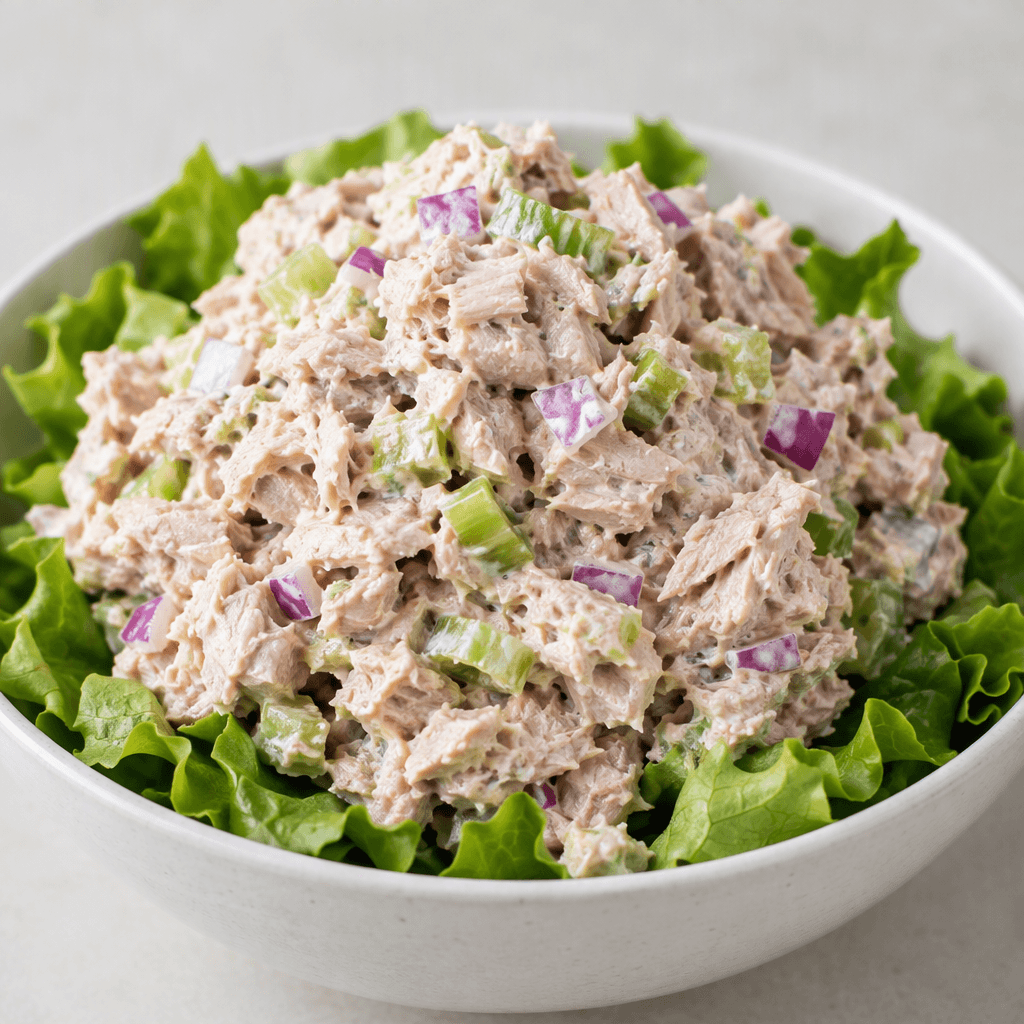
Tuna salad Calories
High protein, omega-3, low carb, source of vitamins and minerals
In season: Spring · Summer · Autumn · Winter
CALORIES
GI
POTASSIUM
FIBER
Quick answer
1 serving (medium) of Tuna salad (150 g) has 195 calories. That works out to 130 calories per 100 g. It contains 4.8 g of carbs, 21.8 g of protein, 9.3 g of fat and 2.4 g of fiber. Its 54 µg of Selenium covers 98% of the Daily Value. Its glycemic index is 35 (low), so it raises blood sugar slowly.
What is Tuna salad?
Tuna salad combines flaked tuna—often canned—with a creamy dressing and finely chopped ingredients such as celery and onion. It is commonly served on crisp lettuce, though recipes vary in how much dressing and which vegetables they include.
The taste is savoury and gently briny, with a soft, creamy texture balanced by crunchy vegetables. In the US and elsewhere, people often spoon it into sandwiches or wraps, serve it with crackers, or add it to a leafy salad for a quick lunch. It is protein-rich and relatively low in carbohydrates. For a lighter version, use less mayonnaise or mix it with yoghurt and lemon, then serve with extra greens.
Tuna salad Nutrition Facts
Selected: 100 g
130
KCAL / 100G
Carbs
3.2g
· 1% DV
Protein
14.5g
· 29% DV
Fat
6.2g
· 8% DV
Fiber
1.6g
· 6% DV
DV is the share of the daily value covered, on a 2,000 kcal reference diet.
Calories come from: Carbs 10% · Protein 46% · Fat 44%
Tuna salad Vitamins & Minerals
Vitamins
B12
1.1µg · 46% DV
B3
3.7mg · 23% DV
B6
0.22mg · 13% DV
Vitamin K
16µg · 13% DV
Minerals
Selenium
36µg · 65% DV
Phosphorus
120mg · 17% DV
Sodium
320mg · 14% DV
Iodine
18µg · 12% DV
How Nutritious Is Tuna salad?
Nutrient density
High
How many vitamins, minerals and how much fiber this food carries per calorie. A high score means a lot of nutrition for few calories.
Satiety score
Medium
An EatBetter score computed from fiber, protein and calorie density. A high score means staying full longer on the same calories.
Both scores are calculated per 100 g and do not change with the selected portion. The satiety score is EatBetter's own calculation, not a clinical measure.
Tuna salad Glycemic Index
GLYCEMIC INDEX
GLYCEMIC LOAD
Accounts for portion size — a more realistic measure than GI alone.
How to Burn Off Tuna salad
To burn the 130 calories in 100 g:
🚶
Walking (5 km/h)
🏃
Running (8 km/h)
🚴
Cycling
🏊
Swimming
Times are calculated with the MET equation for a 70 kg adult. Actual burn varies with your weight, age and pace.
Is Tuna salad Processed?
NOVA 2
Minimally Processed
1. Unprocessed
2. Minimally Processed
3. Processed
4. Ultra-Processed
NOVA classifies foods into 4 groups by industrial processing. NOVA 1 (unprocessed) is the healthiest.
Does Tuna salad Contain Allergens?
Contains these allergens:
Which Diets Is Tuna salad Good For?
Vegan
— Not suitable
Vegetarian
— Not suitable
Gluten-Free
✓ Suitable
Dairy-Free
— Not suitable
Mediterranean
✓ Suitable
Paleo
— Not suitable
Whole30
— Not suitable
DASH
— Not suitable
Keto
— Not suitable
Low FODMAP
— Not suitable
Tuna salad Fat Profile
SATURATED
1.2g
MONOUNSATURATED
2.1g
POLYUNSATURATED
1.1g
Omega 6:3 ratio 0.2:1
Below the ideal 4:1 — a good omega balance.
Compare Tuna salad
Foods Similar to Tuna salad
Frequently Asked Questions About Tuna salad
How do you make tuna salad?
To make tuna salad, drain canned tuna and mix it with chopped vegetables and a dressing. Celery, red onion, and mayonnaise are common additions; lemon juice and pepper brighten the flavor. Serve it over lettuce, in a sandwich, or with crackers.
What kind of tuna is best for tuna salad?
Canned tuna works best for a quick tuna salad because it flakes easily and mixes smoothly with the dressing. Tuna packed in water gives a milder, leaner result, while oil-packed tuna tastes richer; drain either type before mixing.
How do you keep tuna salad from getting watery?
Drain the tuna well and pat wet vegetables dry before mixing tuna salad. Add cucumber or tomatoes just before serving, since they release water as they sit. If the dressing seems loose, stir in a little more tuna rather than extra mayonnaise.
How long does tuna salad last in the fridge?
Tuna salad keeps for up to 3 days in a covered container in the refrigerator. Discard it if it has been at room temperature for more than 2 hours. Keep lettuce and other crisp toppings separate until serving to prevent them from wilting.
Can you freeze tuna salad?
Freezing tuna salad is not recommended. Mayonnaise-based dressing can separate after thawing, and crunchy vegetables such as celery lose their texture. For better results, freeze plain cooked or canned tuna separately and mix it with fresh dressing and vegetables after thawing.
What can you use instead of mayonnaise in tuna salad?
Greek yogurt is a creamy substitute for mayonnaise in tuna salad. Add lemon juice, mustard, and black pepper for extra flavor; a little olive oil and lemon also work if you prefer a lighter, less creamy dressing.
Is tuna salad healthy?
Tuna salad can be a nutritious meal, providing protein from tuna and additional nutrients from vegetables. Its overall balance depends on the dressing and additions: use plenty of vegetables and a measured amount of mayonnaise, or choose yogurt for a tangier alternative.
Is tuna salad good for weight loss?
Tuna salad can fit into a weight-loss eating plan because protein can help make a meal satisfying. Keep the mayonnaise portion moderate and add plenty of vegetables; serving it in a large, buttery sandwich can change the meal substantially.
What should you serve with tuna salad?
Tuna salad pairs well with whole-grain bread, crackers, or a baked potato. For a lighter plate, serve it over leafy greens or alongside vegetable soup. If you are making a sandwich, add crisp lettuce or sliced tomato just before eating.
Can you make tuna salad with fresh tuna instead of canned?
Yes, you can make tuna salad with cooked fresh tuna. Let the fish cool, flake it into small pieces, and mix it gently with the dressing and vegetables. Fresh tuna has a firmer texture and milder flavor than many canned varieties.
Have another question about Tuna salad?
Ask the AI nutrition coach — calories, portions, alternatives and more, answered in seconds in the app.

Scan calories with your camera
Instant AI nutrition analysis

Nutrition data compiled from USDA FoodData Central and scientific sources.