

Ready & Packaged Foods
All →Vegetables & Legumes
All →Desserts & Confectionery
All →Meat & Protein
All →Grains & Bakery
All →Beverages
All →Milk & Dairy
All →

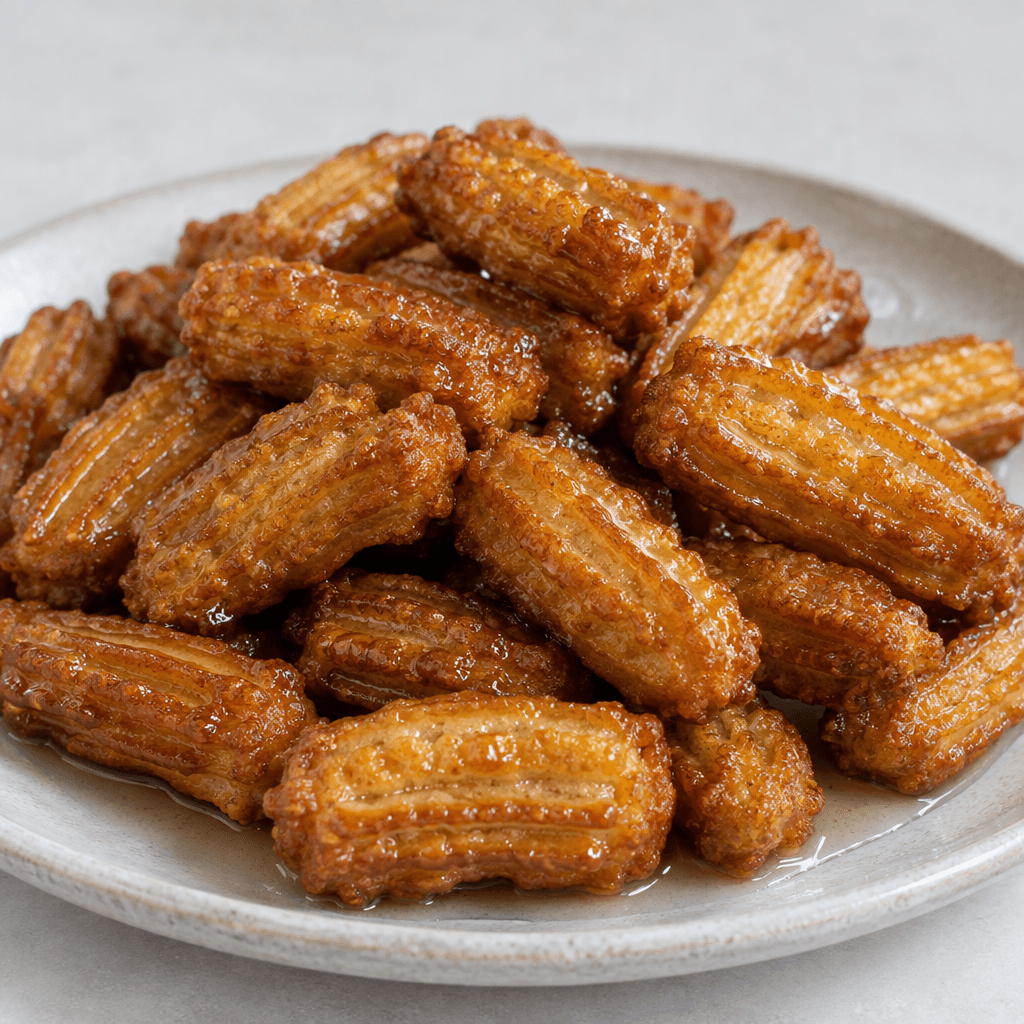
Tulumba Calories
Fried syrup-soaked pastry
In season: Spring · Summer · Autumn · Winter
CALORIES
GI
POTASSIUM
FIBER
Quick answer
3 piece (medium) of Tulumba (60 g) has 210 calories. That works out to 350 calories per 100 g. It contains 33 g of carbs, 2.1 g of protein, 7.2 g of fat and 0.7 g of fiber. Its glycemic index is 75 (high), so it raises blood sugar quickly.
What is Tulumba?
Tulumba is a Turkish syrup dessert made from an egg-and-flour dough piped into short ridged pieces, fried until golden, then soaked in sugar syrup. It is closely associated with Turkish and Ottoman-style sweets and is also familiar across parts of the Balkans and the eastern Mediterranean.
Crisp on the outside and soft and syrupy inside, it is usually served cool or at room temperature after a meal, often with tea or coffee. Turkish bakeries and households also serve it at Ramadan gatherings. The syrup makes it carbohydrate-heavy, while frying adds fat, and it offers little protein or fibre. Because the sweetness is concentrated, a small serving with unsweetened tea is often enough.
Tulumba Nutrition Facts
Selected: 100 g
350
KCAL / 100G
Carbs
55g
· 20% DV
Protein
3.5g
· 7% DV
Fat
12g
· 15% DV
Fiber
1.2g
· 4% DV
DV is the share of the daily value covered, on a 2,000 kcal reference diet.
Calories come from: Carbs 64% · Protein 4% · Fat 32%
Tulumba Vitamins & Minerals
Vitamins
Biotin
1.2µg · 4% DV
Vitamin E
0.6mg · 4% DV
B1
0.04mg · 3% DV
B5
0.13mg · 3% DV
Minerals
Iron
1mg · 6% DV
Sodium
120mg · 5% DV
Selenium
2.5µg · 5% DV
Phosphorus
38mg · 5% DV
How Nutritious Is Tulumba?
Nutrient density
Low
How many vitamins, minerals and how much fiber this food carries per calorie. A high score means a lot of nutrition for few calories.
Satiety score
Low
An EatBetter score computed from fiber, protein and calorie density. A high score means staying full longer on the same calories.
Both scores are calculated per 100 g and do not change with the selected portion. The satiety score is EatBetter's own calculation, not a clinical measure.
Tulumba Glycemic Index
GLYCEMIC INDEX
GLYCEMIC LOAD
Accounts for portion size — a more realistic measure than GI alone.
How to Burn Off Tulumba
To burn the 350 calories in 100 g:
🚶
Walking (5 km/h)
🏃
Running (8 km/h)
🚴
Cycling
🏊
Swimming
Times are calculated with the MET equation for a 70 kg adult. Actual burn varies with your weight, age and pace.
Is Tulumba Processed?
NOVA 4
Ultra-Processed
1. Unprocessed
2. Minimally Processed
3. Processed
4. Ultra-Processed
NOVA classifies foods into 4 groups by industrial processing. NOVA 1 (unprocessed) is the healthiest.
Does Tulumba Contain Allergens?
Contains these allergens:
Which Diets Is Tulumba Good For?
Vegan
— Not suitable
Vegetarian
✓ Suitable
Gluten-Free
— Not suitable
Dairy-Free
— Not suitable
Mediterranean
— Not suitable
Paleo
— Not suitable
Whole30
— Not suitable
DASH
— Not suitable
Keto
— Not suitable
Low FODMAP
— Not suitable
Tulumba Fat Profile
SATURATED
3.5g
MONOUNSATURATED
4.5g
POLYUNSATURATED
2.3g
Omega 6:3 ratio 110:1
Above the ideal 4:1 (110:1).
Compare Tulumba
Foods Similar to Tulumba
Frequently Asked Questions About Tulumba
What is Tulumba, and what does it taste like?
Tulumba is a deep-fried pastry made from piped dough and soaked in sugar syrup. It has a ridged, crisp outside and a soft, syrupy center, with a sweet flavor rather than the cinnamon-and-sugar coating associated with many fried pastries.
Where does Tulumba come from?
Tulumba is associated with Ottoman cuisine and is now popular in Turkey and across parts of the Balkans and the eastern Mediterranean. Because it spread through several regional food traditions, it is difficult to assign it to one modern country or city.
How is Tulumba made?
Tulumba is made by cooking a flour-based dough, mixing in eggs, and piping it through a ridged nozzle into hot oil. The fried pieces are then dipped in sugar syrup, often cooled, so they absorb sweetness while retaining some crispness.
Is Tulumba the same as churros?
No. Tulumba and churros are both piped, fried dough pastries, but Tulumba is soaked in sugar syrup and usually has a ridged, compact shape. Churros are commonly served dry with a sugar coating or alongside a chocolate dip.
Why does Tulumba turn soggy?
Tulumba turns soggy when it absorbs too much syrup or sits in syrup for too long. For a crisper result, let excess syrup drain after dipping and eat the pastries soon after they are made; their texture naturally softens as they stand.
How do you keep Tulumba crisp after frying?
To help Tulumba stay crisp, fry it until evenly golden, dip it briefly in cooled syrup, and let the extra syrup drip off. Store the pieces in a single layer rather than piling them up, since trapped moisture softens their ridged surfaces.
Can you freeze Tulumba?
Yes, Tulumba can be frozen, although thawing may soften its crisp shell. Freeze the pastries in a single layer before transferring them to an airtight container. Thaw them at room temperature and warm briefly in an oven if you want to refresh the outside.
How should you reheat Tulumba?
Reheat Tulumba briefly in a low oven to bring back some crispness; avoid the microwave, which tends to make the syrup-soaked pastry soft and chewy. Since reheating cannot fully restore freshly fried texture, warm only the pieces you plan to eat.
Why does Tulumba have ridges?
Tulumba’s ridges come from piping the dough through a star-shaped nozzle before frying. They give the pastry its recognizable grooved shape and create extra surface area for the syrup to cling to.
Is Tulumba served hot or cold?
Tulumba is usually served at room temperature or cool, after the fried pastry has absorbed the syrup. It does not need to be piping hot; letting it cool also makes the syrup less runny and the pieces easier to serve.
Have another question about Tulumba?
Ask the AI nutrition coach — calories, portions, alternatives and more, answered in seconds in the app.

Scan calories with your camera
Instant AI nutrition analysis

Nutrition data compiled from USDA FoodData Central and scientific sources.