

Ready & Packaged Foods
All →Vegetables & Legumes
All →Desserts & Confectionery
All →Meat & Protein
All →Grains & Bakery
All →Beverages
All →Milk & Dairy
All →

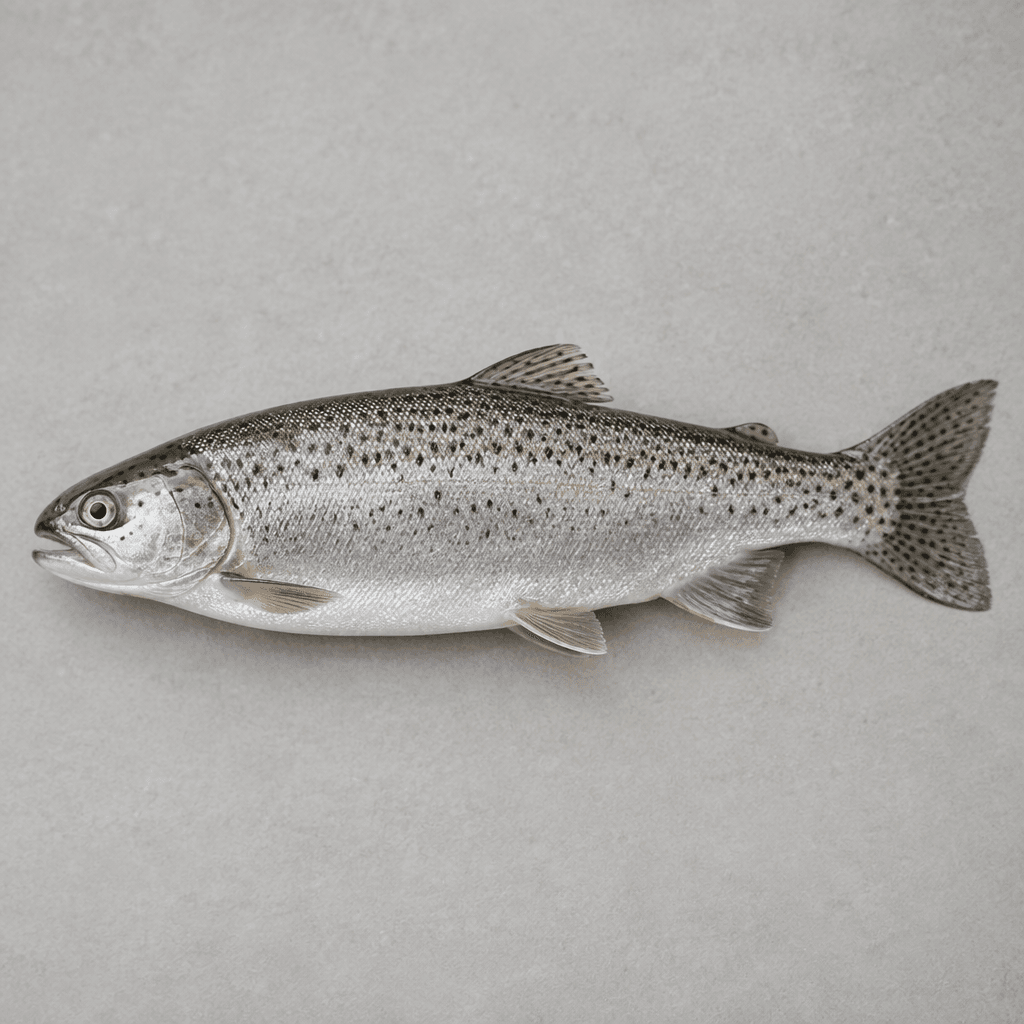
Trout Calories
Rich in omega-3, high protein, low fat
In season: Spring · Summer · Autumn
CALORIES
GI
POTASSIUM
FIBER
Quick answer
1 piece (medium) of Trout (150 g) has 179 calories. That works out to 119 calories per 100 g. It contains 0 g of carbs, 30.8 g of protein, 5.3 g of fat and 0 g of fiber. Its 6.8 µg of B12 covers 281% of the Daily Value. Its glycemic index is 0 (low), so it raises blood sugar slowly.
What is Trout?
Trout is a freshwater fish found in rivers and lakes, and it is also widely raised in aquaculture. Its mild flavour and tender flesh have made it a familiar choice in many regions, from mountain communities to everyday home kitchens.
It is commonly grilled, baked or pan-fried, and may be served whole with lemon, herbs and vegetables, or as fillets alongside potatoes or a salad. Trout is high in protein and relatively lean; baking or grilling keeps the meal simple without adding much extra fat. Its delicate taste pairs well with bright, fresh seasonings rather than heavy sauces.
Trout Nutrition Facts
Selected: 100 g
119
KCAL / 100G
Carbs
0g
· 0% DV
Protein
20.5g
· 41% DV
Fat
3.5g
· 4% DV
Fiber
0g
· 0% DV
DV is the share of the daily value covered, on a 2,000 kcal reference diet.
Calories come from: Carbs 0% · Protein 72% · Fat 28%
Trout Vitamins & Minerals
Vitamins
B12
4.5µg · 188% DV
Vitamin D
7.5µg · 38% DV
B3
5.1mg · 32% DV
B5
1.1mg · 22% DV
Minerals
Phosphorus
220mg · 31% DV
Selenium
12µg · 22% DV
Iodine
25µg · 17% DV
Potassium ⭐
370mg · 11% DV
How Nutritious Is Trout?
Nutrient density
Very high
How many vitamins, minerals and how much fiber this food carries per calorie. A high score means a lot of nutrition for few calories.
Satiety score
Medium
An EatBetter score computed from fiber, protein and calorie density. A high score means staying full longer on the same calories.
Both scores are calculated per 100 g and do not change with the selected portion. The satiety score is EatBetter's own calculation, not a clinical measure.
Trout Glycemic Index
GLYCEMIC INDEX
GLYCEMIC LOAD
Accounts for portion size — a more realistic measure than GI alone.
How to Burn Off Trout
To burn the 119 calories in 100 g:
🚶
Walking (5 km/h)
🏃
Running (8 km/h)
🚴
Cycling
🏊
Swimming
Times are calculated with the MET equation for a 70 kg adult. Actual burn varies with your weight, age and pace.
Is Trout Processed?
NOVA 1
Unprocessed
1. Unprocessed
2. Minimally Processed
3. Processed
4. Ultra-Processed
NOVA classifies foods into 4 groups by industrial processing. NOVA 1 (unprocessed) is the healthiest.
Does Trout Contain Allergens?
Contains these allergens:
Which Diets Is Trout Good For?
Vegan
— Not suitable
Vegetarian
— Not suitable
Gluten-Free
✓ Suitable
Dairy-Free
— Not suitable
Mediterranean
✓ Suitable
Paleo
✓ Suitable
Whole30
— Not suitable
DASH
— Not suitable
Keto
✓ Suitable
Low FODMAP
— Not suitable
Trout Fat Profile
SATURATED
0.9g
MONOUNSATURATED
1.1g
POLYUNSATURATED
1.2g
Omega 6:3 ratio 0.1:1
Below the ideal 4:1 — a good omega balance.
Compare Trout
Foods Similar to Trout
Frequently Asked Questions About Trout
How do you cook trout in an air fryer?
Trout cooks well in an air fryer, either as a fillet or a small whole fish. Brush it lightly with oil and season it, then cook until the flesh is opaque and separates easily with a fork; avoid crowding the basket.
Does trout taste fishy?
Fresh trout usually has a mild, delicate flavor rather than a strongly fishy taste. A sharp sour or ammonia-like odor is a warning sign of spoilage, not a normal feature of trout. Lemon and herbs pair well with its gentle flavor.
Is rainbow trout the same as trout?
Rainbow trout is one kind of trout, not a separate name for every trout. It is known for a colorful stripe along its sides. Other trout, such as brown trout, differ in appearance and habitat.
How do you know when trout is fully cooked?
Trout is cooked when its flesh turns opaque and flakes apart easily with a fork. Check the thickest part of the fish, especially when cooking a whole trout, since it takes longer to cook through than the thinner edges.
Can you eat trout skin?
Yes, trout skin is edible when the fish has been properly cleaned and cooked. For a crisp finish, cook a fillet skin-side down in a hot pan. Skip the skin if the scales have not been removed.
How do you remove bones from trout?
To debone cooked trout, lift the flesh away from the backbone and remove the fine pin bones with your fingers or tweezers. Check each portion carefully before serving, particularly when preparing trout for children.
Is trout a freshwater fish?
Most trout live in freshwater rivers and lakes, although some types migrate to the sea and return to freshwater to spawn. The habitat varies by species, so “trout” does not always mean a fish that stays in rivers.
Can you freeze fresh trout?
Yes, fresh trout freezes well when wrapped tightly to limit air exposure. Freeze it as soon as possible, and thaw it in the refrigerator rather than on the counter. Once thawed, cook it promptly and do not refreeze it raw.
Why does trout sometimes taste muddy?
A muddy flavor in trout can come from naturally occurring compounds in the water where it lived. That flavor alone does not prove the fish is spoiled; a sour or ammonia-like smell is a more concerning sign.
Can you eat trout raw?
Eating raw trout is not recommended unless it has been handled and prepared specifically for raw consumption. Raw freshwater fish can carry parasites, so cooking trout until the flesh is opaque and flakes easily is the safer choice.
Have another question about Trout?
Ask the AI nutrition coach — calories, portions, alternatives and more, answered in seconds in the app.

Scan calories with your camera
Instant AI nutrition analysis

Nutrition data compiled from USDA FoodData Central and scientific sources.