

Ready & Packaged Foods
All →Vegetables & Legumes
All →Desserts & Confectionery
All →Meat & Protein
All →Grains & Bakery
All →Beverages
All →Milk & Dairy
All →

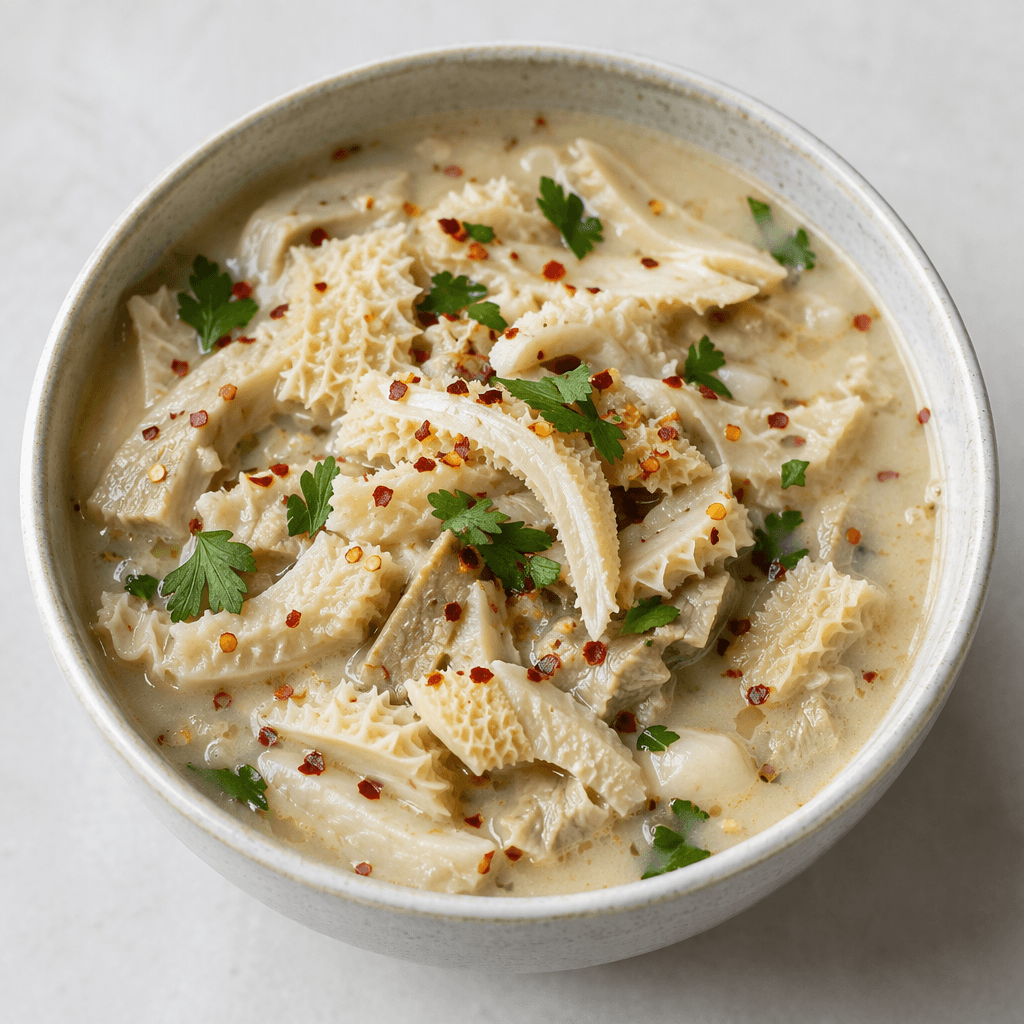
Tripe Soup Calories
Protein source, rich in collagen, traditional soup
In season: Winter
CALORIES
GI
POTASSIUM
FIBER
Quick answer
1 cup (medium) of Tripe Soup (250 g) has 138 calories. That works out to 55 calories per 100 g. It contains 6.3 g of carbs, 13.8 g of protein, 6.3 g of fat and 0.3 g of fiber. Its 1.1 µg of B12 covers 47% of the Daily Value. Its glycemic index is 35 (low), so it raises blood sugar slowly.
What is Tripe Soup?
Turkish Tripe Soup is made by simmering cleaned beef tripe until tender, then serving it in a savoury broth. Some versions are lightly thickened or enriched, so the soup can range from clear and delicate to pale and creamy; recipes vary between cooks and soup shops.
The tripe is usually cut into soft strips, and the bowl is brought to the table hot with lemon or garlic vinegar, chilli and sometimes a buttery pepper topping. In Turkey it is a familiar late-night soup-shop choice, though it is also enjoyed at other times of day. It provides protein and collagen, while remaining relatively light compared with many creamy soups. For a lighter bowl, use less butter and add lemon or vinegar for brightness.
Tripe Soup Nutrition Facts
Selected: 100 g
55
KCAL / 100G
Carbs
2.5g
· 1% DV
Protein
5.5g
· 11% DV
Fat
2.5g
· 3% DV
Fiber
0.1g
· 0% DV
DV is the share of the daily value covered, on a 2,000 kcal reference diet.
Calories come from: Carbs 18% · Protein 40% · Fat 42%
Tripe Soup Vitamins & Minerals
Vitamins
B12
0.45µg · 19% DV
B2
0.09mg · 7% DV
B3
0.85mg · 5% DV
B5
0.18mg · 4% DV
Minerals
Sodium
320mg · 14% DV
Zinc
1mg · 9% DV
Iron
1mg · 6% DV
Selenium
3.5µg · 6% DV
How Nutritious Is Tripe Soup?
Nutrient density
High
How many vitamins, minerals and how much fiber this food carries per calorie. A high score means a lot of nutrition for few calories.
Satiety score
Medium
An EatBetter score computed from fiber, protein and calorie density. A high score means staying full longer on the same calories.
Both scores are calculated per 100 g and do not change with the selected portion. The satiety score is EatBetter's own calculation, not a clinical measure.
Tripe Soup Glycemic Index
GLYCEMIC INDEX
GLYCEMIC LOAD
Accounts for portion size — a more realistic measure than GI alone.
How to Burn Off Tripe Soup
To burn the 55 calories in 100 g:
🚶
Walking (5 km/h)
🏃
Running (8 km/h)
🚴
Cycling
🏊
Swimming
Times are calculated with the MET equation for a 70 kg adult. Actual burn varies with your weight, age and pace.
Is Tripe Soup Processed?
NOVA 2
Minimally Processed
1. Unprocessed
2. Minimally Processed
3. Processed
4. Ultra-Processed
NOVA classifies foods into 4 groups by industrial processing. NOVA 1 (unprocessed) is the healthiest.
Does Tripe Soup Contain Allergens?
No known major allergens
Which Diets Is Tripe Soup Good For?
Vegan
— Not suitable
Vegetarian
— Not suitable
Gluten-Free
✓ Suitable
Dairy-Free
— Not suitable
Mediterranean
✓ Suitable
Paleo
✓ Suitable
Whole30
— Not suitable
DASH
— Not suitable
Keto
— Not suitable
Low FODMAP
— Not suitable
Tripe Soup Fat Profile
SATURATED
1.1g
MONOUNSATURATED
0.7g
POLYUNSATURATED
0.2g
Omega 6:3 ratio 1.3:1
Below the ideal 4:1 — a good omega balance.
Compare Tripe Soup
Foods Similar to Tripe Soup
Frequently Asked Questions About Tripe Soup
What is Tripe Soup made of?
Tripe Soup is made with the edible stomach lining of an animal, most often beef, cooked until tender in a seasoned broth. Turkish versions are commonly served with garlic, vinegar and red pepper.
What does tripe in Tripe Soup taste like?
Tripe has a mild, savory flavor and a springy, slightly chewy texture when cooked properly. In Tripe Soup, it takes on the flavor of the broth and the sharp garlic-and-vinegar condiments served alongside it.
How do you make Tripe Soup at home?
To make Tripe Soup, simmer cleaned tripe until tender, cut it into strips, then return it to the broth. Recipes may thicken the soup with flour or enrich it with an egg-and-lemon tempering.
How do you clean tripe for Tripe Soup?
Rinse tripe thoroughly and remove any remaining residue before cooking; pre-cleaned tripe from a butcher saves substantial preparation. Follow the package or butcher’s handling advice, and simmer the tripe until fully tender before adding it to the soup.
Why is garlic vinegar served with Tripe Soup?
Garlic vinegar adds a bright, sharp contrast to the rich, savory broth and the mild flavor of tripe. It is usually stirred into each bowl to taste, rather than cooked into the whole pot.
Is Tripe Soup healthy?
Tripe Soup can be a filling source of protein, but its overall nutritional profile varies with the broth, thickener, salt and added fat. A homemade version lets you control those ingredients and keep the seasoning moderate.
Does Tripe Soup contain collagen?
Yes, tripe contains connective tissue, so Tripe Soup can contain collagen. Eating collagen-containing food does not mean that its collagen is delivered directly to a particular part of the body.
How is Turkish Tripe Soup different from menudo?
Turkish Tripe Soup is commonly served with garlic vinegar and red pepper, while Mexican menudo is often seasoned with dried chiles and may include hominy. Recipes vary by region, but both are soups built around cooked tripe.
How long does Tripe Soup keep in the refrigerator?
Store Tripe Soup promptly in a covered container in the refrigerator and use it within a few days. Reheat only the portion you plan to eat, and discard it if it develops an unusual smell or appearance.
Can you freeze Tripe Soup?
Yes, Tripe Soup can be frozen in an airtight, freezer-safe container. Leave room for expansion and thaw it in the refrigerator; the broth may separate slightly, so stir it while reheating until hot throughout.
Have another question about Tripe Soup?
Ask the AI nutrition coach — calories, portions, alternatives and more, answered in seconds in the app.

Scan calories with your camera
Instant AI nutrition analysis

Nutrition data compiled from USDA FoodData Central and scientific sources.