

Ready & Packaged Foods
All →Vegetables & Legumes
All →Desserts & Confectionery
All →Meat & Protein
All →Grains & Bakery
All →Beverages
All →Milk & Dairy
All →

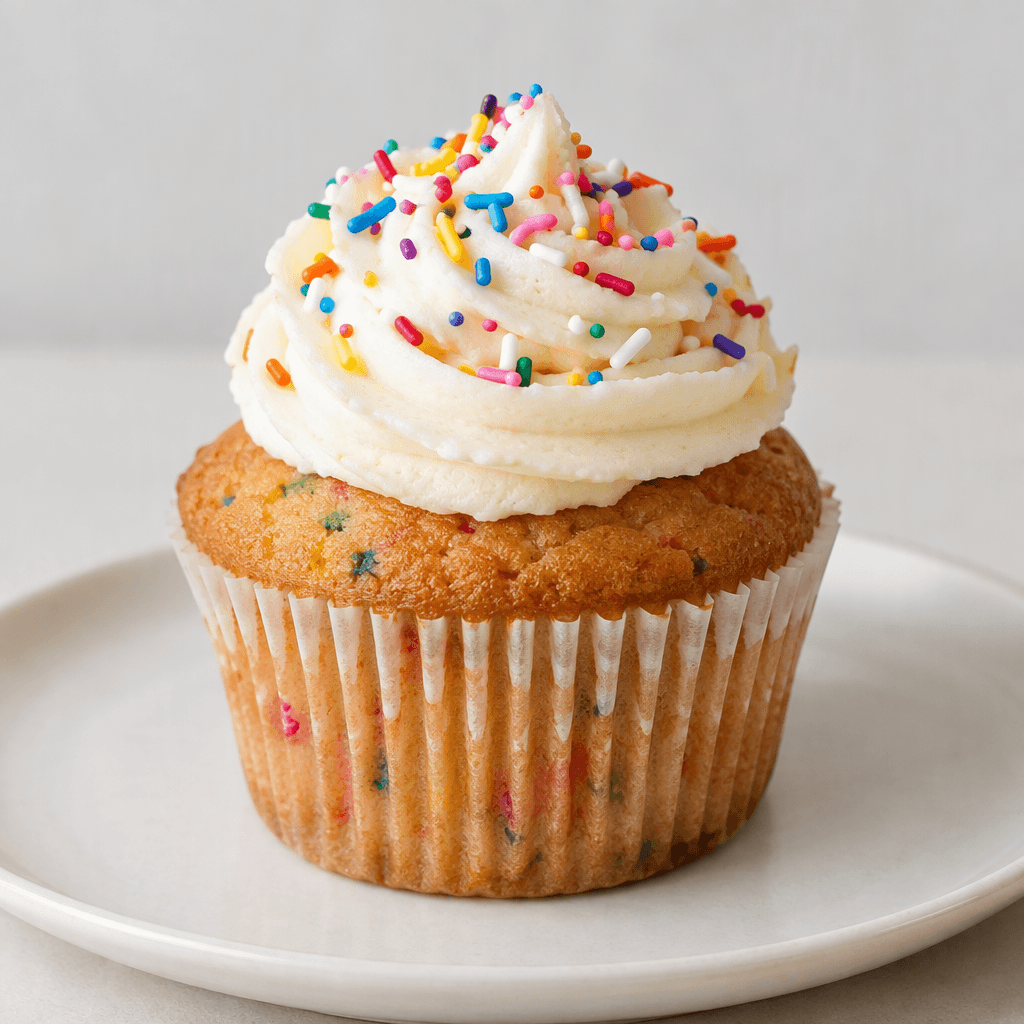
Cupcake Calories
Small cake, usually sweet and decorated
In season: Spring · Summer · Autumn · Winter
CALORIES
GI
POTASSIUM
FIBER
Quick answer
1 piece (medium) of Cupcake (60 g) has 222 calories. That works out to 370 calories per 100 g. It contains 33 g of carbs, 2.7 g of protein, 9 g of fat and 0.7 g of fiber. Its 0.1 mg of B2 covers 7% of the Daily Value. Its glycemic index is 65 (high), so it raises blood sugar quickly.
What is Cupcake?
Topkek is a Turkish packaged snack cake sold in individual portions. Depending on the variety, it may be plain, cocoa-flavoured or filled; it is better understood as a soft, sweet cake for a quick bite than as a frosted cupcake. In Turkey, people commonly enjoy it with tea or grab one between school, work and other daily activities. It can also be packed as a treat, though it is usually a snack rather than a meal.
Its nutrition is mainly made up of carbohydrates and fat, with comparatively little protein or fibre. For a more sustaining snack, pair Topkek with plain yoghurt or milk, and keep the portion in mind if you are having other sweets.
Cupcake Nutrition Facts
Selected: 100 g
370
KCAL / 100G
Carbs
55g
· 20% DV
Protein
4.5g
· 9% DV
Fat
15g
· 19% DV
Fiber
1.2g
· 4% DV
DV is the share of the daily value covered, on a 2,000 kcal reference diet.
Calories come from: Carbs 59% · Protein 5% · Fat 36%
Cupcake Vitamins & Minerals
Vitamins
B2
0.16mg · 12% DV
B1
0.12mg · 10% DV
Vitamin A
60µg · 7% DV
Biotin
2µg · 7% DV
Minerals
Phosphorus
85mg · 12% DV
Selenium
6µg · 11% DV
Sodium
220mg · 10% DV
Calcium
55mg · 6% DV
How Nutritious Is Cupcake?
Nutrient density
Low
How many vitamins, minerals and how much fiber this food carries per calorie. A high score means a lot of nutrition for few calories.
Satiety score
Low
An EatBetter score computed from fiber, protein and calorie density. A high score means staying full longer on the same calories.
Both scores are calculated per 100 g and do not change with the selected portion. The satiety score is EatBetter's own calculation, not a clinical measure.
Cupcake Glycemic Index
GLYCEMIC INDEX
GLYCEMIC LOAD
Accounts for portion size — a more realistic measure than GI alone.
How to Burn Off Cupcake
To burn the 370 calories in 100 g:
🚶
Walking (5 km/h)
🏃
Running (8 km/h)
🚴
Cycling
🏊
Swimming
Times are calculated with the MET equation for a 70 kg adult. Actual burn varies with your weight, age and pace.
Is Cupcake Processed?
NOVA 3
Processed
1. Unprocessed
2. Minimally Processed
3. Processed
4. Ultra-Processed
NOVA classifies foods into 4 groups by industrial processing. NOVA 1 (unprocessed) is the healthiest.
Does Cupcake Contain Allergens?
Contains these allergens:
Which Diets Is Cupcake Good For?
Vegan
— Not suitable
Vegetarian
— Not suitable
Gluten-Free
— Not suitable
Dairy-Free
— Not suitable
Mediterranean
— Not suitable
Paleo
— Not suitable
Whole30
— Not suitable
DASH
— Not suitable
Keto
— Not suitable
Low FODMAP
— Not suitable
Cupcake Fat Profile
SATURATED
4.5g
MONOUNSATURATED
5.2g
POLYUNSATURATED
1.3g
Omega 6:3 ratio 30:1
Above the ideal 4:1 (30:1).
Compare Cupcake
Foods Similar to Cupcake
Frequently Asked Questions About Cupcake
What is a cupcake made of?
A cupcake is a small cake usually made with flour, sugar, eggs, and butter or oil, with a raising agent to make the batter rise. It is often topped with frosting; recipes and toppings vary.
What is the difference between a cupcake and a muffin?
Cupcakes are usually sweeter and finished with frosting, while muffins are commonly served without frosting and may include fruit, nuts, or other mix-ins. The distinction is not absolute, and recipes can overlap.
How should cupcakes be stored?
Keep unfrosted cupcakes in an airtight container at room temperature. Frosted cupcakes with cream cheese or another perishable topping should be refrigerated; let them come toward room temperature before serving for a softer texture.
How long do cupcakes stay fresh?
Unfrosted cupcakes are generally best within a couple of days when kept airtight at room temperature. Cupcakes with perishable frosting need refrigeration, and their freshness depends on the topping and how they were stored.
Can you freeze cupcakes?
Yes. Freeze cooled cupcakes in an airtight container, ideally without frosting, and thaw them at room temperature before decorating. Frosting can also be frozen separately; its texture may need a gentle stir after thawing.
Why do cupcakes sink in the middle?
Cupcakes often sink when the centers have not finished setting before they are removed from the oven. Opening the oven early, overmixing the batter, or using too much raising agent can also leave them sunken.
Why do cupcake wrappers pull away from the cake?
Wrappers can pull away when cupcakes cool in a humid or covered space, or when the cakes are stored while still warm. Let them cool fully on a rack, then store them in a dry, airtight container.
Can you make cupcakes without paper liners?
Yes. Grease each well of the cupcake pan thoroughly and dust it lightly with flour, or use a reliable baking spray. Let the cakes cool briefly before loosening the edges and lifting them out.
How do you keep cupcake frosting from melting?
Let cupcakes cool completely before adding frosting; even a warm cake can soften it. Keep frosted cupcakes out of direct sun and heat, and refrigerate toppings such as cream cheese frosting until shortly before serving.
Can cupcakes be made ahead for a party?
Yes. Bake the cupcakes ahead and store them unfrosted in an airtight container; add the frosting closer to serving so it stays neat. If the topping needs refrigeration, keep the finished cupcakes chilled until serving time.
Have another question about Cupcake?
Ask the AI nutrition coach — calories, portions, alternatives and more, answered in seconds in the app.

Scan calories with your camera
Instant AI nutrition analysis

Nutrition data compiled from USDA FoodData Central and scientific sources.