

Ready & Packaged Foods
All →Vegetables & Legumes
All →Desserts & Confectionery
All →Meat & Protein
All →Grains & Bakery
All →Beverages
All →Milk & Dairy
All →

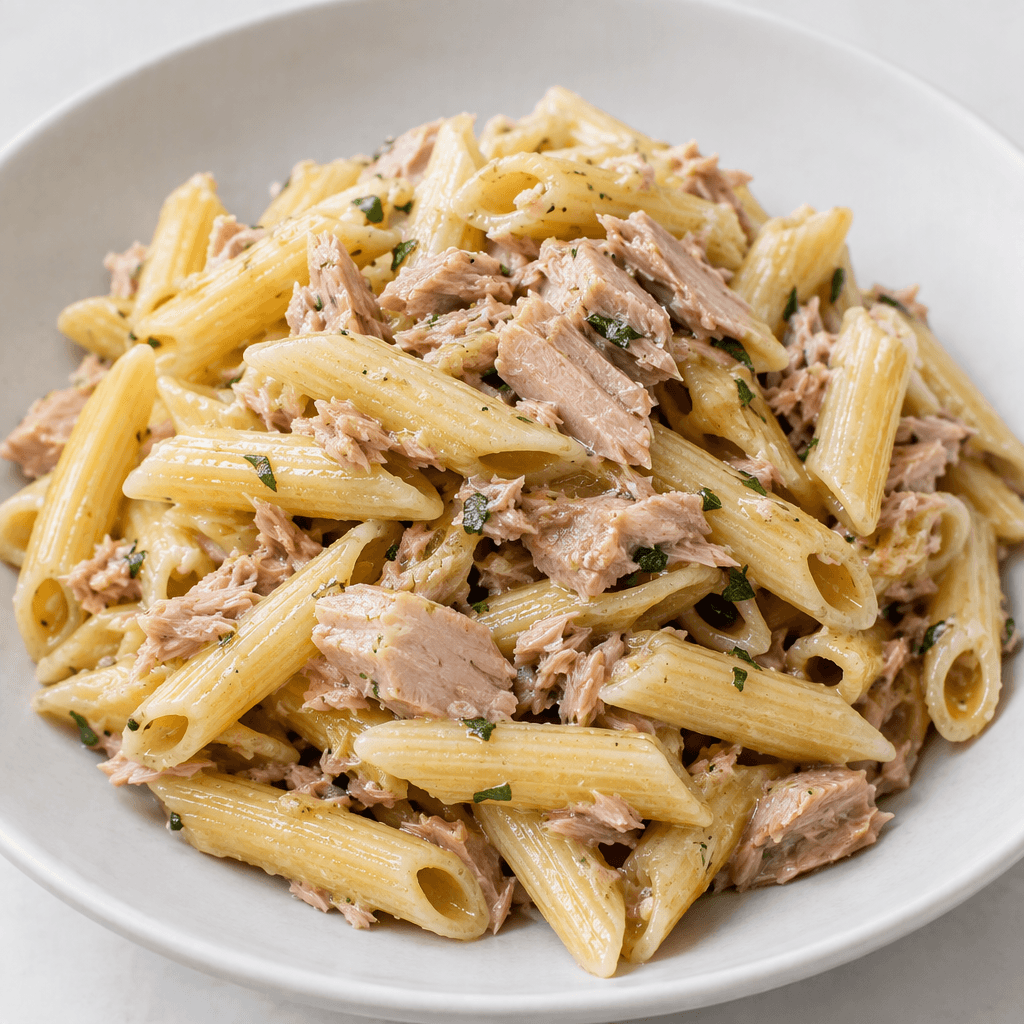
Tuna pasta Calories
Protein and omega-3 source, filling pasta dish
In season: Spring · Summer · Autumn · Winter
CALORIES
GI
POTASSIUM
FIBER
Quick answer
1 serving (medium) of Tuna pasta (200 g) has 340 calories. That works out to 170 calories per 100 g. It contains 45 g of carbs, 20.4 g of protein, 7 g of fat and 4.2 g of fiber. Its 2.2 µg of B12 covers 92% of the Daily Value. Its glycemic index is 55 (medium), so it raises blood sugar at a moderate pace.
What is Tuna pasta?
Tuna pasta brings cooked pasta together with tuna, often dressed with olive oil, tomato, herbs or a little lemon. It is especially familiar in Italian home cooking, where tuna makes a convenient partner for pantry pasta, though recipes vary from a simple warm dish to a chilled pasta salad.
Serve it warm for lunch or supper, or cool it for a make-ahead meal; a green salad makes a fresh accompaniment. The pasta supplies most of the carbohydrates, while tuna adds protein and some omega-3 fats. At 10.2 g of protein per 100 g, it can be a filling everyday meal. For a lighter plate, use a modest amount of oil and add vegetables such as peas or tomatoes.
Tuna pasta Nutrition Facts
Selected: 100 g
170
KCAL / 100G
Carbs
22.5g
· 8% DV
Protein
10.2g
· 20% DV
Fat
3.5g
· 4% DV
Fiber
2.1g
· 8% DV
DV is the share of the daily value covered, on a 2,000 kcal reference diet.
Calories come from: Carbs 55% · Protein 25% · Fat 20%
Tuna pasta Vitamins & Minerals
Vitamins
B12
1.1µg · 46% DV
B3
2.3mg · 14% DV
B1
0.09mg · 8% DV
B6
0.13mg · 8% DV
Minerals
Selenium
13µg · 24% DV
Phosphorus
90mg · 13% DV
Zinc
1mg · 9% DV
Sodium
210mg · 9% DV
How Nutritious Is Tuna pasta?
Nutrient density
Medium
How many vitamins, minerals and how much fiber this food carries per calorie. A high score means a lot of nutrition for few calories.
Satiety score
Medium
An EatBetter score computed from fiber, protein and calorie density. A high score means staying full longer on the same calories.
Both scores are calculated per 100 g and do not change with the selected portion. The satiety score is EatBetter's own calculation, not a clinical measure.
Tuna pasta Glycemic Index
GLYCEMIC INDEX
GLYCEMIC LOAD
Accounts for portion size — a more realistic measure than GI alone.
How to Burn Off Tuna pasta
To burn the 170 calories in 100 g:
🚶
Walking (5 km/h)
🏃
Running (8 km/h)
🚴
Cycling
🏊
Swimming
Times are calculated with the MET equation for a 70 kg adult. Actual burn varies with your weight, age and pace.
Is Tuna pasta Processed?
NOVA 3
Processed
1. Unprocessed
2. Minimally Processed
3. Processed
4. Ultra-Processed
NOVA classifies foods into 4 groups by industrial processing. NOVA 1 (unprocessed) is the healthiest.
Does Tuna pasta Contain Allergens?
Contains these allergens:
Which Diets Is Tuna pasta Good For?
Vegan
— Not suitable
Vegetarian
— Not suitable
Gluten-Free
— Not suitable
Dairy-Free
— Not suitable
Mediterranean
✓ Suitable
Paleo
— Not suitable
Whole30
— Not suitable
DASH
— Not suitable
Keto
— Not suitable
Low FODMAP
— Not suitable
Tuna pasta Fat Profile
SATURATED
0.7g
MONOUNSATURATED
1.1g
POLYUNSATURATED
0.5g
Omega 6:3 ratio 0.5:1
Below the ideal 4:1 — a good omega balance.
Compare Tuna pasta
Foods Similar to Tuna pasta
Frequently Asked Questions About Tuna pasta
How do you make tuna pasta?
Cook the pasta, then mix it with drained tuna and a sauce of your choice. For a quick hot version, sauté garlic in olive oil, add tomatoes and tuna, and toss with the pasta; add herbs or lemon to finish.
What sauce goes best with tuna pasta?
Tomato, olive oil and garlic make a classic sauce for hot tuna pasta. For a cold version, mayonnaise or a mayonnaise-yogurt dressing works well; lemon, capers and herbs can brighten either style without overpowering the tuna.
Should tuna pasta be served hot or cold?
Tuna pasta can be served either hot or cold. Warm versions often use tomato or olive-oil-based sauces, while cold tuna pasta is commonly made as a salad with vegetables and a creamy dressing.
Which pasta shape is best for tuna pasta?
Short shapes such as fusilli, penne and farfalle are especially practical for tuna pasta because they mix easily with flakes of fish and hold onto the sauce. Long pasta works too, but can be harder to toss evenly.
Do you drain the tuna for tuna pasta?
Usually, yes: drain canned tuna before adding it so the pasta does not become oily or watery. You can keep a little of the oil from an olive-oil-packed tin to flavor a tomato or garlic sauce.
How long does tuna pasta last in the fridge?
Tuna pasta can generally be kept in a covered container in the refrigerator for up to three days. Refrigerate it promptly rather than leaving it out, and reheat only the portion you plan to eat if serving it warm.
Can you freeze tuna pasta?
Yes, tuna pasta can be frozen, but the pasta may soften and creamy or mayonnaise-based sauces can separate when thawed. For a better result, freeze a tomato-based version, thaw it in the refrigerator and reheat it thoroughly.
Can you reheat tuna pasta?
Yes, tuna pasta can be reheated until steaming hot, either in a pan or in the microwave. Add a small splash of water or sauce if it seems dry, and avoid reheating the same portion more than once.
Is tuna pasta a healthy meal?
Tuna pasta can be a filling meal that provides protein, especially when served with vegetables and a modest amount of sauce. Its overall balance also depends on the salt in the canned tuna and how much creamy dressing or cheese is added.
Can you eat tuna pasta during pregnancy?
Tuna pasta can be eaten during pregnancy, but tuna contains mercury, so follow current local guidance on how often and how much tuna to have. If you have a specific medical concern or dietary restriction, ask your healthcare professional.
Have another question about Tuna pasta?
Ask the AI nutrition coach — calories, portions, alternatives and more, answered in seconds in the app.

Scan calories with your camera
Instant AI nutrition analysis

Nutrition data compiled from USDA FoodData Central and scientific sources.