

Ready & Packaged Foods
All →Vegetables & Legumes
All →Desserts & Confectionery
All →Meat & Protein
All →Grains & Bakery
All →Beverages
All →Milk & Dairy
All →

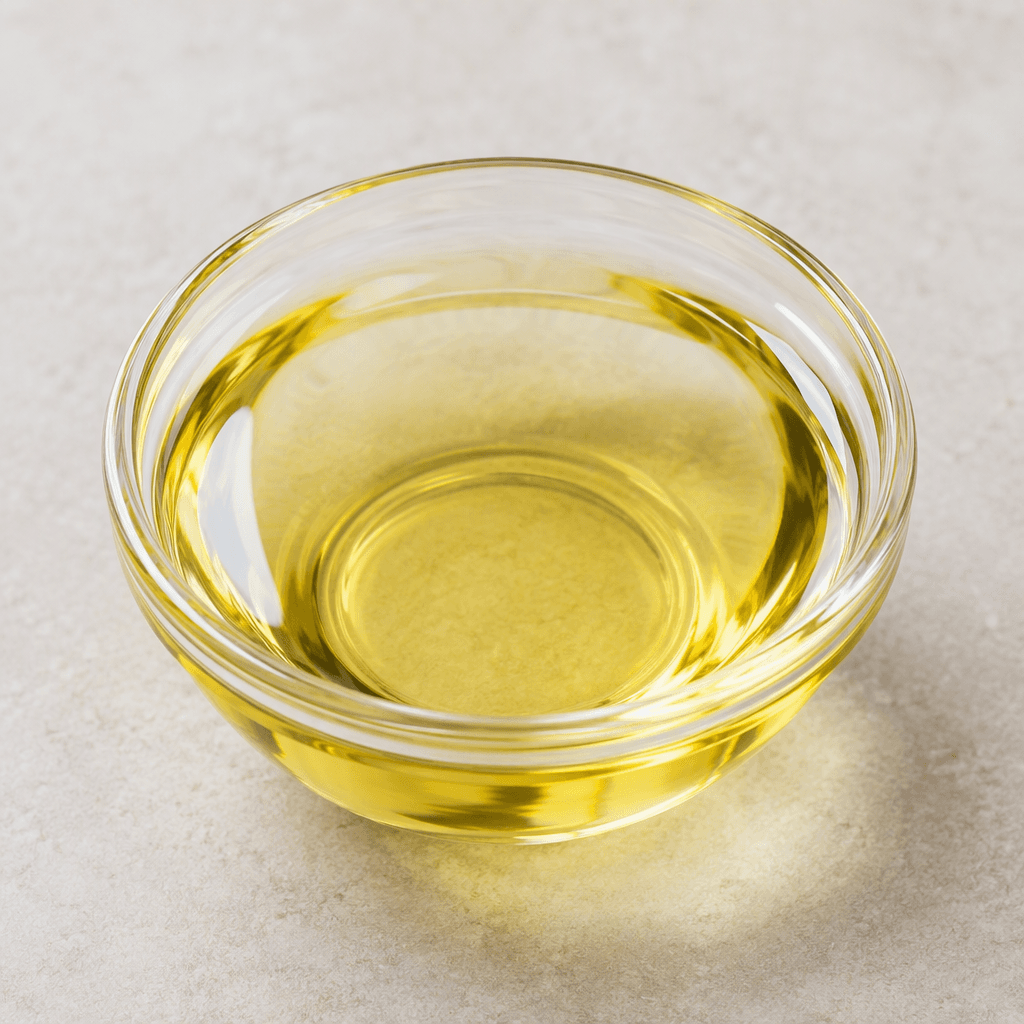
Tuna oil Calories
Tuna oil is rich in omega-3 fatty acids and healthy fats.
In season: Spring · Summer · Autumn · Winter
CALORIES
GI
POTASSIUM
FIBER
Quick answer
1 tablespoon (medium) of Tuna oil (14 g) has 126 calories. That works out to 900 calories per 100 g. It contains 0 g of carbs, 0 g of protein, 14 g of fat and 0 g of fiber. Its 0.8 mg of Vitamin E covers 6% of the Daily Value. Its glycemic index is 0 (low), so it raises blood sugar slowly.
What is Tuna oil?
Tuna oil is oil obtained from tuna, rather than a familiar everyday cooking oil. It may be sold as a food ingredient or included in fish-oil products. It is not necessarily the same as the oil in a can of tuna, which may be a separate added oil.
Its flavour can be distinctly fishy, so it is generally best used sparingly, for example in a dressing or stirred into pasta or vegetables. Nutritionally, it is almost entirely fat, with no protein or carbohydrates, and is noted for its omega-3 fats. If you want a lighter meal, use just a little and pair it with crisp vegetables or a lemony salad.
Tuna oil Nutrition Facts
Selected: 100 g
900
KCAL / 100G
Carbs
0g
· 0% DV
Protein
0g
· 0% DV
Fat
100g
· 128% DV
Fiber
0g
· 0% DV
DV is the share of the daily value covered, on a 2,000 kcal reference diet.
Calories come from: Carbs 0% · Protein 0% · Fat 100%
Tuna oil Vitamins & Minerals
Vitamins
Vitamin E
6mg · 40% DV
Vitamin D
7µg · 35% DV
B12
0.5µg · 21% DV
Vitamin A
20µg · 2% DV
Minerals
Selenium
4µg · 7% DV
Iodine
2µg · 1% DV
Calcium
1mg · 0% DV
Iron
0mg · 0% DV
How Nutritious Is Tuna oil?
Nutrient density
High
How many vitamins, minerals and how much fiber this food carries per calorie. A high score means a lot of nutrition for few calories.
Satiety score
Low
An EatBetter score computed from fiber, protein and calorie density. A high score means staying full longer on the same calories.
Both scores are calculated per 100 g and do not change with the selected portion. The satiety score is EatBetter's own calculation, not a clinical measure.
Tuna oil Glycemic Index
GLYCEMIC INDEX
GLYCEMIC LOAD
Accounts for portion size — a more realistic measure than GI alone.
How to Burn Off Tuna oil
To burn the 900 calories in 100 g:
🚶
Walking (5 km/h)
🏃
Running (8 km/h)
🚴
Cycling
🏊
Swimming
Times are calculated with the MET equation for a 70 kg adult. Actual burn varies with your weight, age and pace.
Is Tuna oil Processed?
NOVA 2
Minimally Processed
1. Unprocessed
2. Minimally Processed
3. Processed
4. Ultra-Processed
NOVA classifies foods into 4 groups by industrial processing. NOVA 1 (unprocessed) is the healthiest.
Does Tuna oil Contain Allergens?
Contains these allergens:
Which Diets Is Tuna oil Good For?
Vegan
— Not suitable
Vegetarian
— Not suitable
Gluten-Free
✓ Suitable
Dairy-Free
— Not suitable
Mediterranean
✓ Suitable
Paleo
✓ Suitable
Whole30
— Not suitable
DASH
— Not suitable
Keto
✓ Suitable
Low FODMAP
— Not suitable
Tuna oil Fat Profile
SATURATED
22g
MONOUNSATURATED
45g
POLYUNSATURATED
33g
Omega 6:3 ratio 0.1:1
Below the ideal 4:1 — a good omega balance.
Compare Tuna oil
Foods Similar to Tuna oil
Frequently Asked Questions About Tuna oil
What is tuna oil used for?
Tuna oil is used as a source of omega-3 fats, either in food products or in supplements. Follow the product’s intended use: supplement oil is not automatically suitable for cooking, and tuna oil is not a treatment for disease.
Is tuna oil good for you?
Tuna oil can be a useful source of omega-3 fatty acids as part of a varied diet. Its benefits depend on the product and how it fits into your diet; it does not prevent or cure illness on its own.
Is tuna oil the same as fish oil?
Tuna oil is a type of fish oil made from tuna. The broader term “fish oil” can refer to oil from other fish too, so omega-3 content and intended use vary between products.
Can you cook with tuna oil?
You can cook with tuna oil only if it is sold as a cooking oil. Supplement oils may not be intended for heating, and tuna oil can give food a noticeable fish flavor; avoid using it for high-heat cooking unless the label allows it.
Can you eat the oil in canned tuna?
Yes, the oil in canned tuna is edible when the product is intended as food. It is not necessarily pure tuna oil: many tins use vegetable oil, and the packing oil may also contain salt and flavor from the fish.
Does tuna oil contain omega-3?
Yes, tuna oil contains omega-3 fatty acids. The amount can vary by source and product, so a specific quantity should come from that product’s nutrition information rather than being assumed for all tuna oils.
Does tuna oil contain mercury?
Tuna oil may contain contaminants depending on its source and processing, so you cannot assume every product is mercury-free. Choose products from reputable manufacturers that provide quality testing, especially if you use the oil regularly.
What does tuna oil taste like?
Tuna oil can have a mild fishy taste and aroma, though the strength varies by product and freshness. If it smells sharply rancid or tastes unpleasantly bitter, do not eat it.
How should you store tuna oil after opening?
Store tuna oil tightly closed and away from heat and light. Refrigerate it after opening if the label instructs you to, and follow the product’s storage directions to help protect its flavor and freshness.
Is tuna oil safe during pregnancy?
Tuna oil may be suitable during pregnancy, but the source, processing, and amount matter. Because tuna products and supplements can differ in contaminant levels and formulation, ask your doctor or dietitian before using it.
Have another question about Tuna oil?
Ask the AI nutrition coach — calories, portions, alternatives and more, answered in seconds in the app.

Scan calories with your camera
Instant AI nutrition analysis

Nutrition data compiled from USDA FoodData Central and scientific sources.