

Ready & Packaged Foods
All →Vegetables & Legumes
All →Desserts & Confectionery
All →Meat & Protein
All →Grains & Bakery
All →Beverages
All →Milk & Dairy
All →

Tombik Bread Calories
Traditional Turkish round bread, soft texture
In season: Spring · Summer · Autumn · Winter
CALORIES
GI
POTASSIUM
FIBER
Quick answer
1 piece (medium) of Tombik Bread (120 g) has 312 calories. That works out to 260 calories per 100 g. It contains 63 g of carbs, 9.7 g of protein, 1.4 g of fat and 3.2 g of fiber. Its 0.3 mg of B1 covers 22% of the Daily Value. Its glycemic index is 70 (high), so it raises blood sugar quickly.
What is Tombik Bread?
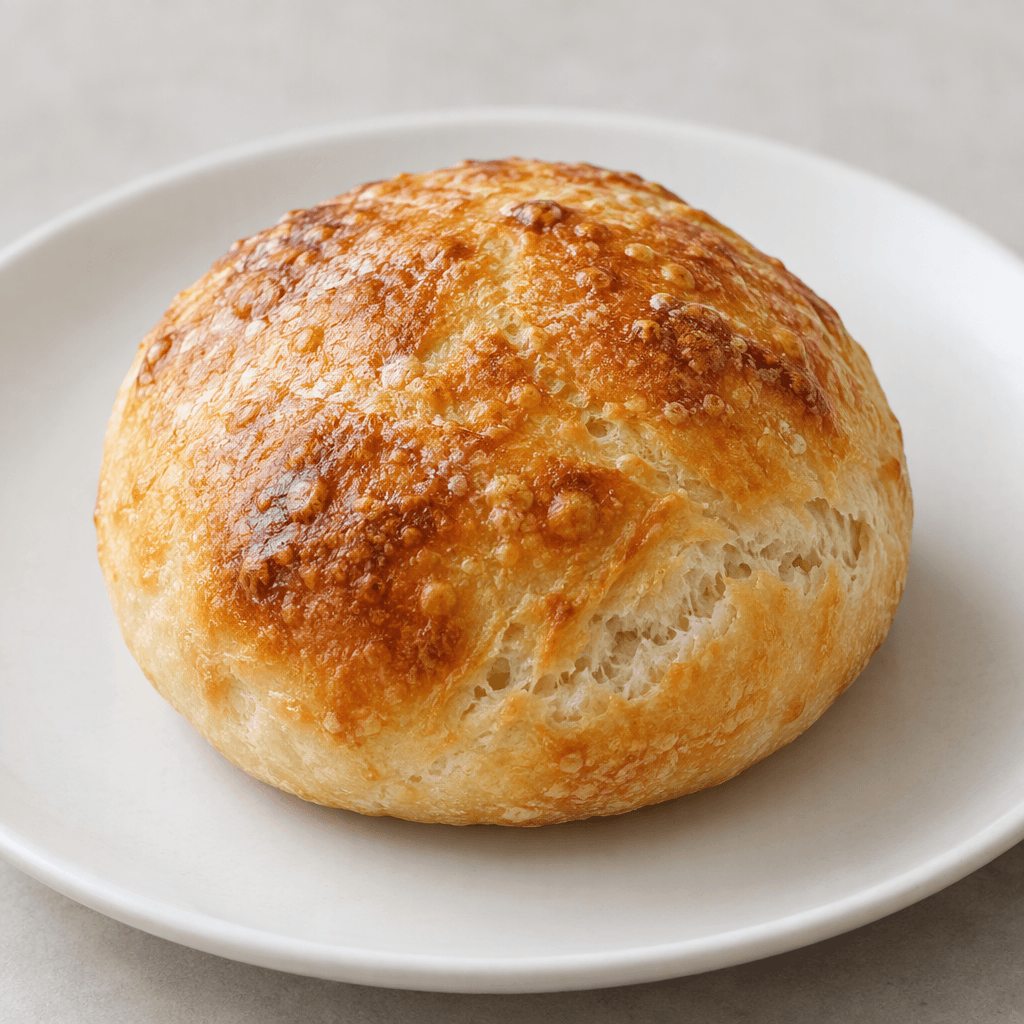
Tombik bread is a small, round Turkish loaf with a soft, pale centre and a lightly blistered, golden crust. Its puffy shape makes it easy to split and fill, and it is especially associated with tombik döner, a Turkish street-food sandwich made with döner meat and accompaniments.
The bread is tender rather than crusty, so it holds warm fillings well without overwhelming them. In Turkey, it is commonly served as a sandwich; you can also pair it with cheese, eggs or vegetables for a simple meal. It is chiefly a source of carbohydrates, with some protein and fibre. For a lighter filling, add plenty of salad and choose lean meat or grilled vegetables.
Tombik Bread Nutrition Facts
Selected: 100 g
260
KCAL / 100G
Carbs
52.5g
· 19% DV
Protein
8.1g
· 16% DV
Fat
1.2g
· 2% DV
Fiber
2.7g
· 10% DV
DV is the share of the daily value covered, on a 2,000 kcal reference diet.
Calories come from: Carbs 83% · Protein 13% · Fat 4%
Tombik Bread Vitamins & Minerals
Vitamins
B1
0.22mg · 18% DV
B3
2.2mg · 14% DV
Folate
28µg · 7% DV
B2
0.08mg · 6% DV
Minerals
Sodium
430mg · 19% DV
Selenium
9µg · 16% DV
Iron
2mg · 11% DV
Zinc
1mg · 9% DV
How Nutritious Is Tombik Bread?
Nutrient density
Low
How many vitamins, minerals and how much fiber this food carries per calorie. A high score means a lot of nutrition for few calories.
Satiety score
Medium
An EatBetter score computed from fiber, protein and calorie density. A high score means staying full longer on the same calories.
Both scores are calculated per 100 g and do not change with the selected portion. The satiety score is EatBetter's own calculation, not a clinical measure.
Tombik Bread Glycemic Index
GLYCEMIC INDEX
GLYCEMIC LOAD
Accounts for portion size — a more realistic measure than GI alone.
How to Burn Off Tombik Bread
To burn the 260 calories in 100 g:
🚶
Walking (5 km/h)
🏃
Running (8 km/h)
🚴
Cycling
🏊
Swimming
Times are calculated with the MET equation for a 70 kg adult. Actual burn varies with your weight, age and pace.
Is Tombik Bread Processed?
NOVA 3
Processed
1. Unprocessed
2. Minimally Processed
3. Processed
4. Ultra-Processed
NOVA classifies foods into 4 groups by industrial processing. NOVA 1 (unprocessed) is the healthiest.
Does Tombik Bread Contain Allergens?
Contains these allergens:
Which Diets Is Tombik Bread Good For?
Vegan
✓ Suitable
Vegetarian
✓ Suitable
Gluten-Free
— Not suitable
Dairy-Free
— Not suitable
Mediterranean
✓ Suitable
Paleo
— Not suitable
Whole30
— Not suitable
DASH
— Not suitable
Keto
— Not suitable
Low FODMAP
— Not suitable
Tombik Bread Fat Profile
SATURATED
0.3g
MONOUNSATURATED
0.2g
POLYUNSATURATED
0.3g
Omega 6:3 ratio 12:1
Above the ideal 4:1 (12:1).
Compare Tombik Bread
Foods Similar to Tombik Bread
Frequently Asked Questions About Tombik Bread
What is Tombik Bread?
Tombik Bread is a round, thick Turkish bread with a lightly browned crust and a soft interior. It is especially associated with döner sandwiches, where it is cut open and filled rather than rolled like a wrap.
Where does Tombik Bread come from?
Tombik Bread comes from Turkish cuisine and is commonly used for döner sandwiches. Its name describes its plump, rounded shape, and it is served as a pocket-style sandwich bread in many döner shops.
Is Tombik Bread the same as pita bread?
No, Tombik Bread is not simply another name for pita. Both can be round, but Tombik Bread is typically thick and soft, and is often opened with a cut to hold a sandwich filling rather than relying on a fully formed hollow pocket.
How do you cut Tombik Bread for a döner sandwich?
Cut Tombik Bread horizontally along one side to make an opening, leaving the opposite edge intact if you want the filling contained. Avoid slicing all the way through, then add the döner and toppings without packing the bread too tightly.
What fillings work best in Tombik Bread?
Döner is the classic filling for Tombik Bread, often paired with fresh vegetables and sauce. Grilled chicken, meatballs, or roasted vegetables also work well; keep wet sauces moderate so the soft bread does not become soggy.
Can you use Tombik Bread instead of a burger bun?
Yes, Tombik Bread can work as a larger, softer alternative to a burger bun. Slice it open and add the patty and toppings, but choose a filling size that the bread can hold without splitting.
Why does homemade Tombik Bread turn out dense?
Homemade Tombik Bread can turn dense if the dough has not risen enough or is rolled too thin before baking. Let the shaped rounds puff up before they go into a hot oven, and avoid adding excess flour while kneading.
How do you warm Tombik Bread without making it hard?
Warm Tombik Bread briefly in a skillet or a low oven, rather than leaving it over high heat. A short warming softens the bread for filling; prolonged heating drives off moisture and can make its crust and interior tough.
How should Tombik Bread be stored after buying it?
Store Tombik Bread in a bread box or a sealed bag at room temperature to slow it from drying out. Keep it away from dampness, and discard it if you see mold rather than trying to remove only the affected spot.
Can Tombik Bread be frozen?
Yes, Tombik Bread freezes well when wrapped airtight. Thaw it before serving, then warm it briefly in a skillet or oven to soften the interior. Freezing is useful if you bought more bread than you plan to eat soon.
Have another question about Tombik Bread?
Ask the AI nutrition coach — calories, portions, alternatives and more, answered in seconds in the app.

Scan calories with your camera
Instant AI nutrition analysis

Nutrition data compiled from USDA FoodData Central and scientific sources.