

Ready & Packaged Foods
All →Vegetables & Legumes
All →Desserts & Confectionery
All →Meat & Protein
All →Grains & Bakery
All →Beverages
All →Milk & Dairy
All →

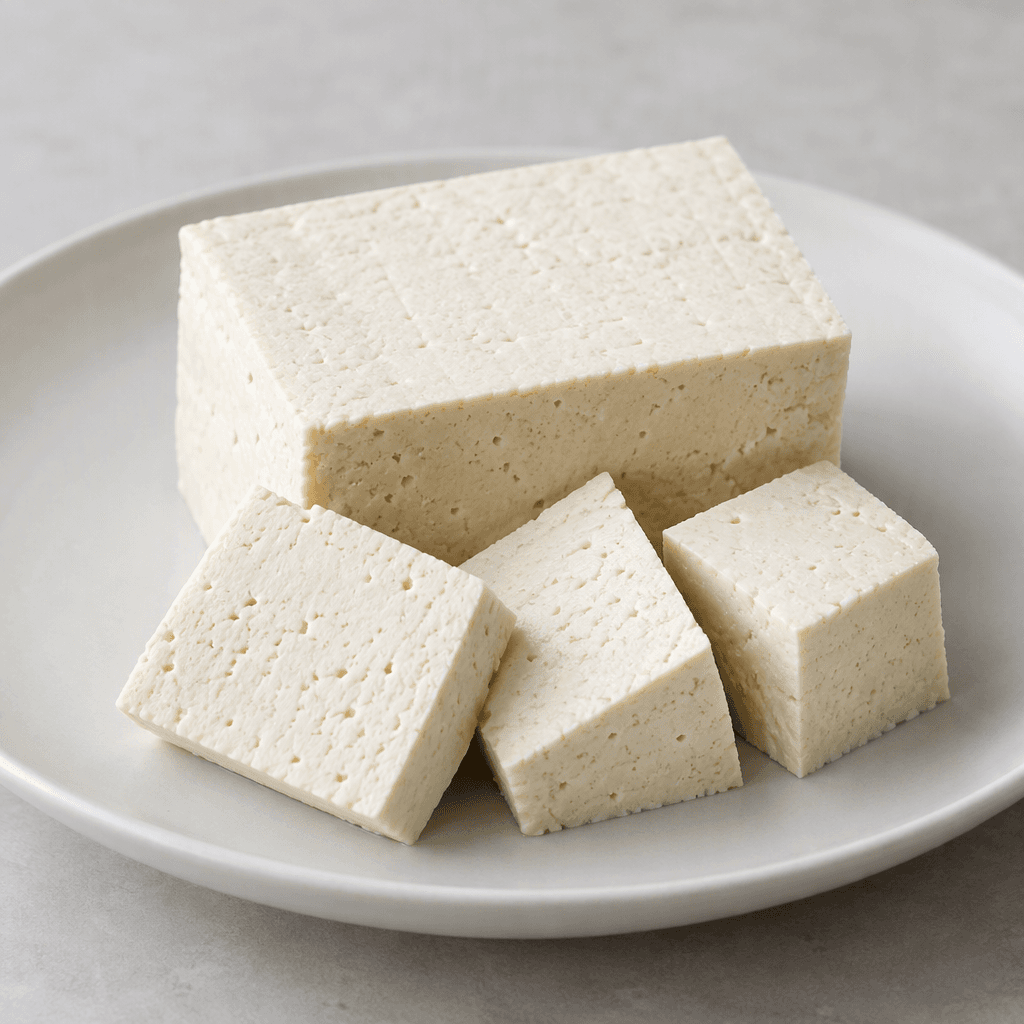
Tofu Calories
Plant-based protein, low fat, vegan
In season: Spring · Summer · Autumn · Winter
CALORIES
GI
POTASSIUM
FIBER
Quick answer
100 g of Tofu has 76 calories. It contains 1.9 g of carbs, 8.1 g of protein, 4.8 g of fat and 0.7 g of fiber. Its 350 mg of Calcium covers 35% of the Daily Value. Its glycemic index is 15 (low), so it raises blood sugar slowly.
What is Tofu?
Tofu is made by curdling soy milk and pressing the curds into blocks; it has been eaten in China for centuries. It comes in soft and firm varieties, with the firmer kind holding its shape well in cooking. Its mild flavour readily takes on marinades, while the texture can be silky, tender or pleasantly chewy depending on the type and preparation.
Across East and Southeast Asia it appears in soups, stir-fries and braised dishes; elsewhere, it is often baked, grilled or added to salads and grain bowls. It provides plant-based protein and is relatively low in fat. Press firm tofu before cooking if you want it to brown well, and pair it with vegetables, noodles or a punchy sauce for a satisfying meat-free meal.
Tofu Nutrition Facts
Selected: 100 g
76
KCAL / 100G
Carbs
1.9g
· 1% DV
Protein
8.1g
· 16% DV
Fat
4.8g
· 6% DV
Fiber
0.7g
· 3% DV
DV is the share of the daily value covered, on a 2,000 kcal reference diet.
Calories come from: Carbs 9% · Protein 39% · Fat 52%
Tofu Vitamins & Minerals
Vitamins
B1
0.08mg · 7% DV
Biotin
2µg · 7% DV
B2
0.06mg · 5% DV
Folate
15µg · 4% DV
Minerals
Manganese
1mg · 43% DV
Calcium
350mg · 35% DV
Iron
5mg · 28% DV
Selenium
8µg · 15% DV
How Nutritious Is Tofu?
Nutrient density
High
How many vitamins, minerals and how much fiber this food carries per calorie. A high score means a lot of nutrition for few calories.
Satiety score
Medium
An EatBetter score computed from fiber, protein and calorie density. A high score means staying full longer on the same calories.
Both scores are calculated per 100 g and do not change with the selected portion. The satiety score is EatBetter's own calculation, not a clinical measure.
Tofu Glycemic Index
GLYCEMIC INDEX
GLYCEMIC LOAD
Accounts for portion size — a more realistic measure than GI alone.
How to Burn Off Tofu
To burn the 76 calories in 100 g:
🚶
Walking (5 km/h)
🏃
Running (8 km/h)
🚴
Cycling
🏊
Swimming
Times are calculated with the MET equation for a 70 kg adult. Actual burn varies with your weight, age and pace.
Is Tofu Processed?
NOVA 2
Minimally Processed
1. Unprocessed
2. Minimally Processed
3. Processed
4. Ultra-Processed
NOVA classifies foods into 4 groups by industrial processing. NOVA 1 (unprocessed) is the healthiest.
Does Tofu Contain Allergens?
Contains these allergens:
Which Diets Is Tofu Good For?
Vegan
✓ Suitable
Vegetarian
✓ Suitable
Gluten-Free
✓ Suitable
Dairy-Free
— Not suitable
Mediterranean
✓ Suitable
Paleo
— Not suitable
Whole30
— Not suitable
DASH
— Not suitable
Keto
✓ Suitable
Low FODMAP
— Not suitable
Tofu Fat Profile
SATURATED
0.7g
MONOUNSATURATED
1.1g
POLYUNSATURATED
2.9g
Omega 6:3 ratio 8.7:1
Above the ideal 4:1 (8.7:1).
Compare Tofu
Foods Similar to Tofu
Frequently Asked Questions About Tofu
What is tofu made of?
Tofu is made by coagulating soy milk and pressing the curds into blocks. Its texture ranges from silken and soft to firm and extra-firm, depending largely on how much water is pressed out.
How do you cook tofu so it gets crispy?
Use firm or extra-firm tofu, press out excess water, then cut it into cubes and coat lightly with oil and a crisping starch. Roast or pan-fry in a single layer, leaving space between pieces so they brown rather than steam.
Does tofu need to be pressed?
No, tofu does not always need pressing. Press firm tofu when you want it to brown well or absorb a marinade; skip this step for silken tofu, which is too delicate and is usually added directly to soups, sauces, or smoothies.
What does tofu taste like?
Tofu has a mild, fairly neutral taste rather than a strong bean flavor. It takes on the seasoning around it, so marinating or cooking it with a flavorful sauce makes a much bigger difference than adding it plain.
Can you eat tofu raw?
Yes, tofu can be eaten straight from its package without cooking. Drain it first and add it to salads, sandwiches, or smoothies; cooking is optional, though it can improve the texture and add flavor.
How do you press tofu without a tofu press?
Wrap firm tofu in a clean kitchen towel or paper towels, set it on a plate, and place a weighted pan or book on top. Let the water drain before cooking, replacing the towel if it becomes soaked.
How long does tofu last after opening?
Keep opened tofu refrigerated in a sealed container covered with fresh water, and change the water daily. Use it within a few days; discard it if it develops an off smell, discoloration, or a slimy surface.
Can you freeze tofu, and what happens to it?
Yes, tofu freezes well, but freezing changes its texture: it becomes more porous and chewier after thawing. That texture is useful in stir-fries and stews because the tofu can take up sauces more readily.
How do you marinate tofu so it absorbs flavor?
Drain firm tofu, cut it into pieces, and let it sit in a savory marinade before cooking. Pressing it first helps remove excess water, while smaller pieces expose more surface area to the marinade.
What is the difference between silken and firm tofu?
Silken tofu is soft and delicate, making it useful in creamy sauces, soups, and desserts. Firm tofu holds its shape when sliced or cubed, so it is better suited to frying, grilling, and stir-frying.
Have another question about Tofu?
Ask the AI nutrition coach — calories, portions, alternatives and more, answered in seconds in the app.

Scan calories with your camera
Instant AI nutrition analysis

Nutrition data compiled from USDA FoodData Central and scientific sources.