

Ready & Packaged Foods
All →Vegetables & Legumes
All →Desserts & Confectionery
All →Meat & Protein
All →Grains & Bakery
All →Beverages
All →Milk & Dairy
All →

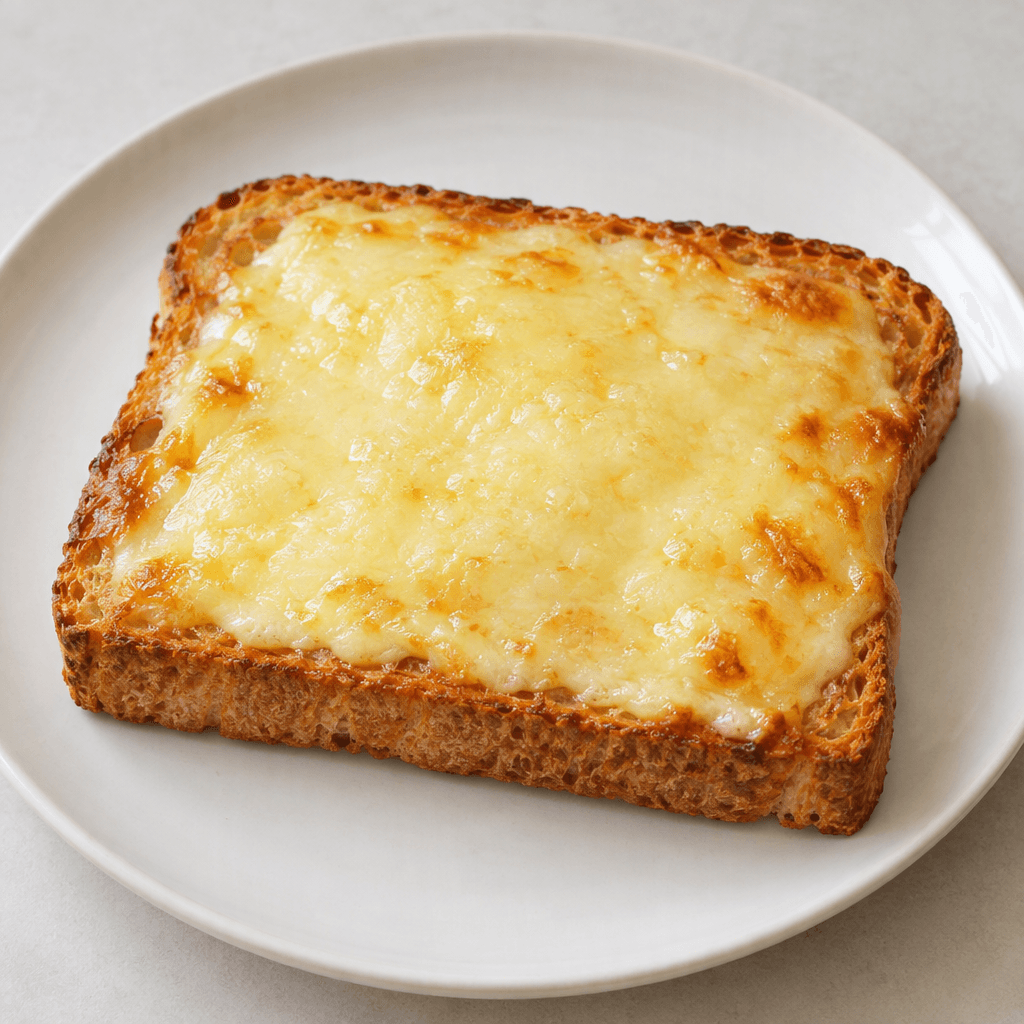
Toast with Cheese Calories
Classic cheese toast: melted cheese between crispy toasted bread.
CALORIES
GI
POTASSIUM
FIBER
Quick answer
1 piece (medium) of Toast with Cheese (90 g) has 243 calories. That works out to 270 calories per 100 g. It contains 26.1 g of carbs, 9.9 g of protein, 9.9 g of fat and 1.6 g of fiber. Its 0.5 µg of B12 covers 23% of the Daily Value. Its glycemic index is 65 (medium), so it raises blood sugar at a moderate pace.
What is Toast with Cheese?
Toast with cheese is made by melting cheese on or between slices of bread, usually in a pan, toaster oven or sandwich press. It is a simple, familiar preparation found in many places; the Turkish-style version is often pressed until the bread is crisp and the cheese soft.
The contrast of crunchy bread and warm, stretchy cheese makes it an easy breakfast, lunch or snack, often served with a salad, soup or sliced tomatoes. It provides carbohydrates from the bread alongside protein and fat from the cheese, so it is more substantial than plain toast. For a lighter version, use wholegrain bread, a moderate amount of cheese and little or no added butter.
Toast with Cheese Nutrition Facts
Selected: 100 g
270
KCAL / 100G
Carbs
29g
· 11% DV
Protein
11g
· 22% DV
Fat
11g
· 14% DV
Fiber
1.8g
· 6% DV
DV is the share of the daily value covered, on a 2,000 kcal reference diet.
Calories come from: Carbs 45% · Protein 17% · Fat 38%
Toast with Cheese Vitamins & Minerals
Vitamins
B12
0.6µg · 25% DV
Biotin
6µg · 20% DV
B2
0.22mg · 17% DV
Vitamin A
120µg · 13% DV
Minerals
Calcium
260mg · 26% DV
Phosphorus
180mg · 26% DV
Sodium
480mg · 21% DV
Selenium
9µg · 16% DV
How Nutritious Is Toast with Cheese?
Nutrient density
Medium
How many vitamins, minerals and how much fiber this food carries per calorie. A high score means a lot of nutrition for few calories.
Satiety score
Medium
An EatBetter score computed from fiber, protein and calorie density. A high score means staying full longer on the same calories.
Both scores are calculated per 100 g and do not change with the selected portion. The satiety score is EatBetter's own calculation, not a clinical measure.
Toast with Cheese Glycemic Index
GLYCEMIC INDEX
GLYCEMIC LOAD
Accounts for portion size — a more realistic measure than GI alone.
How to Burn Off Toast with Cheese
To burn the 270 calories in 100 g:
🚶
Walking (5 km/h)
🏃
Running (8 km/h)
🚴
Cycling
🏊
Swimming
Times are calculated with the MET equation for a 70 kg adult. Actual burn varies with your weight, age and pace.
Is Toast with Cheese Processed?
NOVA 3
Processed
1. Unprocessed
2. Minimally Processed
3. Processed
4. Ultra-Processed
NOVA classifies foods into 4 groups by industrial processing. NOVA 1 (unprocessed) is the healthiest.
Does Toast with Cheese Contain Allergens?
Contains these allergens:
Which Diets Is Toast with Cheese Good For?
Vegan
— Not suitable
Vegetarian
✓ Suitable
Gluten-Free
— Not suitable
Dairy-Free
— Not suitable
Mediterranean
— Not suitable
Paleo
— Not suitable
Whole30
— Not suitable
DASH
— Not suitable
Keto
— Not suitable
Low FODMAP
— Not suitable
Toast with Cheese Fat Profile
SATURATED
5.2g
MONOUNSATURATED
3.2g
POLYUNSATURATED
1g
Omega 6:3 ratio 14:1
Above the ideal 4:1 (14:1).
Compare Toast with Cheese
Foods Similar to Toast with Cheese
Frequently Asked Questions About Toast with Cheese
How do you make toast with cheese?
Toast with cheese is made by putting cheese between bread slices and heating them until the bread is crisp and the cheese melts. A skillet or sandwich press works well; buttering the outside helps it brown, while keeping the cheese away from the edges prevents leaks.
What is the best cheese for toast with cheese?
Cheddar is a reliable choice for toast with cheese because it melts readily and has a savoury flavour. For a milder result, use a young, mild cheddar; grate or slice it evenly so it melts before the bread gets too dark.
Is toast with cheese the same as grilled cheese?
Not always: toast with cheese can mean any toasted bread topped or filled with cheese, while a grilled cheese sandwich is typically buttered bread cooked in a pan with cheese inside. Recipes and names vary by country, but both are served hot with melted cheese.
Why does the cheese leak out of toast with cheese?
Cheese leaks out of toast with cheese when the filling reaches the bread edges or the sandwich is pressed too firmly. Leave a clear border around the cheese, use a moderate amount, and let the sandwich rest briefly after cooking so the melted filling can settle.
Can you make toast with cheese in a regular toaster?
No, not safely as a filled sandwich: cheese can drip into a pop-up toaster and create smoke or a fire hazard. Make toast with cheese in a skillet, toaster oven, or sandwich press instead, and use a tray if melting cheese on an open slice.
What bread is best for toast with cheese?
Sandwich bread is a dependable choice for toast with cheese because it browns evenly and is easy to handle. Sourdough or another sturdy loaf adds a chewier texture, but very thick slices may brown before the cheese in the middle melts.
How do you keep toast with cheese crispy?
To keep toast with cheese crispy, cook it on a fully heated pan or press and avoid overfilling it. Eat it soon after cooking rather than covering it, since trapped steam softens the bread; a wire rack also helps if you need to hold it briefly.
Can you reheat leftover toast with cheese?
Yes, leftover toast with cheese can be reheated after being refrigerated promptly in a covered container. Use a skillet or toaster oven to restore the crisp surface; a microwave heats it quickly but usually leaves the bread soft.
What goes well with toast with cheese?
Toast with cheese pairs well with tomato soup, a simple green salad, or sliced fresh vegetables. For breakfast, fruit or a hot drink also works; a sharp, tangy side can balance the richness of the melted cheese.
Is toast with cheese a healthy breakfast?
Toast with cheese can be part of breakfast, but it is more balanced when paired with fruit or vegetables rather than eaten alone. Choose a moderate amount of cheese and limit added butter if you want a less rich meal.
Have another question about Toast with Cheese?
Ask the AI nutrition coach — calories, portions, alternatives and more, answered in seconds in the app.

Scan calories with your camera
Instant AI nutrition analysis

Nutrition data compiled from USDA FoodData Central and scientific sources.