

Ready & Packaged Foods
All →Vegetables & Legumes
All →Desserts & Confectionery
All →Meat & Protein
All →Grains & Bakery
All →Beverages
All →Milk & Dairy
All →

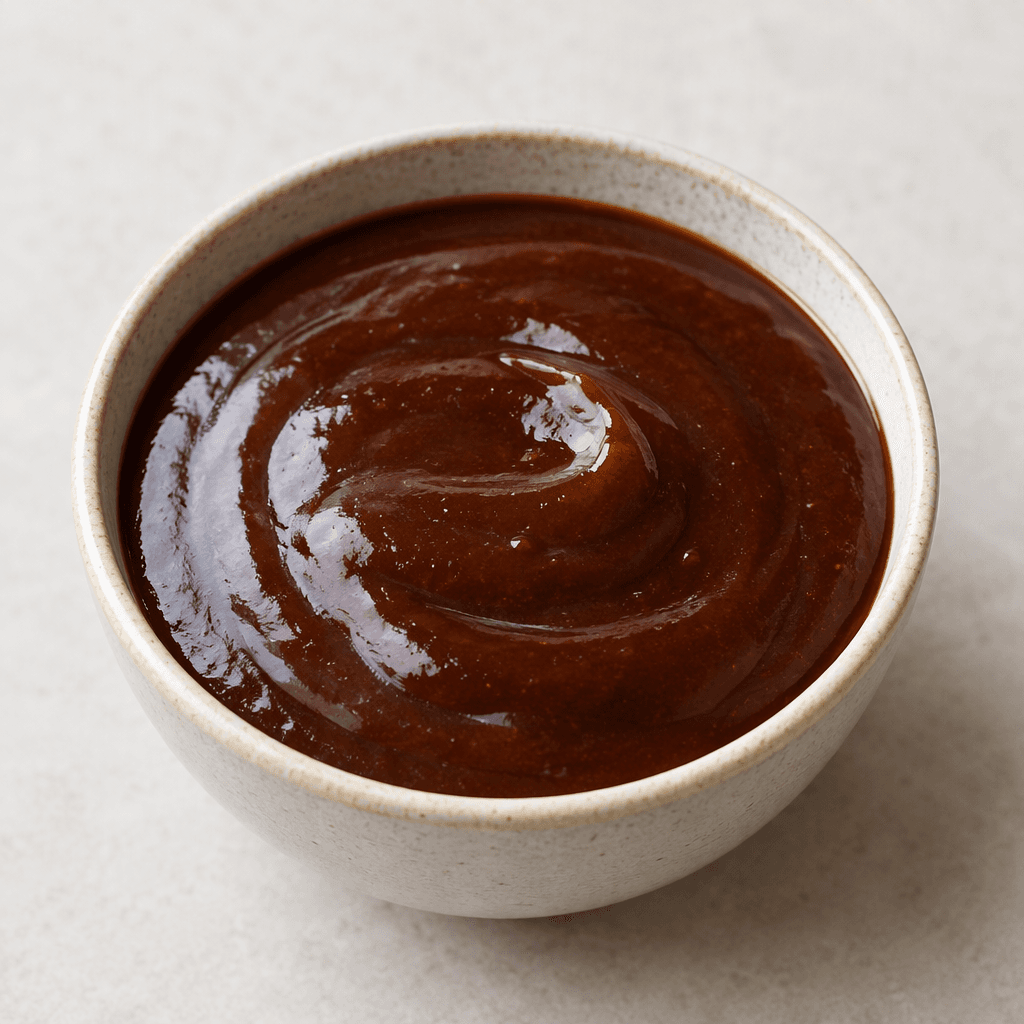
Teriyaki Sauce Calories
Sweet and savory Japanese sauce, typically made with soy sauce, mirin, sugar, and spices.
In season: Spring · Summer · Autumn · Winter
CALORIES
GI
POTASSIUM
FIBER
Quick answer
1 tablespoon (medium) of Teriyaki Sauce (18 g) has 16 calories. That works out to 90 calories per 100 g. It contains 3.1 g of carbs, 0.5 g of protein, 0 g of fat and 0.1 g of fiber. Its 324 mg of Sodium covers 14% of the Daily Value. Its glycemic index is 55 (medium), so it raises blood sugar at a moderate pace.
What is Teriyaki Sauce?
Teriyaki Sauce is a glossy Japanese-style sauce traditionally made by combining soy sauce, mirin and sugar, often with a little seasoning. It tastes sweet and savoury, and its smooth, syrupy consistency clings well to food. The name is also used for variations, so the sweetness and thickness can differ between homemade and ready-made versions.
In Japan and around the world, it is brushed over grilled fish or meat, used to glaze tofu and vegetables, or stirred into rice and noodle dishes. It is especially handy for adding a quick, bold finish to a simple weeknight meal. Nutritionally, it is mostly carbohydrate and very low in fat. Since its flavour is concentrated, start with a small amount and add more to taste; pair it with vegetables or plain rice for balance.
Teriyaki Sauce Nutrition Facts
Selected: 100 g
90
KCAL / 100G
Carbs
17g
· 6% DV
Protein
2.5g
· 5% DV
Fat
0.2g
· 0% DV
Fiber
0.3g
· 1% DV
DV is the share of the daily value covered, on a 2,000 kcal reference diet.
Calories come from: Carbs 85% · Protein 13% · Fat 2%
Teriyaki Sauce Vitamins & Minerals
Vitamins
B2
0.02mg · 2% DV
B6
0.03mg · 2% DV
B1
0.01mg · 1% DV
B3
0.2mg · 1% DV
Minerals
Sodium
1800mg · 78% DV
Iron
1mg · 6% DV
Phosphorus
20mg · 3% DV
Magnesium
10mg · 2% DV
How Nutritious Is Teriyaki Sauce?
Nutrient density
Low
How many vitamins, minerals and how much fiber this food carries per calorie. A high score means a lot of nutrition for few calories.
Satiety score
Medium
An EatBetter score computed from fiber, protein and calorie density. A high score means staying full longer on the same calories.
Both scores are calculated per 100 g and do not change with the selected portion. The satiety score is EatBetter's own calculation, not a clinical measure.
Teriyaki Sauce Glycemic Index
GLYCEMIC INDEX
GLYCEMIC LOAD
Accounts for portion size — a more realistic measure than GI alone.
How to Burn Off Teriyaki Sauce
To burn the 90 calories in 100 g:
🚶
Walking (5 km/h)
🏃
Running (8 km/h)
🚴
Cycling
🏊
Swimming
Times are calculated with the MET equation for a 70 kg adult. Actual burn varies with your weight, age and pace.
Is Teriyaki Sauce Processed?
NOVA 3
Processed
1. Unprocessed
2. Minimally Processed
3. Processed
4. Ultra-Processed
NOVA classifies foods into 4 groups by industrial processing. NOVA 1 (unprocessed) is the healthiest.
Does Teriyaki Sauce Contain Allergens?
Contains these allergens:
Which Diets Is Teriyaki Sauce Good For?
Vegan
✓ Suitable
Vegetarian
✓ Suitable
Gluten-Free
— Not suitable
Dairy-Free
— Not suitable
Mediterranean
✓ Suitable
Paleo
— Not suitable
Whole30
— Not suitable
DASH
— Not suitable
Keto
— Not suitable
Low FODMAP
— Not suitable
Teriyaki Sauce Fat Profile
SATURATED
0.03g
MONOUNSATURATED
0.04g
POLYUNSATURATED
0.05g
Compare Teriyaki Sauce
Foods Similar to Teriyaki Sauce
Frequently Asked Questions About Teriyaki Sauce
What is Teriyaki Sauce made of?
Teriyaki Sauce is usually made with soy sauce, mirin, and sugar, which give it its characteristic savory-sweet flavor and glossy finish. Garlic or ginger may be added, and bottled versions can vary in ingredients and thickness.
How do you use Teriyaki Sauce?
Use Teriyaki Sauce as a glaze for chicken, fish, tofu, or vegetables, or stir a little into a rice bowl. Add it near the end of cooking so its sugar is less likely to scorch.
How do you make Teriyaki Sauce at home?
To make Teriyaki Sauce, gently simmer soy sauce, mirin, and sugar until the mixture becomes glossy and slightly thicker. Add ginger or garlic if you like, and remember that the sauce thickens further as it cools.
Can Teriyaki Sauce be used as a marinade?
Yes, Teriyaki Sauce works as a marinade for chicken, salmon, tofu, and vegetables. Because it contains sugar, wipe off excess before high-heat cooking to reduce burning, and never reuse marinade that touched raw meat without boiling it first.
What is the difference between Teriyaki Sauce and soy sauce?
Teriyaki Sauce is typically sweeter and thicker than soy sauce because it includes mirin and sugar. Soy sauce is saltier and thinner, while Teriyaki Sauce is designed to glaze food or add a sweet-savory coating.
What can I use instead of Teriyaki Sauce?
For a quick substitute, mix soy sauce with a little honey or sugar and a splash of vinegar. It will be less complex than Teriyaki Sauce, but simmering the mixture briefly helps it become more glaze-like.
Does Teriyaki Sauce need to be refrigerated after opening?
Yes, refrigerate opened Teriyaki Sauce with the cap tightly closed. Follow the storage instructions on the bottle, since formulations differ; homemade Teriyaki Sauce should also be kept covered in the refrigerator.
Why does Teriyaki Sauce burn when cooking?
Teriyaki Sauce can burn because its sugar browns quickly over high heat. Brush it onto food near the end of grilling or roasting, or cook the food first and briefly toss it with the sauce afterward.
Is Teriyaki Sauce Japanese, and how is it traditionally used?
Yes, teriyaki is a Japanese cooking style in which food is grilled or broiled with a glossy soy-based glaze. The name refers to the shiny finish and cooking method; many bottled sauces sold internationally are sweeter than traditional versions.
How do you thicken Teriyaki Sauce?
Simmer Teriyaki Sauce gently to reduce it and concentrate its flavor. For a faster thickening method, stir in a small amount of cornstarch mixed with cold water, then heat until the sauce turns glossy.
Have another question about Teriyaki Sauce?
Ask the AI nutrition coach — calories, portions, alternatives and more, answered in seconds in the app.

Scan calories with your camera
Instant AI nutrition analysis

Nutrition data compiled from USDA FoodData Central and scientific sources.