

Ready & Packaged Foods
All →Vegetables & Legumes
All →Desserts & Confectionery
All →Meat & Protein
All →Grains & Bakery
All →Beverages
All →Milk & Dairy
All →

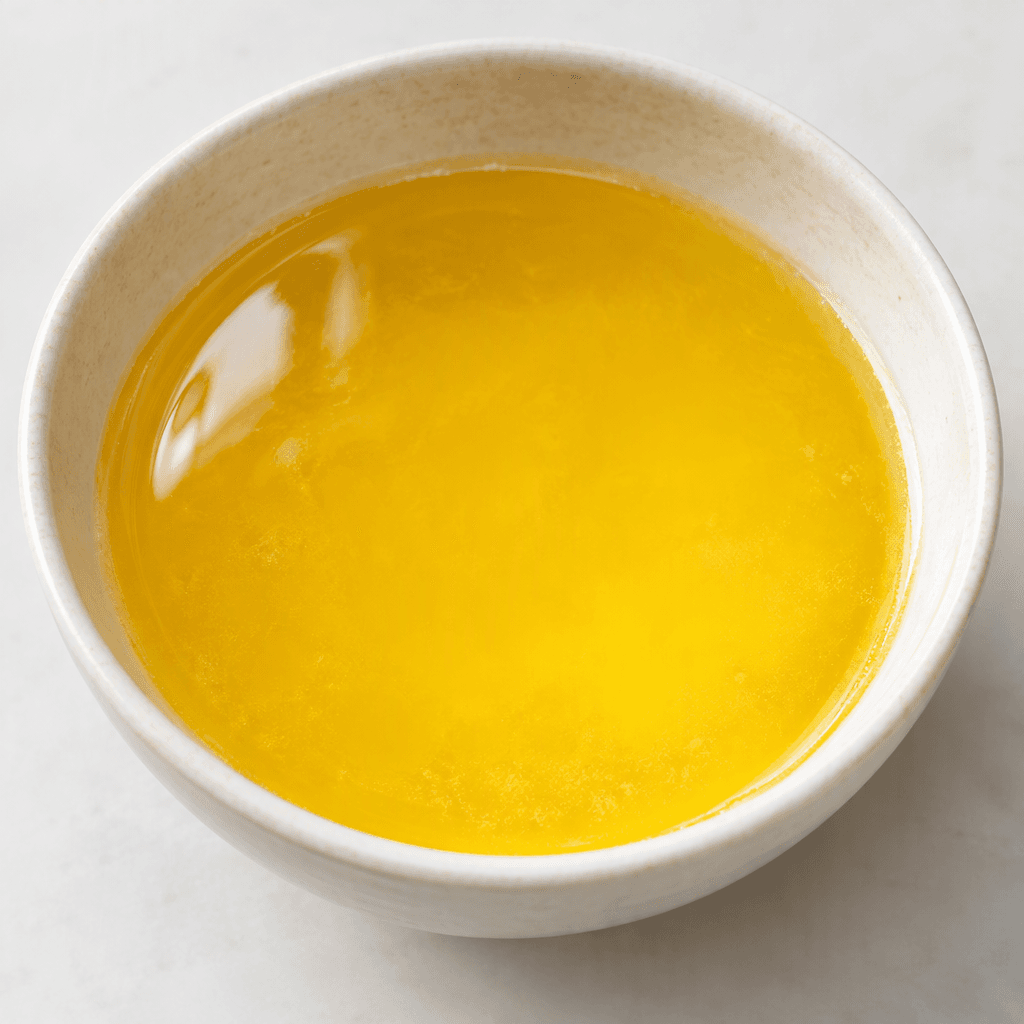
Melted Butter Calories
High fat, energy source, contains vitamin A
In season: Spring · Summer · Autumn · Winter
CALORIES
GI
POTASSIUM
FIBER
Quick answer
1 tablespoon (medium) of Melted Butter (14 g) has 100 calories. That works out to 717 calories per 100 g. It contains 0 g of carbs, 0.1 g of protein, 11.4 g of fat and 0 g of fiber. Its 95.8 µg of Vitamin A covers 11% of the Daily Value. Its glycemic index is 0 (low), so it raises blood sugar slowly.
What is Melted Butter?
Melted butter is butter warmed until liquid; unless it has been clarified, it still contains its milk solids. It has a smooth, glossy texture and a rich, gently sweet dairy flavour. Cooks use it as a cooking fat, drizzle it over food, or dip bread into it, with serving customs varying by region.
In many kitchens it finishes vegetables, potatoes, seafood or grains, and it is also used in baking and sauces. Its fat content makes it energy-dense, so a small spoonful can add plenty of flavour. For a lighter result, use just enough to coat or finish a dish rather than pouring it freely.
Melted Butter Nutrition Facts
Selected: 100 g
717
KCAL / 100G
Carbs
0.1g
· 0% DV
Protein
0.9g
· 2% DV
Fat
81.1g
· 104% DV
Fiber
0g
· 0% DV
DV is the share of the daily value covered, on a 2,000 kcal reference diet.
Calories come from: Carbs 0% · Protein 0% · Fat 100%
Melted Butter Vitamins & Minerals
Vitamins
Vitamin A
684µg · 76% DV
Vitamin E
2.32mg · 15% DV
B12
0.17µg · 7% DV
Vitamin K
7µg · 6% DV
Minerals
Phosphorus
24mg · 3% DV
Calcium
24mg · 2% DV
Selenium
1µg · 2% DV
Iodine
2µg · 1% DV
How Nutritious Is Melted Butter?
Nutrient density
Low
How many vitamins, minerals and how much fiber this food carries per calorie. A high score means a lot of nutrition for few calories.
Satiety score
Low
An EatBetter score computed from fiber, protein and calorie density. A high score means staying full longer on the same calories.
Both scores are calculated per 100 g and do not change with the selected portion. The satiety score is EatBetter's own calculation, not a clinical measure.
Melted Butter Glycemic Index
GLYCEMIC INDEX
GLYCEMIC LOAD
Accounts for portion size — a more realistic measure than GI alone.
How to Burn Off Melted Butter
To burn the 717 calories in 100 g:
🚶
Walking (5 km/h)
🏃
Running (8 km/h)
🚴
Cycling
🏊
Swimming
Times are calculated with the MET equation for a 70 kg adult. Actual burn varies with your weight, age and pace.
Is Melted Butter Processed?
NOVA 2
Minimally Processed
1. Unprocessed
2. Minimally Processed
3. Processed
4. Ultra-Processed
NOVA classifies foods into 4 groups by industrial processing. NOVA 1 (unprocessed) is the healthiest.
Does Melted Butter Contain Allergens?
Contains these allergens:
Which Diets Is Melted Butter Good For?
Vegan
— Not suitable
Vegetarian
— Not suitable
Gluten-Free
✓ Suitable
Dairy-Free
— Not suitable
Mediterranean
✓ Suitable
Paleo
✓ Suitable
Whole30
— Not suitable
DASH
— Not suitable
Keto
✓ Suitable
Low FODMAP
— Not suitable
Melted Butter Fat Profile
SATURATED
51.4g
MONOUNSATURATED
21g
POLYUNSATURATED
3g
Omega 6:3 ratio 7.3:1
Above the ideal 4:1 (7.3:1).
Compare Melted Butter
Foods Similar to Melted Butter
Frequently Asked Questions About Melted Butter
How do you melt butter without burning it?
Melt butter gently over low heat, or use short microwave bursts in a microwave-safe bowl. Take it off the heat as soon as it is liquid; the milk solids in butter can brown and burn quickly if the pan gets too hot.
Is melted butter the same as clarified butter or ghee?
No. Melted butter still contains its water and milk solids, while clarified butter and ghee have those solids removed. That difference makes clarified butter and ghee better suited to higher-heat cooking than ordinary melted butter.
Can you use melted butter instead of oil in a recipe?
Sometimes, but melted butter is not a one-to-one match for every oil-based recipe. It contains water and milk solids, and its flavor is richer; it usually works best in baking or cooking where butter is already an appropriate fat.
Why does melted butter separate?
Melted butter separates because its fat, water, and milk solids do not remain blended once it melts. This is normal and does not mean it has spoiled. Stir it just before using if you want the mixture to look more uniform.
Does melted butter turn solid again in the fridge?
Yes. As melted butter cools in the refrigerator, its fat solidifies again. Rewarm it gently when you need it liquid; chilling and reheating may change its texture, but ordinary cooling does not turn it into clarified butter.
Can you microwave melted butter?
Yes, you can melt butter in the microwave. Put it in a microwave-safe container and heat it in short bursts, checking between each one. Butter can bubble or splatter once its water heats, so avoid a long, uninterrupted heating cycle.
Can you use melted butter instead of softened butter in cookies?
Not always. Melted butter makes cookie dough looser and often produces cookies that spread more, while softened butter can be creamed with sugar to create a lighter texture. Follow the recipe’s specified form of butter for the intended result.
How should you store leftover melted butter?
Store leftover melted butter in a clean, covered container in the refrigerator rather than leaving it out for an extended period. Use a clean utensil to serve it, and discard it if it develops an unusual smell or appearance.
Can you reheat melted butter?
Yes, melted butter can be reheated gently on the stove or in short microwave bursts. Heat only the amount you need and avoid letting it smoke or darken, since overheating can burn its milk solids and create a bitter taste.
Can you put melted butter on popcorn?
Yes, melted butter is a popular topping for popcorn. Pour it over the popcorn gradually while tossing, so it coats more evenly instead of collecting at the bottom and making a few pieces soggy.
Have another question about Melted Butter?
Ask the AI nutrition coach — calories, portions, alternatives and more, answered in seconds in the app.

Scan calories with your camera
Instant AI nutrition analysis

Nutrition data compiled from USDA FoodData Central and scientific sources.