

Ready & Packaged Foods
All →Vegetables & Legumes
All →Desserts & Confectionery
All →Meat & Protein
All →Grains & Bakery
All →Beverages
All →Milk & Dairy
All →

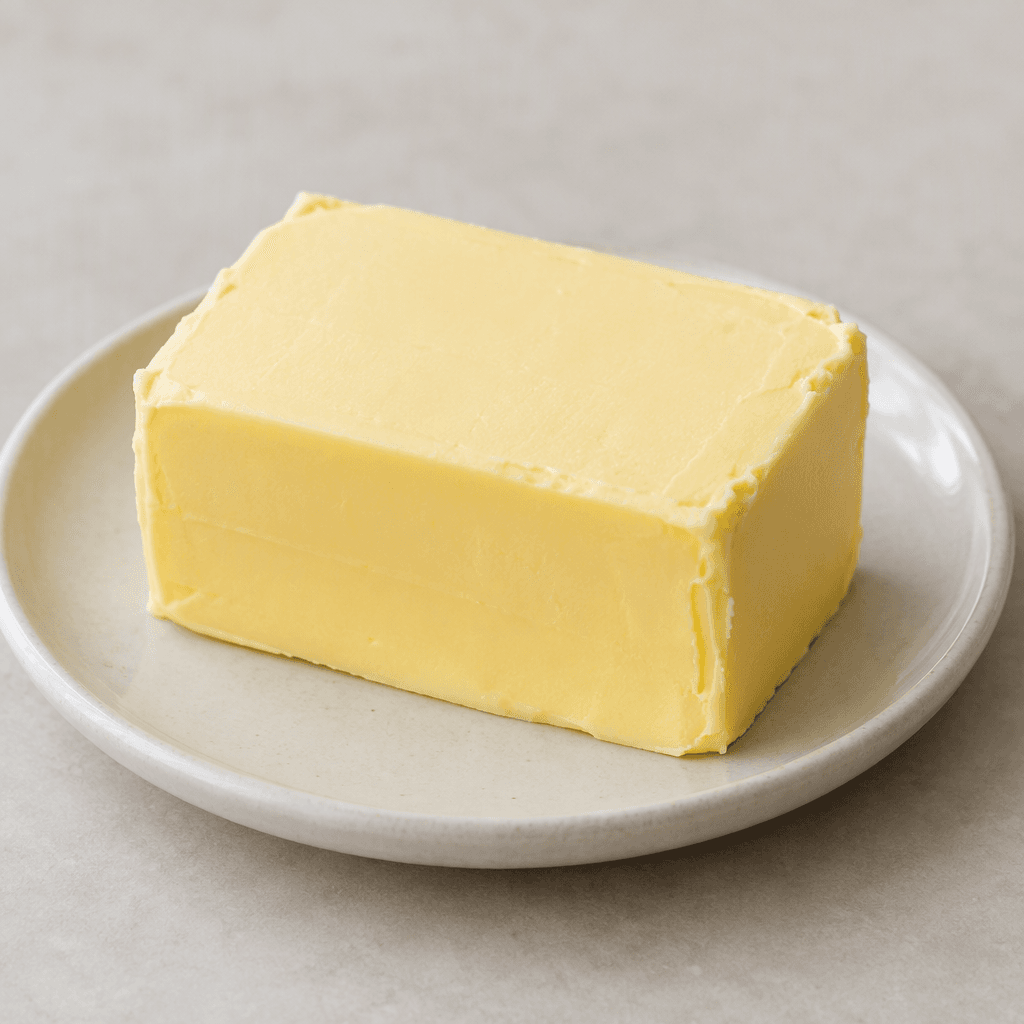
Terem Butter Calories
Popular margarine, widely used for breakfast and cooking
CALORIES
GI
POTASSIUM
FIBER
Quick answer
1 tablespoon (medium) of Terem Butter (15 g) has 108 calories. That works out to 720 calories per 100 g. It contains 0.1 g of carbs, 0.1 g of protein, 12 g of fat and 0 g of fiber. Its 120 µg of Vitamin A covers 13% of the Daily Value. Its glycemic index is 0 (low), so it raises blood sugar slowly.
What is Terem Butter?
Teremyağ is a Turkish table margarine used for spreading and cooking; despite the English name on some listings, it is not butter. It has a smooth, pale-yellow appearance and softens at room temperature, making it easy to spread. In Turkey, it commonly appears at breakfast on bread, often alongside tea, and is also used in home cooking and baking, including pastries.
It is mostly fat, with 80 g of fat per 100 g, so a little can go a long way when spreading it on toast or bread. It suits anyone looking for a convenient, mild-tasting spread or cooking fat. For a lighter serving, spread it thinly, or measure it carefully when adding it to a recipe.
Terem Butter Nutrition Facts
Selected: 100 g
720
KCAL / 100G
Carbs
0.5g
· 0% DV
Protein
0.5g
· 1% DV
Fat
80g
· 103% DV
Fiber
0g
· 0% DV
DV is the share of the daily value covered, on a 2,000 kcal reference diet.
Calories come from: Carbs 0% · Protein 0% · Fat 100%
Terem Butter Vitamins & Minerals
Vitamins
Vitamin A
800µg · 89% DV
Vitamin E
10mg · 67% DV
Vitamin D
7µg · 35% DV
B1
0mg · 0% DV
Minerals
Sodium
600mg · 26% DV
Calcium
10mg · 1% DV
Phosphorus
5mg · 1% DV
Potassium ⭐
30mg · 1% DV
How Nutritious Is Terem Butter?
Nutrient density
Low
How many vitamins, minerals and how much fiber this food carries per calorie. A high score means a lot of nutrition for few calories.
Satiety score
Low
An EatBetter score computed from fiber, protein and calorie density. A high score means staying full longer on the same calories.
Both scores are calculated per 100 g and do not change with the selected portion. The satiety score is EatBetter's own calculation, not a clinical measure.
Terem Butter Glycemic Index
GLYCEMIC INDEX
GLYCEMIC LOAD
Accounts for portion size — a more realistic measure than GI alone.
How to Burn Off Terem Butter
To burn the 720 calories in 100 g:
🚶
Walking (5 km/h)
🏃
Running (8 km/h)
🚴
Cycling
🏊
Swimming
Times are calculated with the MET equation for a 70 kg adult. Actual burn varies with your weight, age and pace.
Is Terem Butter Processed?
NOVA 3
Processed
1. Unprocessed
2. Minimally Processed
3. Processed
4. Ultra-Processed
NOVA classifies foods into 4 groups by industrial processing. NOVA 1 (unprocessed) is the healthiest.
Does Terem Butter Contain Allergens?
Contains these allergens:
Which Diets Is Terem Butter Good For?
Vegan
— Not suitable
Vegetarian
✓ Suitable
Gluten-Free
— Not suitable
Dairy-Free
— Not suitable
Mediterranean
— Not suitable
Paleo
— Not suitable
Whole30
— Not suitable
DASH
— Not suitable
Keto
— Not suitable
Low FODMAP
— Not suitable
Terem Butter Fat Profile
SATURATED
22g
MONOUNSATURATED
30g
POLYUNSATURATED
14g
Omega 6:3 ratio 70:1
Above the ideal 4:1 (70:1).
Compare Terem Butter
Foods Similar to Terem Butter
Frequently Asked Questions About Terem Butter
Is Teremyağ butter or margarine?
Teremyağ is a Turkish margarine spread, not dairy butter. It can look and be used much like butter, but it is a distinct product, so recipes may turn out differently.
Can you freeze Teremyağ?
Yes, Teremyağ can be frozen if you want to keep it longer. Seal it well to protect it from freezer odors, then thaw it in the refrigerator; its texture may be less smooth after thawing.
Does Teremyağ work for making pie crust?
Yes, Teremyağ can be used in pie crust, especially in recipes written for margarine. Keep it cold while mixing so the dough stays workable, and expect a different flavor from a butter-based crust.
Can I use Teremyağ to make Turkish pilaf?
Yes, Teremyağ can be used to sauté the rice before adding liquid for Turkish pilaf. It gives the dish a different flavor from butter, so adjust the seasoning to suit your preference.
Is Teremyağ suitable for frying eggs?
Yes, Teremyağ can be used to cook eggs in a pan over moderate heat. Let it melt without letting it smoke, then add the eggs; avoid heating it for a long time on high.
Can Teremyağ replace butter in frosting?
Teremyağ can replace butter in some frosting recipes, but the result may be softer and less buttery in flavor. Use a recipe designed for margarine when you need frosting that holds its shape.
Why does Teremyağ sometimes splatter in a pan?
Teremyağ may splatter when moisture in the spread heats rapidly in hot fat. Use a dry pan, start over moderate heat, and add ingredients carefully to reduce splashing.
Is Teremyağ healthier than butter?
Teremyağ is not automatically healthier than butter; the two have different fat compositions, and Teremyağ formulations can vary. Compare the specific products’ nutrition information and consider how much you use.
How should Teremyağ be stored after opening?
Keep Teremyağ covered in the refrigerator after opening. Use a clean utensil each time and close the packaging promptly to limit contamination and prevent it from picking up odors from other foods.
Can Teremyağ be used in place of oil in a recipe?
Sometimes, but Teremyağ is not a direct replacement for oil in every recipe. It contains water as well as fat, so swapping it into dressings or recipes that depend on liquid oil can change the texture.
Have another question about Terem Butter?
Ask the AI nutrition coach — calories, portions, alternatives and more, answered in seconds in the app.

Scan calories with your camera
Instant AI nutrition analysis

Nutrition data compiled from USDA FoodData Central and scientific sources.