

Ready & Packaged Foods
All →Vegetables & Legumes
All →Desserts & Confectionery
All →Meat & Protein
All →Grains & Bakery
All →Beverages
All →Milk & Dairy
All →

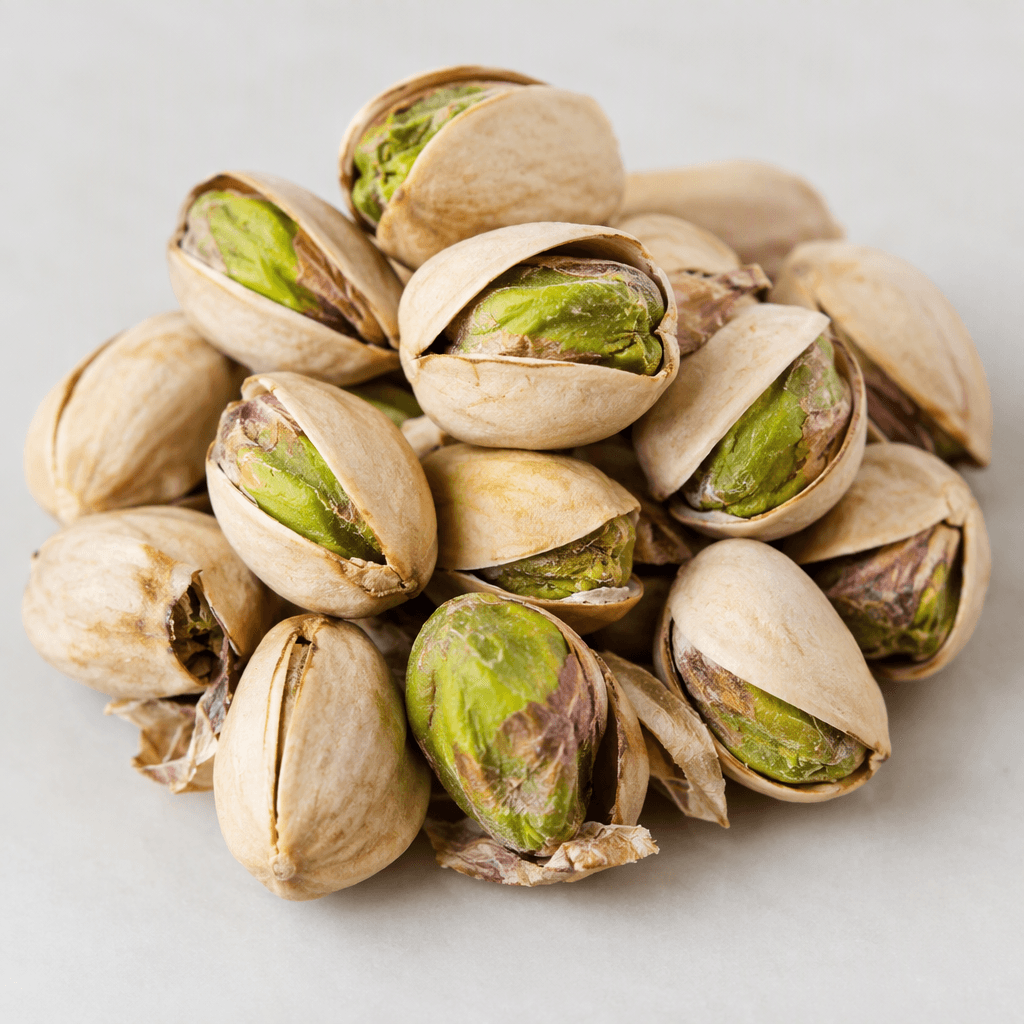
Fresh Pistachio Calories
High in protein, healthy fats, fiber, and vitamins
In season: Summer · Autumn
CALORIES
GI
POTASSIUM
FIBER
Quick answer
1 piece (medium) of Fresh Pistachio (15 g) has 41 calories. That works out to 270 calories per 100 g. It contains 2.6 g of carbs, 1.5 g of protein, 2.7 g of fat and 1.1 g of fiber. Its 0.2 mg of Copper covers 22% of the Daily Value. Its glycemic index is 15 (low), so it raises blood sugar slowly.
What is Fresh Pistachio?
Fresh pistachio is the newly harvested nut of the pistachio tree, a crop strongly associated with Gaziantep and southeastern Turkey. Its green kernel is tender and moist compared with dried pistachios, and it may still have a thin papery skin beneath the shell. Eat it plain as a seasonal snack, or use it to add colour and flavour to desserts and ice cream.
Its taste is gently sweet and grassy, with a soft bite. In Turkey it may be enjoyed on its own, alongside tea, or after a meal; elsewhere, serve it as a snack or chop it over yoghurt and pastries. It provides protein, fibre and fats, with 7 g of fibre per 100 g. Pair a small handful with fruit for an easy snack.
Fresh Pistachio Nutrition Facts
Selected: 100 g
270
KCAL / 100G
Carbs
17.5g
· 6% DV
Protein
10.3g
· 21% DV
Fat
18g
· 23% DV
Fiber
7g
· 25% DV
DV is the share of the daily value covered, on a 2,000 kcal reference diet.
Calories come from: Carbs 26% · Protein 15% · Fat 59%

Log this food in EatBetter
100,000+ people use it
- Get your daily calorie target
- Snap your meal, log it in seconds
- See every vitamin and mineral

📸 Scan the code to get the app free.

Fresh Pistachio Vitamins & Minerals
Vitamins
B6
1.7mg · 100% DV
B1
0.87mg · 73% DV
Vitamin E
2.3mg · 15% DV
Folate
51µg · 13% DV
Minerals
Copper
1mg · 111% DV
Phosphorus
490mg · 70% DV
Manganese
1mg · 43% DV
Potassium ⭐
1020mg · 30% DV
How Nutritious Is Fresh Pistachio?
Nutrient density
Very high
How many vitamins, minerals and how much fiber this food carries per calorie. A high score means a lot of nutrition for few calories.
Satiety score
Medium
An EatBetter score computed from fiber, protein and calorie density. A high score means staying full longer on the same calories.
Both scores are calculated per 100 g and do not change with the selected portion. The satiety score is EatBetter's own calculation, not a clinical measure.
Fresh Pistachio Glycemic Index
GLYCEMIC INDEX
GLYCEMIC LOAD
Accounts for portion size — a more realistic measure than GI alone.
How to Burn Off Fresh Pistachio
To burn the 270 calories in 100 g:
🚶
Walking (5 km/h)
🏃
Running (8 km/h)
🚴
Cycling
🏊
Swimming
Times are calculated with the MET equation for a 70 kg adult. Actual burn varies with your weight, age and pace.
Is Fresh Pistachio Processed?
NOVA 1
Unprocessed
1. Unprocessed
2. Minimally Processed
3. Processed
4. Ultra-Processed
NOVA classifies foods into 4 groups by industrial processing. NOVA 1 (unprocessed) is the healthiest.
Does Fresh Pistachio Contain Allergens?
Contains these allergens:
Which Diets Is Fresh Pistachio Good For?
Vegan
✓ Suitable
Vegetarian
✓ Suitable
Gluten-Free
✓ Suitable
Dairy-Free
— Not suitable
Mediterranean
✓ Suitable
Paleo
✓ Suitable
Whole30
— Not suitable
DASH
— Not suitable
Keto
✓ Suitable
Low FODMAP
— Not suitable
Fresh Pistachio Fat Profile
SATURATED
2.1g
MONOUNSATURATED
9.3g
POLYUNSATURATED
5.9g
Omega 6:3 ratio 96.7:1
Above the ideal 4:1 (96.7:1).
Compare Fresh Pistachio
Foods Similar to Fresh Pistachio
Frequently Asked Questions About Fresh Pistachio
How do you eat fresh pistachios?
Open the firm outer shell and eat the green kernel inside. The thin reddish or purple skin around the kernel is edible too. Fresh pistachios can be eaten on their own or added to salads, desserts, and sauces.
Can you eat fresh pistachios raw?
Yes, fresh pistachios can be eaten raw once you remove the hard shell. Their kernels are naturally softer and more moist than dried pistachios, and the thin skin around each kernel does not need to be peeled.
How do you peel fresh pistachios?
Remove the hard shell by hand or with a nutcracker; the kernel’s thin colored skin is optional to peel. To remove that skin more easily, briefly soak the kernels in hot water, then rub them gently with a clean towel.
What do fresh pistachios taste like?
Fresh pistachios taste mild, sweet, and slightly grassy, with a softer texture than roasted or dried pistachios. Their flavor is most noticeable when the kernels are eaten plain, without salt or strong seasonings.
How are fresh pistachios different from dried pistachios?
Fresh pistachios contain more moisture and have softer kernels and a milder flavor; dried pistachios are firmer, crunchier, and more concentrated in taste. Fresh ones may also be sold with a fleshy outer hull that dried pistachios lack.
How should you store fresh pistachios?
Keep fresh pistachios in a sealed container in the refrigerator. If they still have a moist outer hull, remove it before storage to reduce the chance of mold; discard pistachios that develop a sour smell, mold, or a sticky texture.
Can you freeze fresh pistachios?
Yes, fresh pistachios freeze well. Remove any fleshy outer hull, dry the kernels thoroughly, and seal them in a freezer-safe container. After thawing, they may be softer, so they work especially well in cooking and baking.
When are fresh pistachios in season?
Fresh pistachios are harvested in late summer and are usually available for a limited time. Choose ones with plump, vividly green kernels and firm outer coverings; shriveled kernels or a musty smell suggest they are no longer fresh.
Can you roast fresh pistachios?
Yes, you can roast fresh pistachios, but their extra moisture means they may take longer to crisp than dried nuts. Remove the hard shells, roast the kernels gently, and stir them often to keep them from scorching.
Are fresh pistachios healthy to snack on?
Yes, fresh pistachios provide protein, fiber, and unsaturated fats, making them a filling snack. They are easy to overeat when shelled, so serving them in their shells can help slow down snacking and make portions easier to notice.
Have another question about Fresh Pistachio?
Ask the AI nutrition coach — calories, portions, alternatives and more, answered in seconds in the app.

Scan calories with your camera
Instant AI nutrition analysis

Nutrition data compiled from USDA FoodData Central and scientific sources.