

Ready & Packaged Foods
All →Vegetables & Legumes
All →Desserts & Confectionery
All →Meat & Protein
All →Grains & Bakery
All →Beverages
All →Milk & Dairy
All →

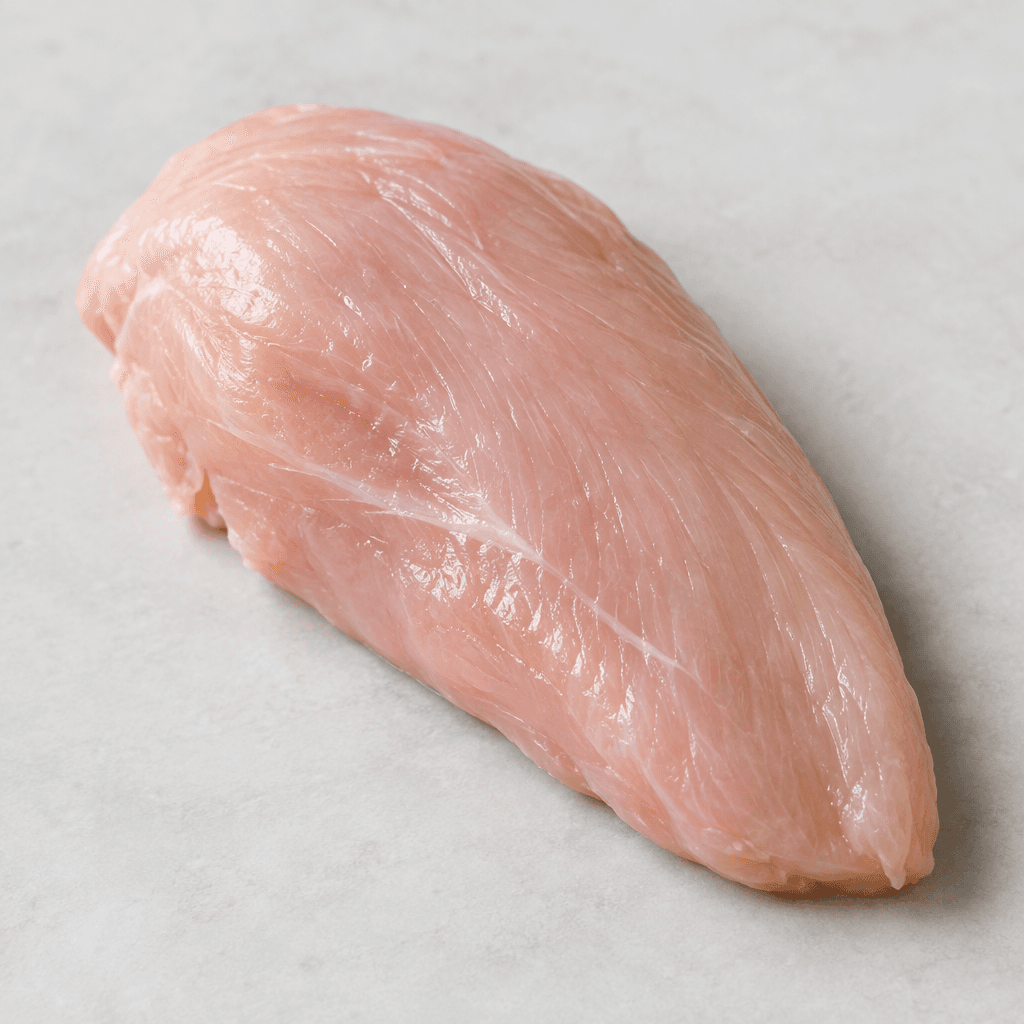
Chicken fillet Calories
Lean protein, low fat, source of vitamin B6 and niacin
In season: Spring · Summer · Autumn · Winter
CALORIES
GI
POTASSIUM
FIBER
Quick answer
1 piece (medium) of Chicken fillet (120 g) has 132 calories. That works out to 110 calories per 100 g. It contains 0 g of carbs, 27.7 g of protein, 1.4 g of fat and 0 g of fiber. Its 16.4 mg of B3 covers 103% of the Daily Value. Its glycemic index is 0 (low), so it raises blood sugar slowly.
What is Chicken fillet?
Chicken fillet is a boneless, skinless cut, usually taken from the breast. Its mild flavour and even shape make it a handy choice for quick meals, whether you buy it fresh from a butcher or a supermarket.
Grill, pan-cook or bake it, then serve with vegetables, rice or potatoes; sliced fillet also works well in salads and sandwiches. It is a lean, protein-rich meat, with 23.1 g of protein per 100 g. Because it can dry out if overcooked, season or briefly marinate it and cook just until done. A squeeze of lemon and a little oil pair well without making the meal feel heavy.
Chicken fillet Nutrition Facts
Selected: 100 g
110
KCAL / 100G
Carbs
0g
· 0% DV
Protein
23.1g
· 46% DV
Fat
1.2g
· 2% DV
Fiber
0g
· 0% DV
DV is the share of the daily value covered, on a 2,000 kcal reference diet.
Calories come from: Carbs 0% · Protein 90% · Fat 10%
Chicken fillet Vitamins & Minerals
Vitamins
B3
13.7mg · 86% DV
B6
0.6mg · 35% DV
B5
1mg · 20% DV
B12
0.3µg · 13% DV
Minerals
Phosphorus
210mg · 30% DV
Selenium
16µg · 29% DV
Zinc
1mg · 9% DV
Potassium ⭐
256mg · 8% DV
How Nutritious Is Chicken fillet?
Nutrient density
High
How many vitamins, minerals and how much fiber this food carries per calorie. A high score means a lot of nutrition for few calories.
Satiety score
Medium
An EatBetter score computed from fiber, protein and calorie density. A high score means staying full longer on the same calories.
Both scores are calculated per 100 g and do not change with the selected portion. The satiety score is EatBetter's own calculation, not a clinical measure.
Chicken fillet Glycemic Index
GLYCEMIC INDEX
GLYCEMIC LOAD
Accounts for portion size — a more realistic measure than GI alone.
How to Burn Off Chicken fillet
To burn the 110 calories in 100 g:
🚶
Walking (5 km/h)
🏃
Running (8 km/h)
🚴
Cycling
🏊
Swimming
Times are calculated with the MET equation for a 70 kg adult. Actual burn varies with your weight, age and pace.
Is Chicken fillet Processed?
NOVA 1
Unprocessed
1. Unprocessed
2. Minimally Processed
3. Processed
4. Ultra-Processed
NOVA classifies foods into 4 groups by industrial processing. NOVA 1 (unprocessed) is the healthiest.
Does Chicken fillet Contain Allergens?
No known major allergens
Which Diets Is Chicken fillet Good For?
Vegan
— Not suitable
Vegetarian
— Not suitable
Gluten-Free
✓ Suitable
Dairy-Free
— Not suitable
Mediterranean
✓ Suitable
Paleo
✓ Suitable
Whole30
— Not suitable
DASH
— Not suitable
Keto
✓ Suitable
Low FODMAP
— Not suitable
Chicken fillet Fat Profile
SATURATED
0.3g
MONOUNSATURATED
0.3g
POLYUNSATURATED
0.3g
Omega 6:3 ratio 5.8:1
Above the ideal 4:1 (5.8:1).
Compare Chicken fillet
Foods Similar to Chicken fillet
Frequently Asked Questions About Chicken fillet
What is the difference between chicken fillet and chicken breast?
A chicken fillet is usually a boneless piece cut from the breast, while “chicken breast” can refer to the whole breast portion, including bone and skin. In some shops, “fillet” means the smaller tenderloin beneath the breast, so check the cut if the distinction matters.
How do you cook chicken fillet in an air fryer?
Cook chicken fillet in a preheated air fryer in a single layer, turning it partway through so it browns evenly. The cooking time varies with thickness; check the thickest part with a food thermometer and cook it to 74°C (165°F).
Can you cook chicken fillet from frozen?
Yes, chicken fillet can be cooked from frozen, but it takes longer and may cook unevenly if pieces are stuck together. Separate the pieces, use a method that heats them thoroughly, and confirm the centre reaches 74°C (165°F) before serving.
How do you keep chicken fillet from sticking to the grill?
Clean and preheat the grill, then lightly oil the chicken fillet rather than pouring oil onto the grates. Let the meat form a browned surface before turning it; forcing it loose too early can tear it and leave pieces behind.
How long should you marinate chicken fillet?
Chicken fillet can be marinated in the refrigerator for about 30 minutes to a few hours. Acidic marinades with lemon or vinegar can make the surface mushy if left too long, so avoid leaving the meat in them overnight.
Should you rinse chicken fillet before cooking?
No, do not rinse chicken fillet. Water can splash bacteria from raw poultry onto the sink, counters, and nearby food; pat the surface dry with paper towels instead, then wash your hands and clean anything that touched the raw meat.
How can you tell when chicken fillet is cooked without cutting it?
Use a food thermometer to check the thickest part of the chicken fillet; it is safely cooked at 74°C (165°F). Colour and clear juices are less reliable indicators, especially when the meat is thick or unevenly shaped.
How should you store cooked chicken fillet for meal prep?
Store cooked chicken fillet in a covered container in the refrigerator and use it within 3–4 days. Refrigerate it within 2 hours of cooking, then reheat portions until steaming hot; keeping portions separate helps them cool and reheat evenly.
Can chicken fillet be frozen after cooking?
Yes, cooked chicken fillet freezes well when wrapped tightly or sealed in an airtight container. Freeze it in meal-sized portions, thaw it in the refrigerator, and use it soon after thawing; reheating it from frozen is also possible if it heats through evenly.
Why does chicken fillet turn rubbery in the microwave?
Chicken fillet can turn rubbery in the microwave when it is overheated or heated unevenly. Slice it, add a spoonful of water or broth, cover loosely, and warm it in short bursts, checking between bursts so the meat does not dry out.
Have another question about Chicken fillet?
Ask the AI nutrition coach — calories, portions, alternatives and more, answered in seconds in the app.

Scan calories with your camera
Instant AI nutrition analysis

Nutrition data compiled from USDA FoodData Central and scientific sources.