

Ready & Packaged Foods
All →Vegetables & Legumes
All →Desserts & Confectionery
All →Meat & Protein
All →Grains & Bakery
All →Beverages
All →Milk & Dairy
All →

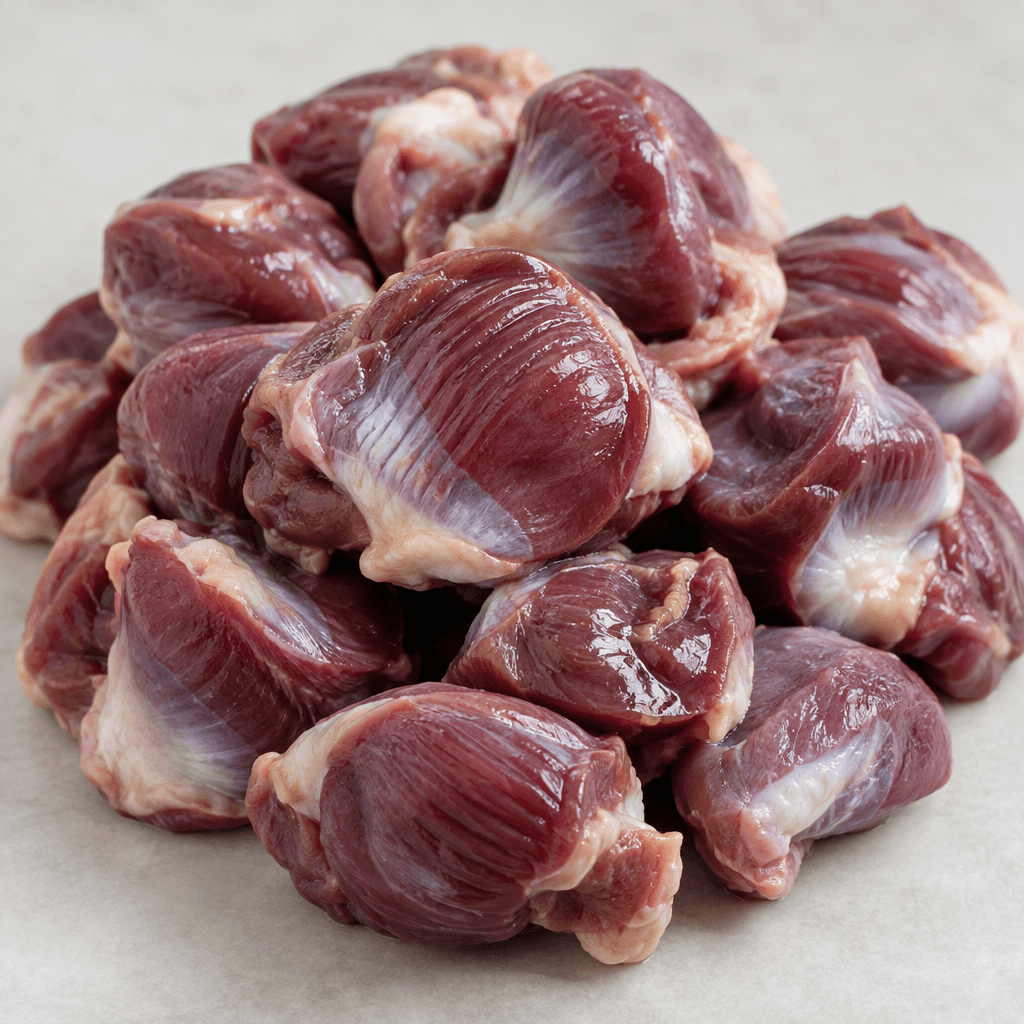
Chicken Gizzard Calories
Rich in iron and protein, low-fat chicken organ meat.
In season: Spring · Summer · Autumn · Winter
CALORIES
GI
POTASSIUM
FIBER
Quick answer
1 piece (medium) of Chicken Gizzard (40 g) has 38 calories. That works out to 94 calories per 100 g. It contains 0.3 g of carbs, 7.3 g of protein, 0.8 g of fat and 0 g of fiber. Its 0.6 µg of B12 covers 27% of the Daily Value. Its glycemic index is 0 (low), so it raises blood sugar slowly.
What is Chicken Gizzard?
Chicken gizzard is the muscular part of a chicken’s digestive tract that grinds its food. It is sold cleaned and is often simmered until tender before being browned, grilled or added to a stew. The flavour is savoury and gently distinctive; its firm, chewy texture is part of its appeal when cooked well. Across the world, it also turns up in skewers, soups and mixed offal dishes, and can be served with rice, potatoes or a crisp salad.
It is a lean, protein-rich choice, with about 18 g of protein per 100 g. Because it can be tough, cook it gently until tender before finishing it over high heat. Pair it with vegetables and go easy on added oil for a lighter meal.
Chicken Gizzard Nutrition Facts
Selected: 100 g
94
KCAL / 100G
Carbs
0.7g
· 0% DV
Protein
18.2g
· 36% DV
Fat
2.1g
· 3% DV
Fiber
0g
· 0% DV
DV is the share of the daily value covered, on a 2,000 kcal reference diet.
Calories come from: Carbs 3% · Protein 77% · Fat 20%
Chicken Gizzard Vitamins & Minerals
Vitamins
B12
1.6µg · 67% DV
B3
3.8mg · 24% DV
B5
1.1mg · 22% DV
B2
0.22mg · 17% DV
Minerals
Selenium
22µg · 40% DV
Phosphorus
180mg · 26% DV
Zinc
2mg · 18% DV
Iron
3mg · 17% DV
How Nutritious Is Chicken Gizzard?
Nutrient density
High
How many vitamins, minerals and how much fiber this food carries per calorie. A high score means a lot of nutrition for few calories.
Satiety score
Medium
An EatBetter score computed from fiber, protein and calorie density. A high score means staying full longer on the same calories.
Both scores are calculated per 100 g and do not change with the selected portion. The satiety score is EatBetter's own calculation, not a clinical measure.
Chicken Gizzard Glycemic Index
GLYCEMIC INDEX
GLYCEMIC LOAD
Accounts for portion size — a more realistic measure than GI alone.
How to Burn Off Chicken Gizzard
To burn the 94 calories in 100 g:
🚶
Walking (5 km/h)
🏃
Running (8 km/h)
🚴
Cycling
🏊
Swimming
Times are calculated with the MET equation for a 70 kg adult. Actual burn varies with your weight, age and pace.
Is Chicken Gizzard Processed?
NOVA 1
Unprocessed
1. Unprocessed
2. Minimally Processed
3. Processed
4. Ultra-Processed
NOVA classifies foods into 4 groups by industrial processing. NOVA 1 (unprocessed) is the healthiest.
Does Chicken Gizzard Contain Allergens?
No known major allergens
Which Diets Is Chicken Gizzard Good For?
Vegan
— Not suitable
Vegetarian
— Not suitable
Gluten-Free
✓ Suitable
Dairy-Free
— Not suitable
Mediterranean
✓ Suitable
Paleo
✓ Suitable
Whole30
— Not suitable
DASH
— Not suitable
Keto
✓ Suitable
Low FODMAP
— Not suitable
Chicken Gizzard Fat Profile
SATURATED
0.6g
MONOUNSATURATED
0.6g
POLYUNSATURATED
0.3g
Omega 6:3 ratio 4.5:1
Above the ideal 4:1 (4.5:1).
Compare Chicken Gizzard
Foods Similar to Chicken Gizzard
Frequently Asked Questions About Chicken Gizzard
What is a chicken gizzard?
A chicken gizzard is the bird’s muscular stomach, which grinds food, and it is sold as an unprocessed organ meat. Its firm texture comes from that muscle, so it usually needs slow cooking or pressure cooking to become tender.
What do chicken gizzards taste like?
Chicken gizzards have a savory, mildly chicken-like flavor and a much firmer, chewier texture than breast meat. When cooked until tender and then browned, they take on a richer, slightly nutty taste.
How do you clean chicken gizzards?
Rinse chicken gizzards under cold running water, then trim away connective tissue and any tough yellowish inner lining that remains. Rinse again and clean the knife, board, and sink thoroughly after handling raw poultry.
How do you cook chicken gizzards so they are tender?
Simmer chicken gizzards gently in liquid until a fork can pierce them easily, or use a pressure cooker to speed up tenderizing. For a browned finish, cook them until tender first, then sear or fry them briefly.
Why are chicken gizzards tough?
Chicken gizzards are tough when they have not been cooked long enough to soften their dense muscle fibers. A quick sauté may brown the outside while leaving the center chewy, so simmer them gently before finishing them in a pan.
Can you fry chicken gizzards?
Yes, you can fry chicken gizzards, but tenderize them first by simmering or pressure cooking. Pat them dry, coat them if desired, and fry briefly to brown; frying raw gizzards often leaves them unpleasantly tough.
Are chicken gizzards healthy to eat?
Yes, chicken gizzards provide protein and iron while being relatively low in fat. They are organ meat, so people who have been advised to limit cholesterol-rich foods should ask their healthcare professional how often to include them.
Can you freeze chicken gizzards?
Yes, chicken gizzards can be frozen raw or cooked. Seal them in an airtight freezer-safe package, thaw them in the refrigerator rather than on the counter, and cook thawed raw gizzards before freezing them again.
Are chicken gizzards the same as chicken giblets?
No. A chicken gizzard is one specific organ; “giblets” usually means a collection of edible organs, often including the heart, liver, and gizzard. A package labeled giblets may therefore contain more than gizzards.
How can you tell when chicken gizzards are cooked?
Chicken gizzards are ready when they are thoroughly cooked through and tender enough to pierce easily with a fork. Color alone is not a dependable safety check; use a food thermometer to confirm poultry has reached a safe internal temperature.
Have another question about Chicken Gizzard?
Ask the AI nutrition coach — calories, portions, alternatives and more, answered in seconds in the app.

Scan calories with your camera
Instant AI nutrition analysis

Nutrition data compiled from USDA FoodData Central and scientific sources.