

Ready & Packaged Foods
All →Vegetables & Legumes
All →Desserts & Confectionery
All →Meat & Protein
All →Grains & Bakery
All →Beverages
All →Milk & Dairy
All →

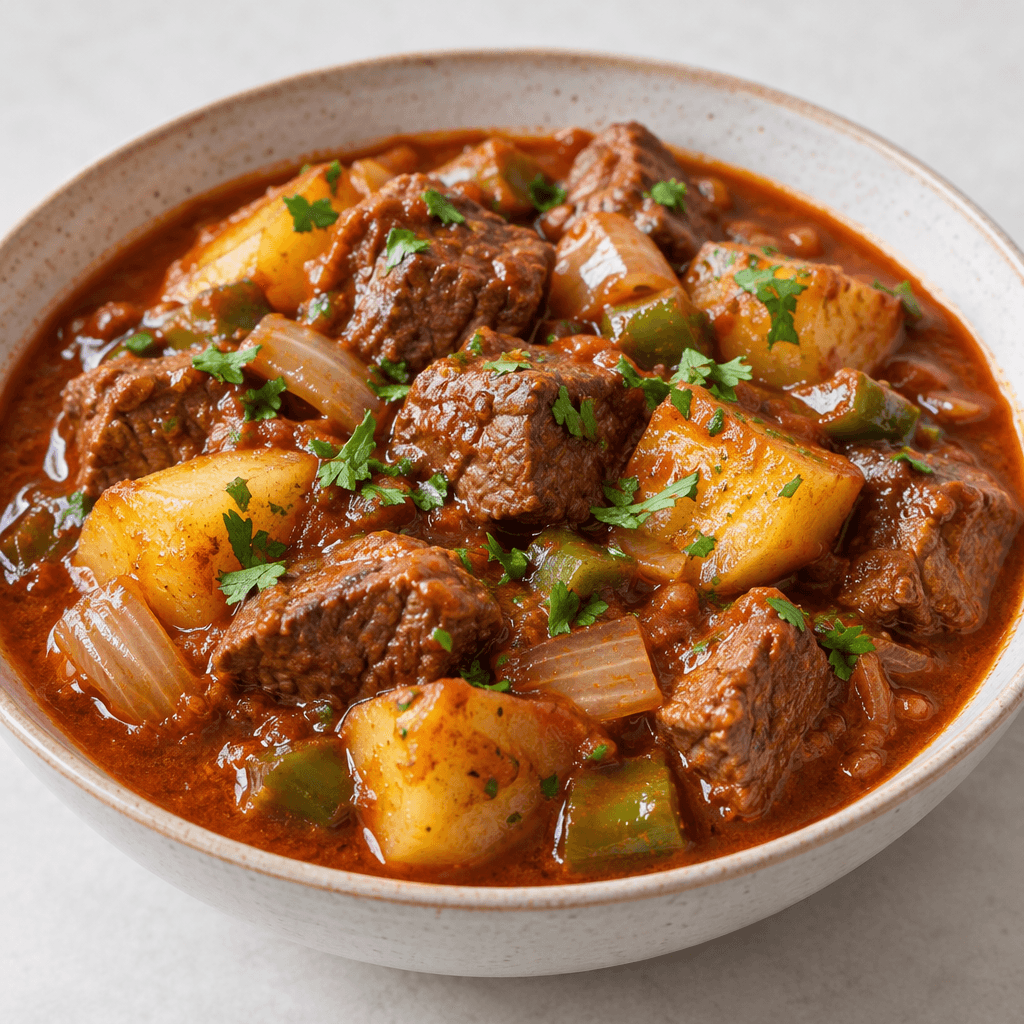
Tas Kebab Calories
Traditional Turkish stew with beef, vegetables, and spices
In season: Autumn · Winter
CALORIES
GI
POTASSIUM
FIBER
Quick answer
1 serving (medium) of Tas Kebab (250 g) has 300 calories. That works out to 120 calories per 100 g. It contains 15.5 g of carbs, 26.3 g of protein, 13 g of fat and 3.3 g of fiber. Its 2.8 µg of B12 covers 115% of the Daily Value. Its glycemic index is 45 (low), so it raises blood sugar slowly.
What is Tas Kebab?
Tas Kebab is a Turkish stew, usually made with chunks of beef, onion and tomato, with potatoes and peppers common additions. The meat is browned and then simmered slowly with the vegetables and seasoning until tender, in a thick, savoury sauce. Recipes vary from one household to another, including the choice of meat and the sauce’s richness.
In Turkey it is generally served as a hearty main, often alongside rice pilaf, bulgur or bread; a crisp salad or yoghurt can balance the rich gravy. It brings protein together with vegetables, though the overall nutrition depends on the cut of meat and how much oil is used. For a lighter serving, keep the oil modest and pair it with salad rather than adding extra bread or pilaf.
Tas Kebab Nutrition Facts
Selected: 100 g
120
KCAL / 100G
Carbs
6.2g
· 2% DV
Protein
10.5g
· 21% DV
Fat
5.2g
· 7% DV
Fiber
1.3g
· 5% DV
DV is the share of the daily value covered, on a 2,000 kcal reference diet.
Calories come from: Carbs 22% · Protein 37% · Fat 41%
Tas Kebab Vitamins & Minerals
Vitamins
B12
1.1µg · 46% DV
B3
2.1mg · 13% DV
B5
0.45mg · 9% DV
B2
0.11mg · 8% DV
Minerals
Zinc
2mg · 18% DV
Phosphorus
110mg · 16% DV
Selenium
7µg · 13% DV
Sodium
210mg · 9% DV
How Nutritious Is Tas Kebab?
Nutrient density
High
How many vitamins, minerals and how much fiber this food carries per calorie. A high score means a lot of nutrition for few calories.
Satiety score
Medium
An EatBetter score computed from fiber, protein and calorie density. A high score means staying full longer on the same calories.
Both scores are calculated per 100 g and do not change with the selected portion. The satiety score is EatBetter's own calculation, not a clinical measure.
Tas Kebab Glycemic Index
GLYCEMIC INDEX
GLYCEMIC LOAD
Accounts for portion size — a more realistic measure than GI alone.
How to Burn Off Tas Kebab
To burn the 120 calories in 100 g:
🚶
Walking (5 km/h)
🏃
Running (8 km/h)
🚴
Cycling
🏊
Swimming
Times are calculated with the MET equation for a 70 kg adult. Actual burn varies with your weight, age and pace.
Is Tas Kebab Processed?
NOVA 2
Minimally Processed
1. Unprocessed
2. Minimally Processed
3. Processed
4. Ultra-Processed
NOVA classifies foods into 4 groups by industrial processing. NOVA 1 (unprocessed) is the healthiest.
Does Tas Kebab Contain Allergens?
No known major allergens
Which Diets Is Tas Kebab Good For?
Vegan
— Not suitable
Vegetarian
— Not suitable
Gluten-Free
✓ Suitable
Dairy-Free
— Not suitable
Mediterranean
✓ Suitable
Paleo
✓ Suitable
Whole30
— Not suitable
DASH
— Not suitable
Keto
— Not suitable
Low FODMAP
— Not suitable
Tas Kebab Fat Profile
SATURATED
2.1g
MONOUNSATURATED
2g
POLYUNSATURATED
0.5g
Omega 6:3 ratio 3:1
Below the ideal 4:1 — a good omega balance.
Compare Tas Kebab
Foods Similar to Tas Kebab
Frequently Asked Questions About Tas Kebab
What is Tas Kebab?
Tas Kebab is a Turkish meat stew made by slowly cooking bite-sized beef or lamb with onions, tomato paste, spices and often potatoes. The result is tender meat in a thick, savoury sauce, usually served hot as a main course.
How is Tas Kebab traditionally cooked?
Tas Kebab is traditionally cooked slowly in a covered pot: brown the meat, soften the onions, stir in tomato paste and seasonings, then simmer with a little water until tender. Potatoes or other vegetables are added later so they hold their shape.
What cut of meat is best for Tas Kebab?
Beef chuck or another well-marbled stewing cut works well for Tas Kebab because slow cooking softens its connective tissue. Lamb shoulder is also a traditional option. Cut the meat into even chunks so they cook at a similar rate.
Why is the meat in my Tas Kebab tough?
Tas Kebab meat is usually tough because it has not simmered long enough to soften. Keep the pot covered and cook gently until the pieces are tender; raising the heat can make the meat dry before the sauce has time to develop.
Does Tas Kebab contain potatoes?
Tas Kebab often includes potatoes, but they are not essential in every version. When used, they are typically added after the meat has started to tenderize, so they finish cooking without falling apart in the sauce.
Is Tas Kebab spicy?
Tas Kebab is usually savoury rather than very hot, with its flavour coming from tomato paste, black pepper and other seasonings. Some cooks add chilli or red pepper flakes, so the heat varies by recipe and can be adjusted to taste.
What do you serve with Tas Kebab?
Tas Kebab is commonly served with Turkish rice pilaf or bulgur pilaf, which soak up its thick sauce. A simple salad or yogurt-based side such as cacık makes the meal feel fresher and balances the rich stew.
Can you make Tas Kebab ahead of time?
Yes, Tas Kebab can be cooked a day ahead and refrigerated once cooled. Reheat it thoroughly in a covered saucepan; if the sauce has thickened in the fridge, stir in a little water while warming.
Can you freeze Tas Kebab?
Yes, Tas Kebab freezes well, although potatoes may become soft or crumbly after thawing. Cool it before freezing in an airtight container, thaw it in the refrigerator, and reheat until hot throughout.
What makes Tas Kebab different from ordinary beef stew?
Tas Kebab is a Turkish-style stew typically built around browned chunks of meat, onions and tomato paste, with potatoes common in many home versions. Its seasoning and thick, concentrated sauce distinguish it from beef stews made with other regional ingredients.
Have another question about Tas Kebab?
Ask the AI nutrition coach — calories, portions, alternatives and more, answered in seconds in the app.

Scan calories with your camera
Instant AI nutrition analysis

Nutrition data compiled from USDA FoodData Central and scientific sources.