

Ready & Packaged Foods
All →Vegetables & Legumes
All →Desserts & Confectionery
All →Meat & Protein
All →Grains & Bakery
All →Beverages
All →Milk & Dairy
All →

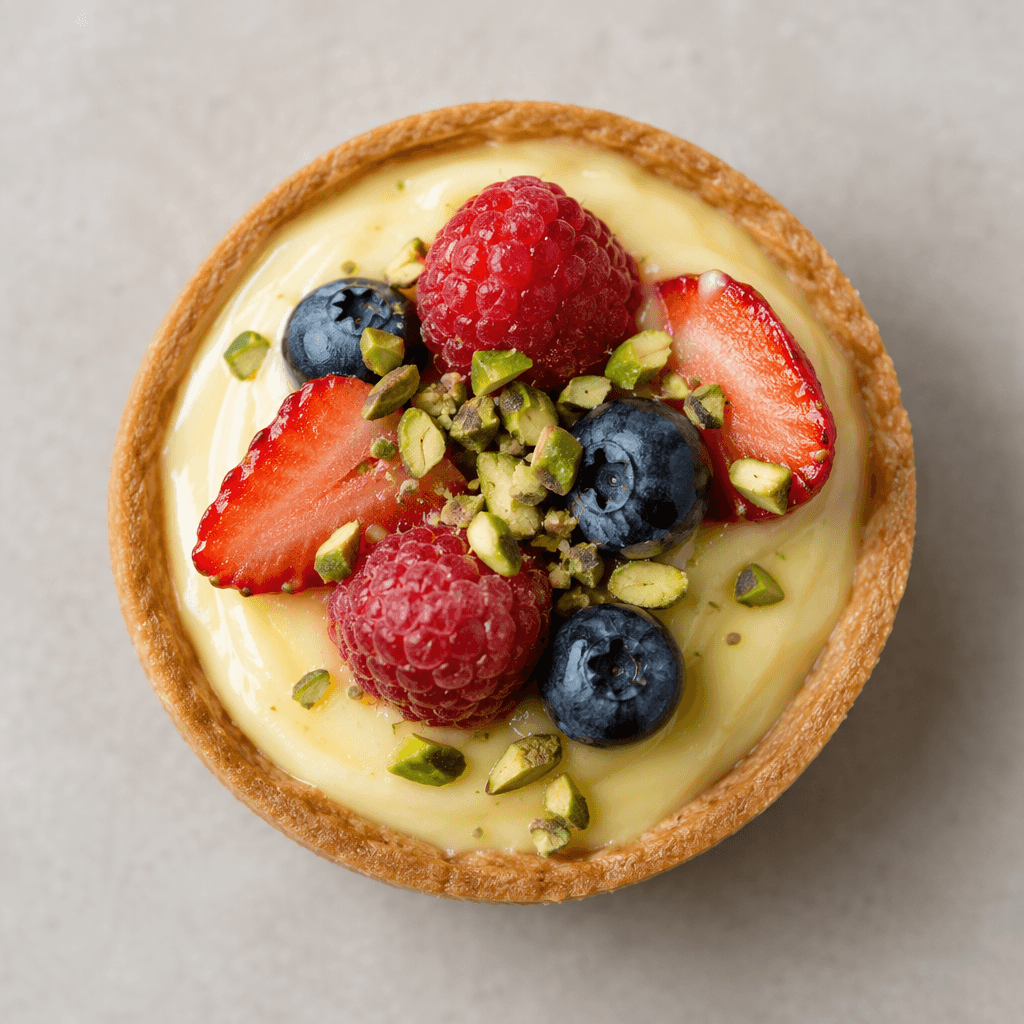
Tartlet Calories
Small pastry shell often filled with fruit, custard, or cream
In season: Spring · Summer · Autumn · Winter
CALORIES
GI
POTASSIUM
FIBER
Quick answer
1 piece (medium) of Tartlet (40 g) has 128 calories. That works out to 320 calories per 100 g. It contains 18 g of carbs, 1.8 g of protein, 5.6 g of fat and 0.6 g of fiber. Its glycemic index is 65 (high), so it raises blood sugar quickly.
What is Tartlet?
A tartlet is a small, individual tart made with a shallow pastry shell and a sweet filling such as custard, pastry cream or fruit. It belongs to the European pastry tradition, with especially familiar versions in French patisserie; fillings and toppings vary from bakery to bakery.
The shell is usually crisp and buttery, contrasting with a smooth, soft centre. Tartlets are served as a dessert or with coffee or tea, whether bought from a bakery or made at home. They are mainly a source of carbohydrate and fat, with relatively little protein and fibre. For a lighter-feeling choice, look for one topped generously with fresh fruit and filled with a thinner layer of cream.
Tartlet Nutrition Facts
Selected: 100 g
320
KCAL / 100G
Carbs
45g
· 16% DV
Protein
4.5g
· 9% DV
Fat
14g
· 18% DV
Fiber
1.5g
· 5% DV
DV is the share of the daily value covered, on a 2,000 kcal reference diet.
Calories come from: Carbs 56% · Protein 6% · Fat 38%
Tartlet Vitamins & Minerals
Vitamins
B2
0.13mg · 10% DV
B1
0.11mg · 9% DV
Biotin
2.5µg · 8% DV
Vitamin A
60µg · 7% DV
Minerals
Selenium
5µg · 9% DV
Phosphorus
55mg · 8% DV
Iron
1mg · 6% DV
Sodium
120mg · 5% DV
How Nutritious Is Tartlet?
Nutrient density
Low
How many vitamins, minerals and how much fiber this food carries per calorie. A high score means a lot of nutrition for few calories.
Satiety score
Low
An EatBetter score computed from fiber, protein and calorie density. A high score means staying full longer on the same calories.
Both scores are calculated per 100 g and do not change with the selected portion. The satiety score is EatBetter's own calculation, not a clinical measure.
Tartlet Glycemic Index
GLYCEMIC INDEX
GLYCEMIC LOAD
Accounts for portion size — a more realistic measure than GI alone.
How to Burn Off Tartlet
To burn the 320 calories in 100 g:
🚶
Walking (5 km/h)
🏃
Running (8 km/h)
🚴
Cycling
🏊
Swimming
Times are calculated with the MET equation for a 70 kg adult. Actual burn varies with your weight, age and pace.
Is Tartlet Processed?
NOVA 3
Processed
1. Unprocessed
2. Minimally Processed
3. Processed
4. Ultra-Processed
NOVA classifies foods into 4 groups by industrial processing. NOVA 1 (unprocessed) is the healthiest.
Does Tartlet Contain Allergens?
Contains these allergens:
Which Diets Is Tartlet Good For?
Vegan
— Not suitable
Vegetarian
✓ Suitable
Gluten-Free
— Not suitable
Dairy-Free
— Not suitable
Mediterranean
— Not suitable
Paleo
— Not suitable
Whole30
— Not suitable
DASH
— Not suitable
Keto
— Not suitable
Low FODMAP
— Not suitable
Tartlet Fat Profile
SATURATED
5.5g
MONOUNSATURATED
5.1g
POLYUNSATURATED
1.3g
Omega 6:3 ratio 40:1
Above the ideal 4:1 (40:1).
Compare Tartlet
Foods Similar to Tartlet
Frequently Asked Questions About Tartlet
What is a tartlet?
A tartlet is a small, individual tart with a pastry shell and a filling. It may be topped with fruit, custard, cream, chocolate, or a savoury mixture, though sweet tartlets are common in bakeries and at afternoon tea.
How do you make tartlets?
Make tartlet shells from pastry, press the dough into small tins, chill it, and bake until golden. Once cooled, fill the shells with custard, cream, fruit, or another chosen filling; baking the shells separately helps them stay crisp.
What fillings are best for tartlets?
Custard, pastry cream, chocolate ganache, lemon curd, and fresh fruit are popular tartlet fillings. Pair a crisp shell with a filling that is thick enough to hold its shape, and add juicy fruit shortly before serving.
Why does tartlet pastry shrink when baking?
Tartlet pastry usually shrinks because the dough was stretched into the tin, insufficiently chilled, or worked too much. Press it gently into the mould, trim the edges without pulling, and chill the lined tins before baking.
How do you stop tartlet shells from going soggy?
Bake tartlet shells fully before adding a wet filling, then let them cool completely. Fill them as close to serving time as practical; a thin layer of melted chocolate or egg wash can also create a moisture barrier.
Can you make tartlets ahead of time?
Yes, you can bake tartlet shells ahead and keep them unfilled in an airtight container. Prepare the filling separately and assemble the tartlets closer to serving, since custard and fruit can soften the pastry.
How should you store tartlets?
Store tartlets with custard, cream, or fresh fruit covered in the refrigerator. Plain baked shells can stay at room temperature in an airtight container; keep fillings separate until serving if you want the pastry to remain crisp.
Can you freeze tartlets?
You can freeze baked, unfilled tartlet shells after they have cooled completely. Pack them airtight and thaw before filling. Freezing assembled tartlets with custard or fresh fruit is less successful because the filling and pastry may turn watery or soft.
What is the difference between a tartlet and a mini tart?
Tartlet and mini tart usually describe the same kind of small, individual pastry. Bakeries may use “mini tart” for a smaller bite-sized version, but there is no strict standard separating the names.
Do tartlet shells need blind baking?
Yes, tartlet shells often need blind baking when they will be filled with an unbaked cream or fruit mixture. Line the pastry with baking paper and pie weights, then remove them near the end so the base can brown.
Have another question about Tartlet?
Ask the AI nutrition coach — calories, portions, alternatives and more, answered in seconds in the app.

Scan calories with your camera
Instant AI nutrition analysis

Nutrition data compiled from USDA FoodData Central and scientific sources.