

Ready & Packaged Foods
All →Vegetables & Legumes
All →Desserts & Confectionery
All →Meat & Protein
All →Grains & Bakery
All →Beverages
All →Milk & Dairy
All →

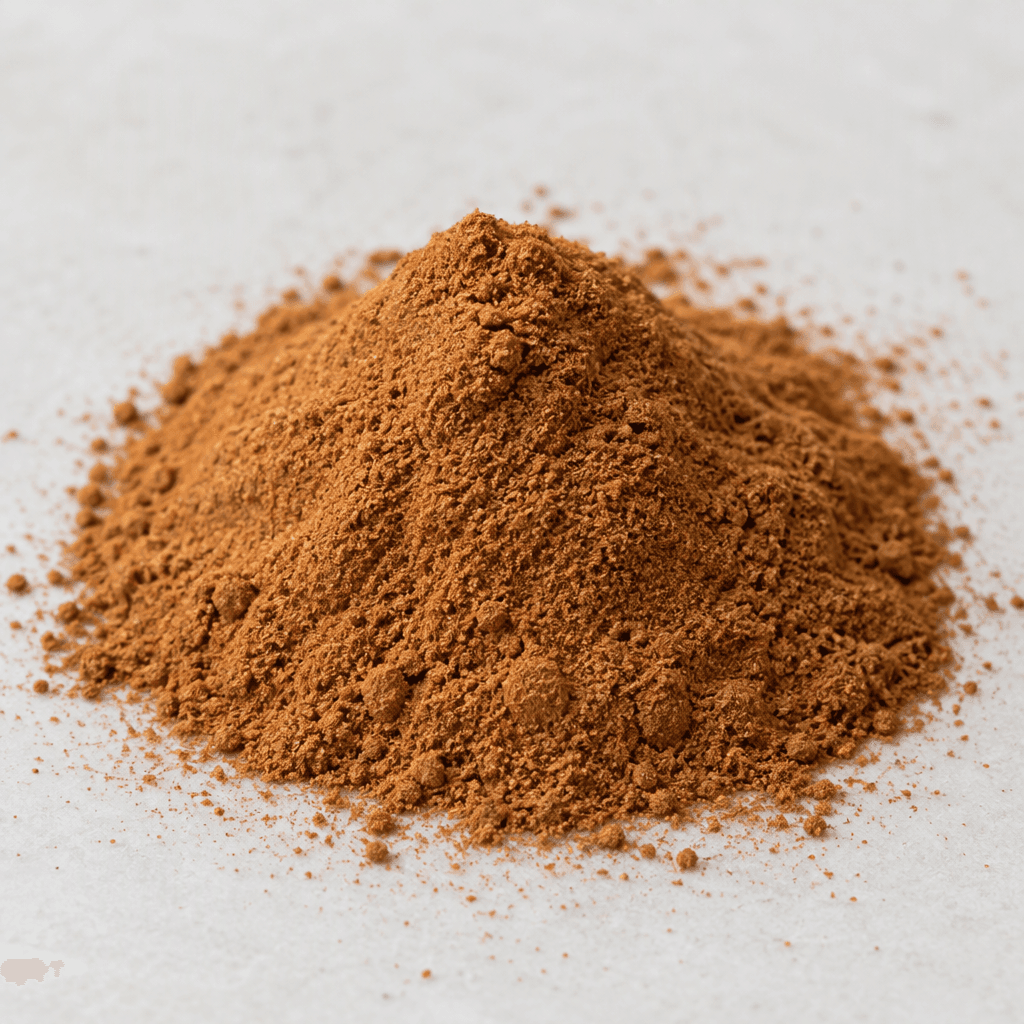
Cinnamon Powder Calories
Antioxidant, blood sugar regulator, aromatic spice
In season: Spring · Summer · Autumn · Winter
CALORIES
GI
POTASSIUM
FIBER
Quick answer
1 teaspoon (medium) of Cinnamon Powder (3 g) has 6 calories. That works out to 247 calories per 100 g. It contains 2.1 g of carbs, 0.1 g of protein, 0 g of fat and 1.4 g of fiber. Its 0.5 mg of Manganese covers 20% of the Daily Value. Its glycemic index is 5 (low), so it raises blood sugar slowly.
What is Cinnamon Powder?
Cinnamon powder is made by drying and grinding the inner bark of cinnamon trees. It has a warm, sweet-woody aroma and a fine, dry texture, so a little can flavour a whole dish. Cinnamon powder is used in kitchens around the world, with varieties and traditions differing by region.
In the US and UK, it is commonly stirred into porridge and baked into cakes, while in South Asian cooking it also seasons savoury dishes and spice blends. It is a concentrated seasoning, with carbohydrates largely coming from fibre; the usual pinch or teaspoon is a small serving. Add it gradually to oatmeal, stewed fruit or coffee so its flavour stays balanced.
Cinnamon Powder Nutrition Facts
Selected: 100 g
247
KCAL / 100G
Carbs
81g
· 29% DV
Protein
4g
· 8% DV
Fat
1.2g
· 2% DV
Fiber
53g
· 189% DV
DV is the share of the daily value covered, on a 2,000 kcal reference diet.
Calories come from: Carbs 92% · Protein 5% · Fat 3%
Cinnamon Powder Vitamins & Minerals
Vitamins
Vitamin K
31.2µg · 26% DV
Vitamin E
2.3mg · 15% DV
B6
0.16mg · 9% DV
B3
1.3mg · 8% DV
Minerals
Manganese
18mg · 783% DV
Calcium
1002mg · 100% DV
Iron
8mg · 44% DV
Zinc
2mg · 18% DV
How Nutritious Is Cinnamon Powder?
Nutrient density
Very high
How many vitamins, minerals and how much fiber this food carries per calorie. A high score means a lot of nutrition for few calories.
Satiety score
Medium
An EatBetter score computed from fiber, protein and calorie density. A high score means staying full longer on the same calories.
Both scores are calculated per 100 g and do not change with the selected portion. The satiety score is EatBetter's own calculation, not a clinical measure.
Cinnamon Powder Glycemic Index
GLYCEMIC INDEX
GLYCEMIC LOAD
Accounts for portion size — a more realistic measure than GI alone.
How to Burn Off Cinnamon Powder
To burn the 247 calories in 100 g:
🚶
Walking (5 km/h)
🏃
Running (8 km/h)
🚴
Cycling
🏊
Swimming
Times are calculated with the MET equation for a 70 kg adult. Actual burn varies with your weight, age and pace.
Is Cinnamon Powder Processed?
NOVA 2
Minimally Processed
1. Unprocessed
2. Minimally Processed
3. Processed
4. Ultra-Processed
NOVA classifies foods into 4 groups by industrial processing. NOVA 1 (unprocessed) is the healthiest.
Does Cinnamon Powder Contain Allergens?
No known major allergens
Which Diets Is Cinnamon Powder Good For?
Vegan
✓ Suitable
Vegetarian
✓ Suitable
Gluten-Free
✓ Suitable
Dairy-Free
— Not suitable
Mediterranean
✓ Suitable
Paleo
✓ Suitable
Whole30
— Not suitable
DASH
— Not suitable
Keto
✓ Suitable
Low FODMAP
— Not suitable
Cinnamon Powder Fat Profile
SATURATED
0.32g
MONOUNSATURATED
0.09g
POLYUNSATURATED
0.09g
Omega 6:3 ratio 4.5:1
Above the ideal 4:1 (4.5:1).
Compare Cinnamon Powder
Foods Similar to Cinnamon Powder
Frequently Asked Questions About Cinnamon Powder
Does cinnamon powder lower blood sugar?
Cinnamon powder is not a proven way to lower blood sugar or a replacement for diabetes medicine. Research on possible effects is mixed, so anyone taking glucose-lowering medication should ask their clinician before using large amounts regularly.
Does cinnamon powder help with weight loss?
No, cinnamon powder does not cause weight loss on its own. It can add flavor to food without adding sugar, but cinnamon water and cinnamon drinks have not been shown to burn fat.
What is the difference between Ceylon cinnamon and regular cinnamon powder?
Ceylon cinnamon has a delicate, mildly sweet flavor, while common cassia cinnamon tastes stronger and sharper. Ceylon usually contains much less coumarin, a compound that can harm the liver when large amounts are consumed regularly.
How much cinnamon powder is safe to eat every day?
There is no universally established daily dose for cinnamon powder. Regularly eating large amounts of cassia cinnamon can expose you to too much coumarin, so use it as a seasoning rather than taking spoonfuls as a supplement.
How do you use cinnamon powder?
Stir cinnamon powder into oatmeal, yogurt, coffee, baked goods, or fruit. In liquids, mix it in gradually to reduce clumps; adding it near the end of cooking helps preserve its aroma.
Can you use cinnamon powder instead of a cinnamon stick?
Yes, cinnamon powder can replace a cinnamon stick in many recipes, but it disperses through the dish and may leave sediment in drinks. Use less powder than the recipe’s whole-stick amount, then adjust to taste.
How do you make cinnamon tea with cinnamon powder?
Stir cinnamon powder into hot water and let it sit briefly to make a simple tea. The powder does not dissolve fully, so expect sediment at the bottom; a cinnamon stick makes a clearer infusion.
Can you put cinnamon powder in coffee?
Yes, cinnamon powder works in brewed coffee, espresso, and coffee with milk. Stir it into the grounds before brewing or mix a small amount into the finished drink; sprinkling it on top can leave a dry, gritty layer.
How should you store cinnamon powder?
Keep cinnamon powder in a tightly sealed container in a cool, dry cupboard away from sunlight, steam, and the stove. Moisture can cause clumping, while air and heat gradually dull its flavor.
Does cinnamon powder expire?
Cinnamon powder usually loses aroma and flavor before it becomes unsafe, provided it stays dry and uncontaminated. Discard it if it smells unusual or shows moisture or mold; otherwise, check its scent and flavor to judge freshness.
Have another question about Cinnamon Powder?
Ask the AI nutrition coach — calories, portions, alternatives and more, answered in seconds in the app.

Scan calories with your camera
Instant AI nutrition analysis

Nutrition data compiled from USDA FoodData Central and scientific sources.