

Ready & Packaged Foods
All →Vegetables & Legumes
All →Desserts & Confectionery
All →Meat & Protein
All →Grains & Bakery
All →Beverages
All →Milk & Dairy
All →

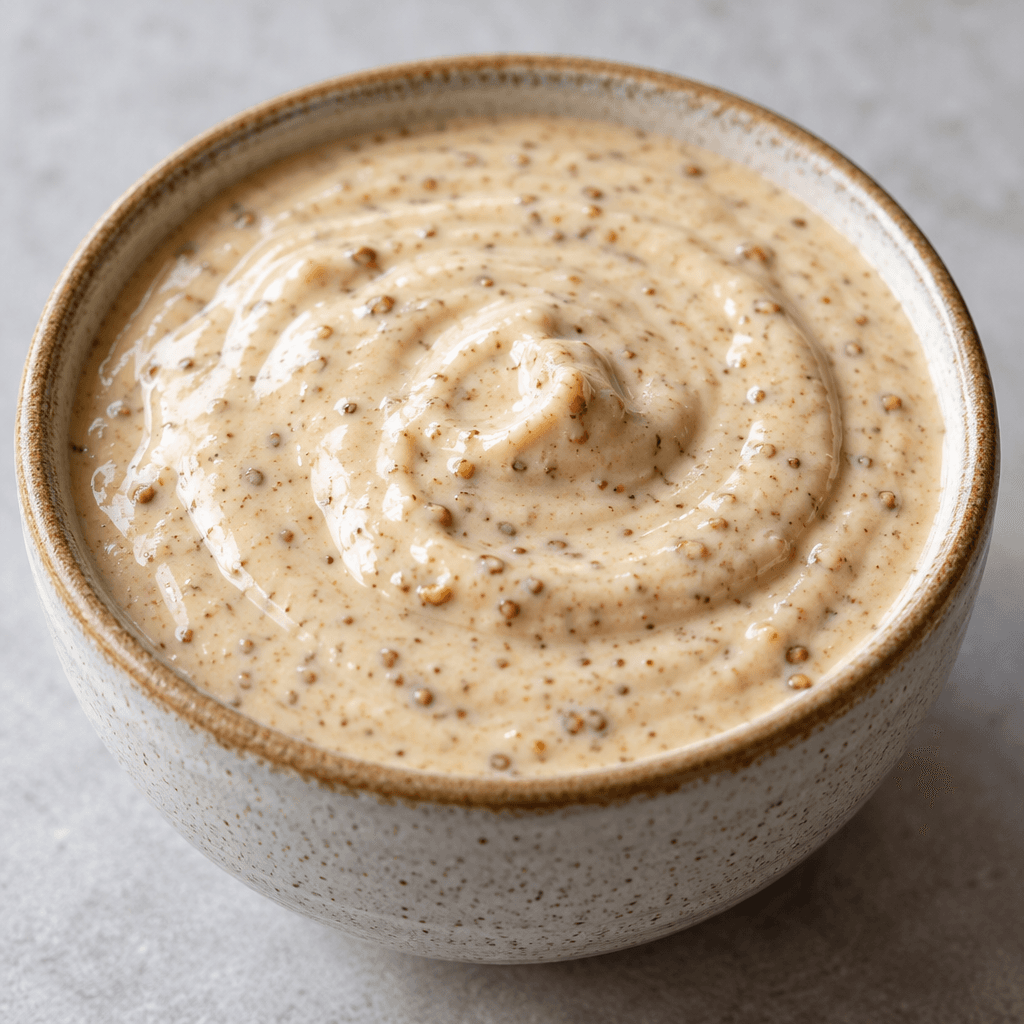
Tarator sauce Calories
Walnut and garlic sauce
CALORIES
GI
POTASSIUM
FIBER
Quick answer
2 tablespoon (medium) of Tarator sauce (30 g) has 86 calories. That works out to 285 calories per 100 g. It contains 4.1 g of carbs, 1.6 g of protein, 7.3 g of fat and 0.8 g of fiber. Its 0.1 mg of Copper covers 11% of the Daily Value. Its glycemic index is 25 (low), so it raises blood sugar slowly.
What is Tarator sauce?
Tarator sauce is a thick walnut-and-garlic sauce found in Turkish and wider eastern Mediterranean and Balkan cooking. In the Turkish version, walnuts are commonly blended with garlic, bread, olive oil and lemon, though recipes vary. It tastes nutty and savoury, with a bright citrus edge; the bread gives it a spoonable, creamy texture. Serve it as a dip or meze, especially alongside fried fish or calamari, or with raw and cooked vegetables. Walnuts and oil make it energy-dense, while the nuts also contribute some fibre and protein. A little goes a long way; for a lighter sauce, thin it with lemon juice and water and use less oil.
Tarator sauce Nutrition Facts
Selected: 100 g
285
KCAL / 100G
Carbs
13.8g
· 5% DV
Protein
5.4g
· 11% DV
Fat
24.2g
· 31% DV
Fiber
2.6g
· 9% DV
DV is the share of the daily value covered, on a 2,000 kcal reference diet.
Calories come from: Carbs 19% · Protein 7% · Fat 74%
Tarator sauce Vitamins & Minerals
Vitamins
B6
0.18mg · 11% DV
B1
0.12mg · 10% DV
Folate
36µg · 9% DV
B2
0.09mg · 7% DV
Minerals
Manganese
1mg · 43% DV
Phosphorus
142mg · 20% DV
Sodium
410mg · 18% DV
Magnesium
72mg · 17% DV
How Nutritious Is Tarator sauce?
Nutrient density
Medium
How many vitamins, minerals and how much fiber this food carries per calorie. A high score means a lot of nutrition for few calories.
Satiety score
Low
An EatBetter score computed from fiber, protein and calorie density. A high score means staying full longer on the same calories.
Both scores are calculated per 100 g and do not change with the selected portion. The satiety score is EatBetter's own calculation, not a clinical measure.
Tarator sauce Glycemic Index
GLYCEMIC INDEX
GLYCEMIC LOAD
Accounts for portion size — a more realistic measure than GI alone.
How to Burn Off Tarator sauce
To burn the 285 calories in 100 g:
🚶
Walking (5 km/h)
🏃
Running (8 km/h)
🚴
Cycling
🏊
Swimming
Times are calculated with the MET equation for a 70 kg adult. Actual burn varies with your weight, age and pace.
Is Tarator sauce Processed?
NOVA 2
Minimally Processed
1. Unprocessed
2. Minimally Processed
3. Processed
4. Ultra-Processed
NOVA classifies foods into 4 groups by industrial processing. NOVA 1 (unprocessed) is the healthiest.
Does Tarator sauce Contain Allergens?
Contains these allergens:
Which Diets Is Tarator sauce Good For?
Vegan
✓ Suitable
Vegetarian
✓ Suitable
Gluten-Free
— Not suitable
Dairy-Free
— Not suitable
Mediterranean
✓ Suitable
Paleo
— Not suitable
Whole30
— Not suitable
DASH
— Not suitable
Keto
— Not suitable
Low FODMAP
— Not suitable
Tarator sauce Fat Profile
SATURATED
2.45g
MONOUNSATURATED
7.4g
POLYUNSATURATED
12.5g
Omega 6:3 ratio 5.6:1
Above the ideal 4:1 (5.6:1).
Compare Tarator sauce
Foods Similar to Tarator sauce
Frequently Asked Questions About Tarator sauce
What is tarator sauce made of?
Turkish-style tarator sauce is usually made with walnuts, garlic, stale bread, olive oil, and lemon juice or vinegar. Some recipes vary the bread and liquid, so the sauce may be thick enough to spread or loosened for dipping.
How do you make tarator sauce?
Blend or pound walnuts, garlic, and stale bread, then mix in olive oil and lemon juice or vinegar. Add water gradually until the sauce reaches a thick, spoonable consistency; taste and adjust the garlic and acidity.
What does tarator sauce taste like?
Tarator sauce tastes nutty and savory, with a noticeable garlic flavor and a bright tang from lemon juice or vinegar. Bread gives it body, while olive oil rounds out the flavor and makes the texture creamy.
What is tarator sauce served with?
Tarator sauce is commonly served with fried seafood, especially calamari and mussels, and with fried or boiled vegetables. Its rich, garlicky flavor also works as a spread in sandwiches or wraps.
Is tarator sauce the same as tahini sauce?
No. Turkish tarator sauce is commonly built around walnuts and stale bread, while tahini sauce gets its main flavor and texture from sesame paste. Some regional recipes use different ingredients, so the name can vary by cuisine.
Is tarator sauce the same as tzatziki?
No. Tarator sauce is typically a walnut-and-bread sauce, while tzatziki is made with yogurt and cucumber. They are both served as dips or accompaniments, but their ingredients, texture, and flavor are quite different.
Why is tarator sauce served with fried mussels?
Tarator’s tangy, garlicky walnut flavor complements the crisp coating and mild taste of fried mussels. The creamy sauce also adds moisture, which is why it is a familiar accompaniment to fried seafood in Turkey.
How do you thicken tarator sauce?
To thicken tarator sauce, stir in a little more finely ground walnut or crumbled stale bread. Add it gradually and let the sauce stand briefly so the bread can absorb liquid before adjusting the texture again.
How long does tarator sauce last in the fridge?
Tarator sauce generally keeps for 3–4 days in a covered container in the refrigerator. Use a clean spoon when serving, and discard it if you notice mold, an unusual smell, or a change in appearance.
Can you freeze tarator sauce?
Freezing tarator sauce is not recommended because the bread-and-walnut mixture may separate or turn watery when thawed. For the best texture, make it fresh or keep it refrigerated and use it within a few days.
Have another question about Tarator sauce?
Ask the AI nutrition coach — calories, portions, alternatives and more, answered in seconds in the app.

Scan calories with your camera
Instant AI nutrition analysis

Nutrition data compiled from USDA FoodData Central and scientific sources.