

Ready & Packaged Foods
All →Vegetables & Legumes
All →Desserts & Confectionery
All →Meat & Protein
All →Grains & Bakery
All →Beverages
All →Milk & Dairy
All →

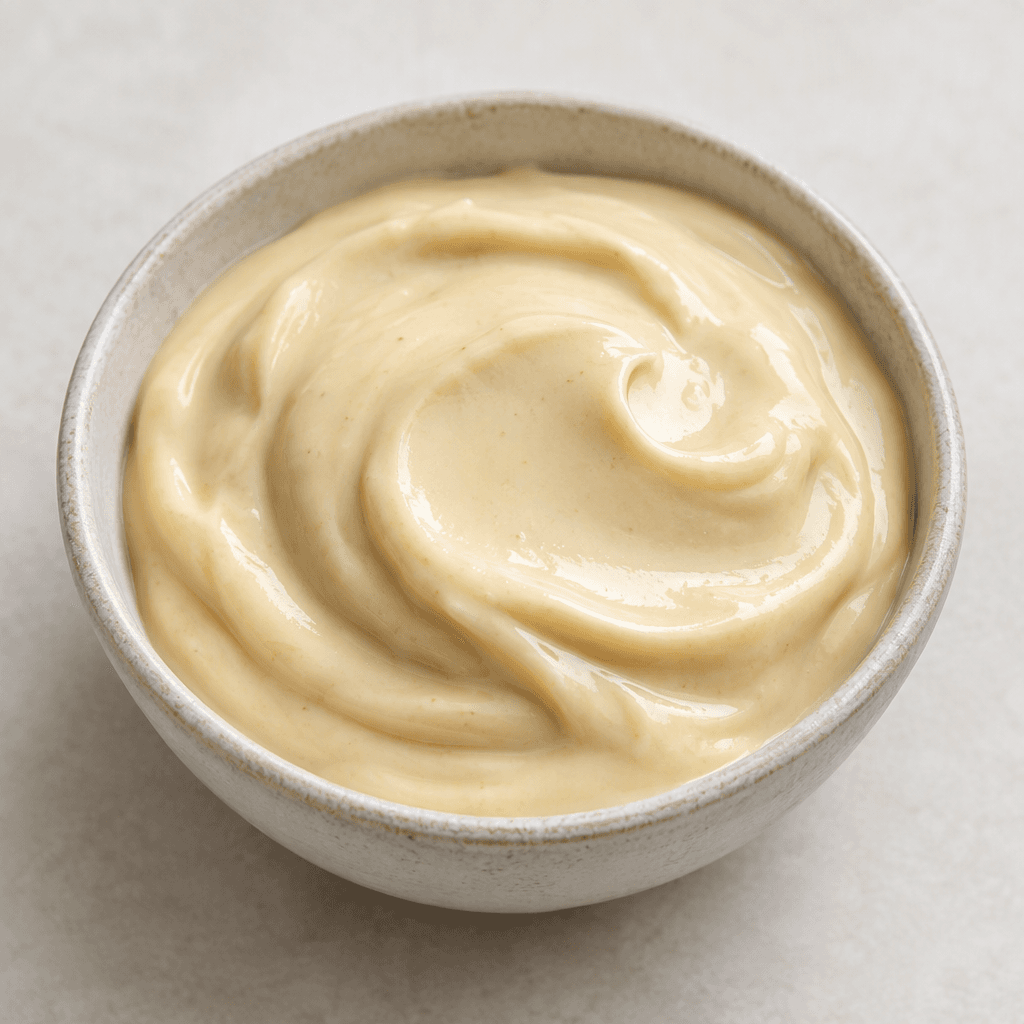
Tahini Sauce Calories
Creamy sauce made from sesame paste, lemon, and garlic
In season: Spring · Summer · Autumn · Winter
CALORIES
GI
POTASSIUM
FIBER
Quick answer
2 tablespoon (medium) of Tahini Sauce (30 g) has 81 calories. That works out to 270 calories per 100 g. It contains 3.1 g of carbs, 2 g of protein, 6.7 g of fat and 1.1 g of fiber. Its 0.1 mg of Copper covers 15% of the Daily Value. Its glycemic index is 35 (low), so it raises blood sugar slowly.
What is Tahini Sauce?
Tahini Sauce is made by loosening sesame paste with lemon juice, garlic and often a little water. It is familiar across Levantine and wider Middle Eastern cooking, where it is served as a dip or a dressing rather than as a dish on its own.
Its smooth, thick texture and toasted, nutty flavour are brightened by lemon and garlic. Spoon it over falafel, grilled vegetables or salads, or add it to wraps and grain bowls; it also pairs well with grilled meat. The sesame makes it a relatively rich sauce, with some protein and fibre alongside its fat. For a lighter, more pourable dressing, whisk in water gradually and use a modest drizzle.
Tahini Sauce Nutrition Facts
Selected: 100 g
270
KCAL / 100G
Carbs
10.2g
· 4% DV
Protein
6.5g
· 13% DV
Fat
22.3g
· 29% DV
Fiber
3.8g
· 14% DV
DV is the share of the daily value covered, on a 2,000 kcal reference diet.
Calories come from: Carbs 15% · Protein 10% · Fat 75%
Tahini Sauce Vitamins & Minerals
Vitamins
B1
0.18mg · 15% DV
Vitamin K
18µg · 15% DV
B3
1.2mg · 8% DV
Biotin
2.5µg · 8% DV
Minerals
Phosphorus
120mg · 17% DV
Calcium
140mg · 14% DV
Magnesium
60mg · 14% DV
Selenium
7µg · 13% DV
How Nutritious Is Tahini Sauce?
Nutrient density
Medium
How many vitamins, minerals and how much fiber this food carries per calorie. A high score means a lot of nutrition for few calories.
Satiety score
Medium
An EatBetter score computed from fiber, protein and calorie density. A high score means staying full longer on the same calories.
Both scores are calculated per 100 g and do not change with the selected portion. The satiety score is EatBetter's own calculation, not a clinical measure.
Tahini Sauce Glycemic Index
GLYCEMIC INDEX
GLYCEMIC LOAD
Accounts for portion size — a more realistic measure than GI alone.
How to Burn Off Tahini Sauce
To burn the 270 calories in 100 g:
🚶
Walking (5 km/h)
🏃
Running (8 km/h)
🚴
Cycling
🏊
Swimming
Times are calculated with the MET equation for a 70 kg adult. Actual burn varies with your weight, age and pace.
Is Tahini Sauce Processed?
NOVA 3
Processed
1. Unprocessed
2. Minimally Processed
3. Processed
4. Ultra-Processed
NOVA classifies foods into 4 groups by industrial processing. NOVA 1 (unprocessed) is the healthiest.
Does Tahini Sauce Contain Allergens?
Contains these allergens:
Which Diets Is Tahini Sauce Good For?
Vegan
✓ Suitable
Vegetarian
✓ Suitable
Gluten-Free
✓ Suitable
Dairy-Free
— Not suitable
Mediterranean
✓ Suitable
Paleo
✓ Suitable
Whole30
— Not suitable
DASH
— Not suitable
Keto
— Not suitable
Low FODMAP
— Not suitable
Tahini Sauce Fat Profile
SATURATED
3.2g
MONOUNSATURATED
7.8g
POLYUNSATURATED
8.1g
Omega 6:3 ratio 51.5:1
Above the ideal 4:1 (51.5:1).
Compare Tahini Sauce
Foods Similar to Tahini Sauce
Frequently Asked Questions About Tahini Sauce
How do you make tahini sauce?
Whisk tahini with lemon juice, crushed garlic, and a little water to make tahini sauce. It may thicken at first; keep whisking and add water gradually until it turns smooth and pourable. Season with salt if desired.
What do you eat tahini sauce with?
Tahini sauce is commonly served with falafel, shawarma, roasted vegetables, and grain bowls. It also works as a dip for raw vegetables or a drizzle for grilled meat. Thin it with water when you want it to coat a salad.
Why is my tahini sauce bitter?
Tahini sauce can taste bitter when the sesame paste was made from over-roasted sesame seeds. Garlic can add extra sharpness, too. Add a little water and lemon juice, tasting as you go, to soften the flavor without masking it.
How do you thin tahini sauce?
Whisk in cold water a little at a time until tahini sauce reaches the consistency you want. It can seize and look thicker before loosening, so keep stirring rather than adding a large splash. Use lemon juice for a tangier, thinner sauce.
Is tahini sauce the same as tahini?
No. Tahini is a paste made from ground sesame seeds, while tahini sauce is usually tahini mixed with lemon juice, garlic, and water. The sauce is thinner and seasoned, so it can be poured or served as a dip.
Does tahini sauce need to be refrigerated?
Homemade tahini sauce should be kept covered in the refrigerator because it contains fresh ingredients such as lemon juice and garlic. Let it sit briefly at room temperature before serving if it has thickened, then stir well.
How long does homemade tahini sauce last?
Homemade tahini sauce generally keeps for about 3–4 days in an airtight container in the refrigerator. Use a clean spoon each time, and discard it if its smell or appearance changes. Commercial versions may have different storage instructions after opening.
Can you freeze tahini sauce?
Yes, tahini sauce can be frozen, but it may separate or become grainy after thawing. Freeze it in small portions, thaw it in the refrigerator, and whisk it thoroughly before serving. A splash of water can help restore its texture.
Can tahini sauce be used as a salad dressing?
Yes, tahini sauce makes a creamy dressing for leafy salads, roasted vegetables, and grain bowls. Thin it with water or lemon juice so it coats the ingredients instead of clumping, then toss the salad just before serving.
Can you put tahini sauce on hot food?
Yes, tahini sauce is often spooned over warm falafel, roasted vegetables, and grilled dishes. Add it after cooking rather than boiling it in the pan; prolonged heat can make the sauce separate or lose its smooth texture.
Have another question about Tahini Sauce?
Ask the AI nutrition coach — calories, portions, alternatives and more, answered in seconds in the app.

Scan calories with your camera
Instant AI nutrition analysis

Nutrition data compiled from USDA FoodData Central and scientific sources.