

Ready & Packaged Foods
All →Vegetables & Legumes
All →Desserts & Confectionery
All →Meat & Protein
All →Grains & Bakery
All →Beverages
All →Milk & Dairy
All →

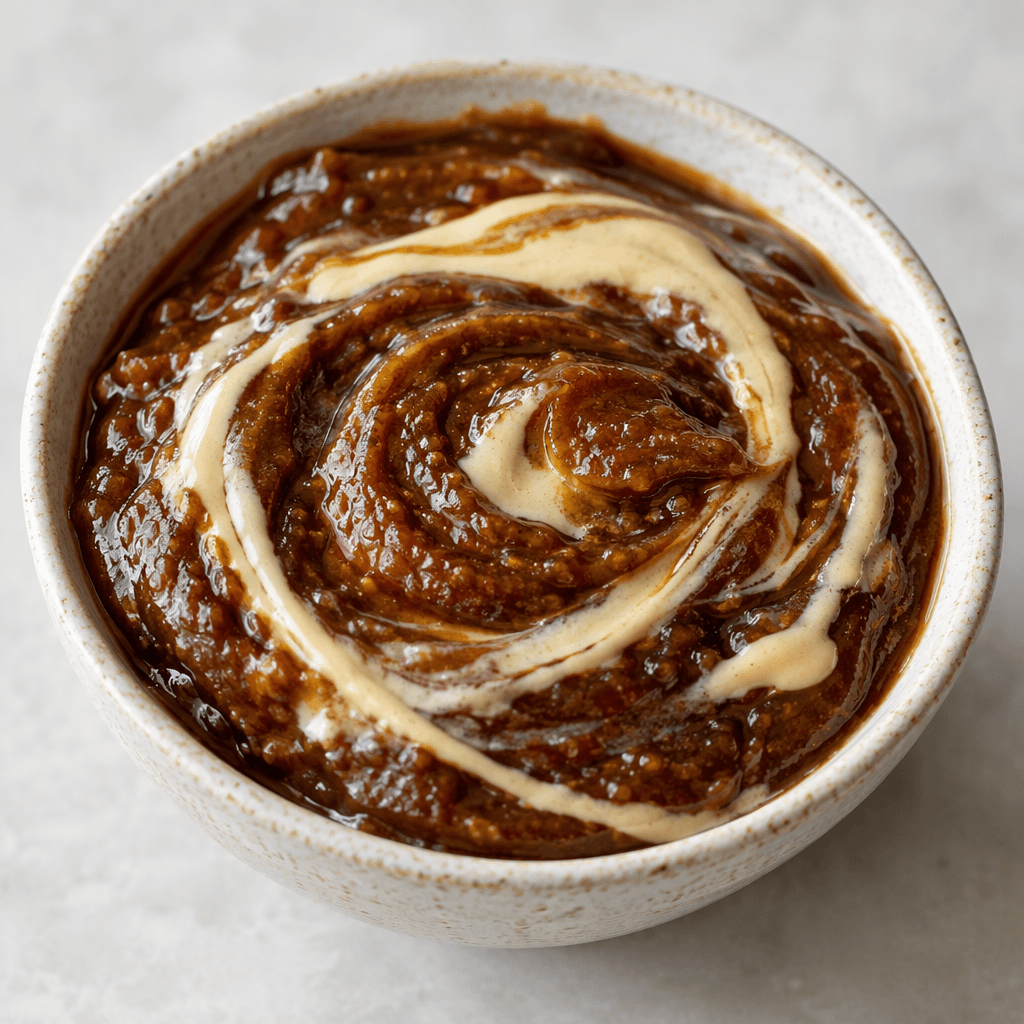
Tahini Molasses Calories
Sesame paste and molasses blend, high energy and calcium
In season: Autumn · Winter
CALORIES
GI
POTASSIUM
FIBER
Quick answer
2 tablespoon (medium) of Tahini Molasses (40 g) has 164 calories. That works out to 410 calories per 100 g. It contains 18 g of carbs, 3.4 g of protein, 7.6 g of fat and 1.5 g of fiber. Its 0.3 mg of Copper covers 36% of the Daily Value. Its glycemic index is 55 (medium), so it raises blood sugar at a moderate pace.
What is Tahini Molasses?
Tahini Molasses brings together tahini, a paste made from ground sesame seeds, and pekmez, a thick fruit syrup most often made from grapes in Turkey, though mulberry is also common. The ingredients may be stirred together or served side by side, so each person can choose the balance of nutty and sweet.
Its texture is smooth, rich and spoonable, with toasted sesame notes softened by the deep, fruity sweetness of the syrup. In Turkey it is a familiar breakfast pairing, usually eaten with bread; it also works as a drizzle over porridge or yoghurt. It is energy-dense, while sesame contributes protein and calcium. A little goes a long way, so pair a modest serving with fresh fruit for a lighter breakfast.
Tahini Molasses Nutrition Facts
Selected: 100 g
410
KCAL / 100G
Carbs
45g
· 16% DV
Protein
8.5g
· 17% DV
Fat
19g
· 24% DV
Fiber
3.8g
· 14% DV
DV is the share of the daily value covered, on a 2,000 kcal reference diet.
Calories come from: Carbs 47% · Protein 9% · Fat 44%
Tahini Molasses Vitamins & Minerals
Vitamins
B1
0.25mg · 21% DV
Biotin
5µg · 17% DV
Vitamin K
18µg · 15% DV
B6
0.19mg · 11% DV
Minerals
Copper
1mg · 111% DV
Manganese
1mg · 43% DV
Calcium
380mg · 38% DV
Phosphorus
230mg · 33% DV
How Nutritious Is Tahini Molasses?
Nutrient density
High
How many vitamins, minerals and how much fiber this food carries per calorie. A high score means a lot of nutrition for few calories.
Satiety score
Low
An EatBetter score computed from fiber, protein and calorie density. A high score means staying full longer on the same calories.
Both scores are calculated per 100 g and do not change with the selected portion. The satiety score is EatBetter's own calculation, not a clinical measure.
Tahini Molasses Glycemic Index
GLYCEMIC INDEX
GLYCEMIC LOAD
Accounts for portion size — a more realistic measure than GI alone.
How to Burn Off Tahini Molasses
To burn the 410 calories in 100 g:
🚶
Walking (5 km/h)
🏃
Running (8 km/h)
🚴
Cycling
🏊
Swimming
Times are calculated with the MET equation for a 70 kg adult. Actual burn varies with your weight, age and pace.
Is Tahini Molasses Processed?
NOVA 3
Processed
1. Unprocessed
2. Minimally Processed
3. Processed
4. Ultra-Processed
NOVA classifies foods into 4 groups by industrial processing. NOVA 1 (unprocessed) is the healthiest.
Does Tahini Molasses Contain Allergens?
Contains these allergens:
Which Diets Is Tahini Molasses Good For?
Vegan
✓ Suitable
Vegetarian
✓ Suitable
Gluten-Free
— Not suitable
Dairy-Free
— Not suitable
Mediterranean
✓ Suitable
Paleo
— Not suitable
Whole30
— Not suitable
DASH
— Not suitable
Keto
— Not suitable
Low FODMAP
— Not suitable
Tahini Molasses Fat Profile
SATURATED
2.6g
MONOUNSATURATED
7.8g
POLYUNSATURATED
7.4g
Omega 6:3 ratio 55.4:1
Above the ideal 4:1 (55.4:1).
Compare Tahini Molasses
Foods Similar to Tahini Molasses
Frequently Asked Questions About Tahini Molasses
What is tahini molasses?
Tahini molasses is a thick mixture of sesame paste and sweet molasses, commonly eaten in Turkey. It is often served at breakfast, either as a dip or spread, and its flavor balances tahini’s nuttiness with molasses’ sweetness.
How do you make tahini molasses at home?
You make tahini molasses by stirring tahini and molasses together until smooth. Grape molasses is a common choice, though other fruit molasses can be used; mix a small serving fresh so you can adjust the sweetness and texture.
How is tahini molasses traditionally eaten in Turkey?
In Turkey, tahini molasses is commonly eaten at breakfast, often with bread for dipping or spreading. It may also be served alongside other breakfast foods; its rich, sweet taste means a little can go a long way.
Is tahini molasses the same as halva?
No, tahini molasses is not the same as halva. Tahini molasses is a pourable or spoonable mixture of sesame paste and molasses, while tahini halva is a firmer confection made with tahini and a separately prepared sweetener.
Can you bake with tahini molasses?
Yes, tahini molasses can be used in baking, especially in cookies, cakes, and breads that suit its nutty, caramel-like flavor. It adds moisture and sweetness, so reduce other sweeteners or liquids in the recipe as needed.
Can tahini molasses replace honey or maple syrup?
Sometimes, but tahini molasses is thicker and has a pronounced sesame flavor, unlike honey or maple syrup. It works best as a substitute in recipes where those flavors fit, rather than in drinks or delicate desserts.
Does tahini molasses need to be refrigerated after mixing?
Refrigeration is a practical choice for homemade tahini molasses, especially if you have mixed a batch to keep. Store it in a clean, sealed container; it may thicken when cold, so stir it before serving.
Can you eat tahini molasses with yogurt?
Yes, tahini molasses pairs well with plain yogurt. Stir in a small amount or drizzle it over the top for a sweet, nutty contrast; unsweetened yogurt helps keep the overall dish from becoming overly sweet.
Is tahini molasses a good pre-workout snack?
Tahini molasses can work as a pre-workout snack when eaten with bread or another easy-to-digest carbohydrate. Its thick, fatty tahini base may feel heavy right before exercise, so leave time to digest and choose a smaller serving.
Why does tahini molasses separate?
Tahini molasses can separate because tahini naturally releases sesame oil and the two ingredients have different textures. Stir the mixture thoroughly before serving; if it has been refrigerated, let it soften briefly first for easier mixing.
Have another question about Tahini Molasses?
Ask the AI nutrition coach — calories, portions, alternatives and more, answered in seconds in the app.

Scan calories with your camera
Instant AI nutrition analysis

Nutrition data compiled from USDA FoodData Central and scientific sources.