

Ready & Packaged Foods
All →Vegetables & Legumes
All →Desserts & Confectionery
All →Meat & Protein
All →Grains & Bakery
All →Beverages
All →Milk & Dairy
All →

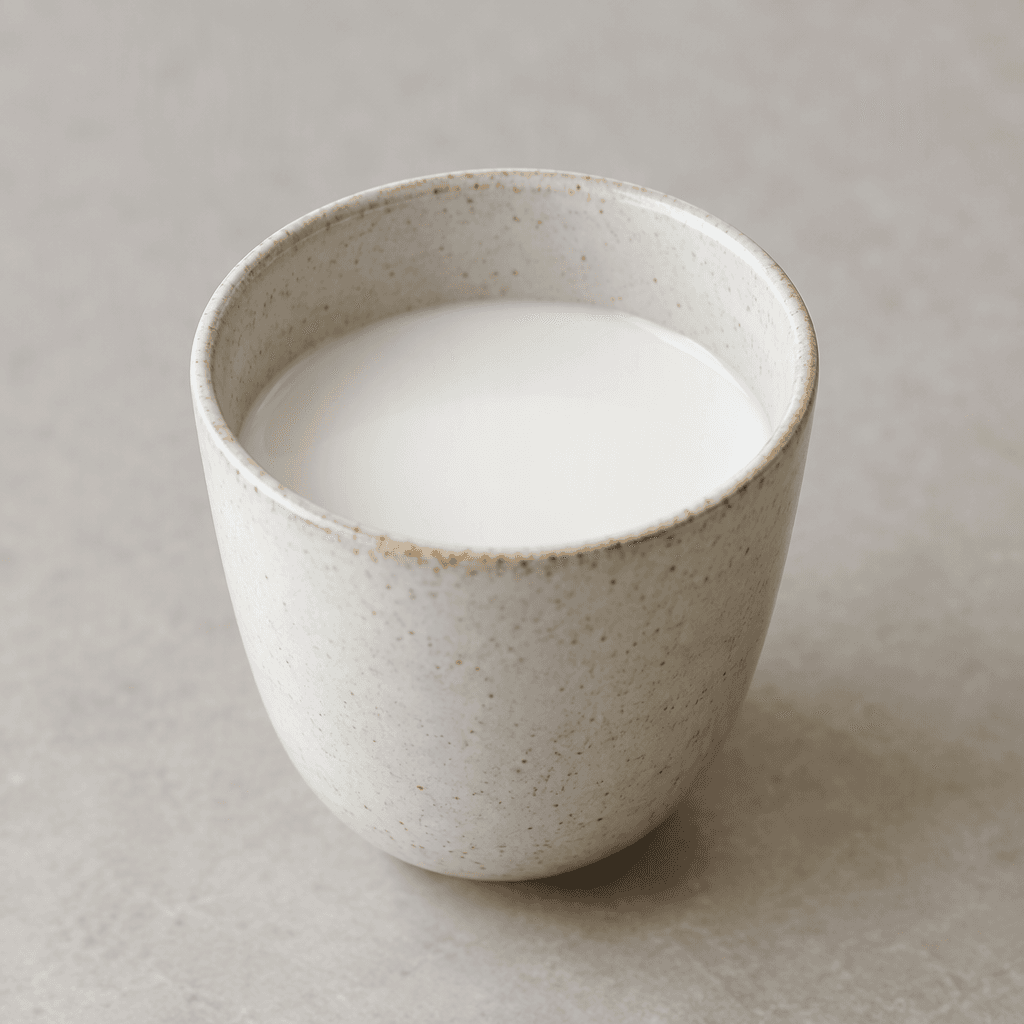
Milk (half cup) Calories
Source of calcium and protein, half cup portion.
In season: Spring · Summer · Autumn · Winter
CALORIES · 100 G
GI
POTASSIUM · 100 G
FIBER · 100 G
Quick answer
1 cup (half) of Milk (half cup) (120 g) has 50 calories. That works out to 42 calories per 100 g. It contains 5.8 g of carbs, 4.1 g of protein, 1.2 g of fat and 0 g of fiber. Its 0.5 µg of B12 covers 23% of the Daily Value. Its glycemic index is 30 (low), so it raises blood sugar slowly.
Milk (half cup) Nutrition Facts
Selected: 1 cup (half) · 120 g
50
KCAL / 120G
Carbs
5.8g
· 2% DV
Protein
4.1g
· 8% DV
Fat
1.2g
· 2% DV
Fiber
0g
· 0% DV
DV is the share of the daily value covered, on a 2,000 kcal reference diet.
Calories come from: Carbs 46% · Protein 33% · Fat 21%
Milk (half cup) nutrition facts table · 1 cup (half) (120 g)
| Nutrient | Amount | % DV |
|---|---|---|
| Calories | 50 kcal | |
| Total fat | 1.2 g | 2% |
| Saturated fat | 0.72 g | 4% |
| Trans fat | 0.02 g | |
| Sodium | 53 mg | 2% |
| Total carbohydrate | 5.8 g | 2% |
| Fiber | 0 g | 0% |
| Protein | 4.1 g | 8% |
Calories: Calories measure energy. Average daily need is 2,000 kcal. Excess calories are stored as fat, too few cause weight loss.
Carbs: Your body's primary energy source. The brain runs exclusively on carbs. Daily need: 275g.
Protein: Essential for muscle repair and cell growth. Daily need: 50g. Keeps you full and boosts metabolism.
Fat: Needed for hormone production and vitamin absorption. Daily need: 78g. Limit saturated fats, choose unsaturated.
Fiber: Critical for digestive health and satiety. Daily need: 28g. Stabilizes blood sugar, lowers cholesterol.

Log this food in EatBetter
100,000+ people use it
- Get your daily calorie target
- Snap your meal, log it in seconds
- See every vitamin and mineral

📸 Scan the code to get the app free.

How Many Calories in ½ Cup of Milk (half cup)?
| Serving | Amount | Calories |
|---|---|---|
| 1 cup (half) | 120 g | 50 kcal |
| 1 teaspoon (small) | 5 g | 2 kcal |
| 1 tablespoon (medium) | 15 g | 6 kcal |
| 1 cup (quarter) | 60 g | 25 kcal |
| 100 g | 100 g | 42 kcal |
| 1 cup (large) | 180 g | 76 kcal |
| 1 bottle (medium) | 200 g | 84 kcal |
| 1 cup (whole) | 240 g | 101 kcal |
| 1 pack (large) | 250 g | 105 kcal |
| 1 cup (jumbo) | 360 g | 151 kcal |
Calculated from 42 calories per 100 g.
Frequently Asked Questions About Milk (half cup)
Does milk need to be boiled before drinking?
No, pasteurized or UHT milk does not need to be boiled before drinking when stored as directed. Raw milk can carry harmful germs, so avoid drinking it unpasteurized; boiling reduces this risk but does not replace safe handling.
How long does milk last after opening?
Keep opened milk refrigerated and follow the storage instructions on its package. How long it stays fresh depends on whether it is pasteurized or UHT and how cold the fridge is; UHT milk also needs refrigeration once opened.
Can you freeze milk?
Yes, you can freeze milk, although it may separate and become grainier after thawing. Freeze it in an airtight container with room for expansion, thaw it in the refrigerator, and shake it well before using.
Why does milk curdle in coffee?
Milk can curdle in coffee when the coffee is very hot or acidic, especially if the milk is already starting to spoil. Let coffee cool slightly and use fresh milk; curdling from spoilage means it should be discarded.
How can you tell if milk has gone bad?
Spoiled milk often has a sour smell, a lumpy texture, or a curdled appearance. Do not taste it to check; discard it if you notice these signs, even if the package date has not passed.
Can people with lactose intolerance drink milk?
Some people with lactose intolerance get bloating, gas, or diarrhea after drinking regular milk. Lactose-free milk is an alternative, since its lactose has been broken down; tolerance varies, so pay attention to how much you drink.
Does drinking milk before bed help you sleep?
Milk may feel soothing as part of a bedtime routine, but it is not a proven treatment for insomnia. If drinking it close to bedtime triggers reflux or stomach discomfort, have it earlier instead.
Does milk cause more mucus?
No, milk does not increase mucus production. Its texture can leave a coating sensation in the mouth or throat, which some people mistake for extra phlegm; that sensation does not mean the airways are producing more mucus.
Can you drink milk after eating fish?
Yes, drinking milk after eating fish is safe; the combination does not cause food poisoning. The real concern is eating fish or milk that has spoiled or been stored unsafely.
When can babies drink cow’s milk?
Cow’s milk should not be a baby’s main drink before 12 months; breast milk or infant formula is recommended instead. Small amounts in foods may be introduced earlier with solid foods, but ask a pediatrician if your baby has specific health needs.
Milk (half cup) Vitamins & Minerals
Vitamins
B12
0.54µg · 23% DV
B2
0.22mg · 17% DV
Biotin
3.84µg · 13% DV
B5
0.42mg · 8% DV
Minerals
Phosphorus
114mg · 16% DV
Calcium
144mg · 14% DV
Iodine
19µg · 13% DV
Potassium ⭐
180mg · 5% DV
Sodium
53mg · 2% DV
Milk (half cup) Glycemic Index
GLYCEMIC INDEX
GLYCEMIC LOAD
Accounts for portion size — a more realistic measure than GI alone.
How to Burn Off Milk (half cup)
To burn the 50 calories in 1 cup (half) (120 g):
🚶
Walking (5 km/h)
🏃
Running (8 km/h)
🚴
Cycling
🏊
Swimming
Times are calculated with the MET equation for a 70 kg adult. Actual burn varies with your weight, age and pace.
What is Milk (half cup)?
Milk is a familiar dairy drink, usually from cows, and a versatile ingredient in home cooking. A half cup can be poured over cereal or oats, stirred into coffee, or used in soups, sauces and baking. Its mild, creamy taste and smooth texture work well both cold and gently warmed.
Milk is a breakfast staple in many places and an everyday drink elsewhere; it may also be served with a snack or added to tea and coffee, depending on local custom. It provides protein and calcium, along with naturally occurring milk sugars, and has no fibre. Pair it with oats or fruit for a simple breakfast, or use it to soften the richness of a dish.
How Nutritious Is Milk (half cup)?
Nutrient density
High
How many vitamins, minerals and how much fiber this food carries per calorie. A high score means a lot of nutrition for few calories.
Satiety score
Medium
An EatBetter score computed from fiber, protein and calorie density. A high score means staying full longer on the same calories.
Both scores are calculated per 100 g and do not change with the selected portion. The satiety score is EatBetter's own calculation, not a clinical measure.
Is Milk (half cup) Processed?
NOVA 2
Minimally Processed
1. Unprocessed
2. Minimally Processed
3. Processed
4. Ultra-Processed
NOVA classifies foods into 4 groups by industrial processing. NOVA 1 (unprocessed) is the healthiest.
Does Milk (half cup) Contain Allergens?
Contains these allergens:
Which Diets Is Milk (half cup) Good For?
Vegan
— Not suitable
Vegetarian
✓ Suitable
Gluten-Free
— Not suitable
Dairy-Free
— Not suitable
Mediterranean
✓ Suitable
Paleo
— Not suitable
Whole30
— Not suitable
DASH
— Not suitable
Keto
— Not suitable
Low FODMAP
— Not suitable
Milk (half cup) Fat Profile
SATURATED
0.72g
MONOUNSATURATED
0.36g
POLYUNSATURATED
0.12g
Omega 6:3 ratio 2:1
Below the ideal 4:1 — a good omega balance.
Compare Milk (half cup)
Foods Similar to Milk (half cup)
Have another question about Milk (half cup)?
Ask the AI nutrition coach — calories, portions, alternatives and more, answered in seconds in the app.

Scan calories with your camera
Instant AI nutrition analysis

Nutrition data compiled from USDA FoodData Central and scientific sources.