

Ready & Packaged Foods
All →Vegetables & Legumes
All →Desserts & Confectionery
All →Meat & Protein
All →Grains & Bakery
All →Beverages
All →Milk & Dairy
All →

Surimi Calories
Low fat, protein source, processed seafood
In season: Spring · Summer · Autumn · Winter
CALORIES
GI
POTASSIUM
FIBER
Quick answer
1 piece (medium) of Surimi (30 g) has 30 calories. That works out to 99 calories per 100 g. It contains 4.1 g of carbs, 2.3 g of protein, 0.2 g of fat and 0 g of fiber. Its 210 mg of Sodium covers 9% of the Daily Value. Its glycemic index is 50 (medium), so it raises blood sugar at a moderate pace.
What is Surimi?
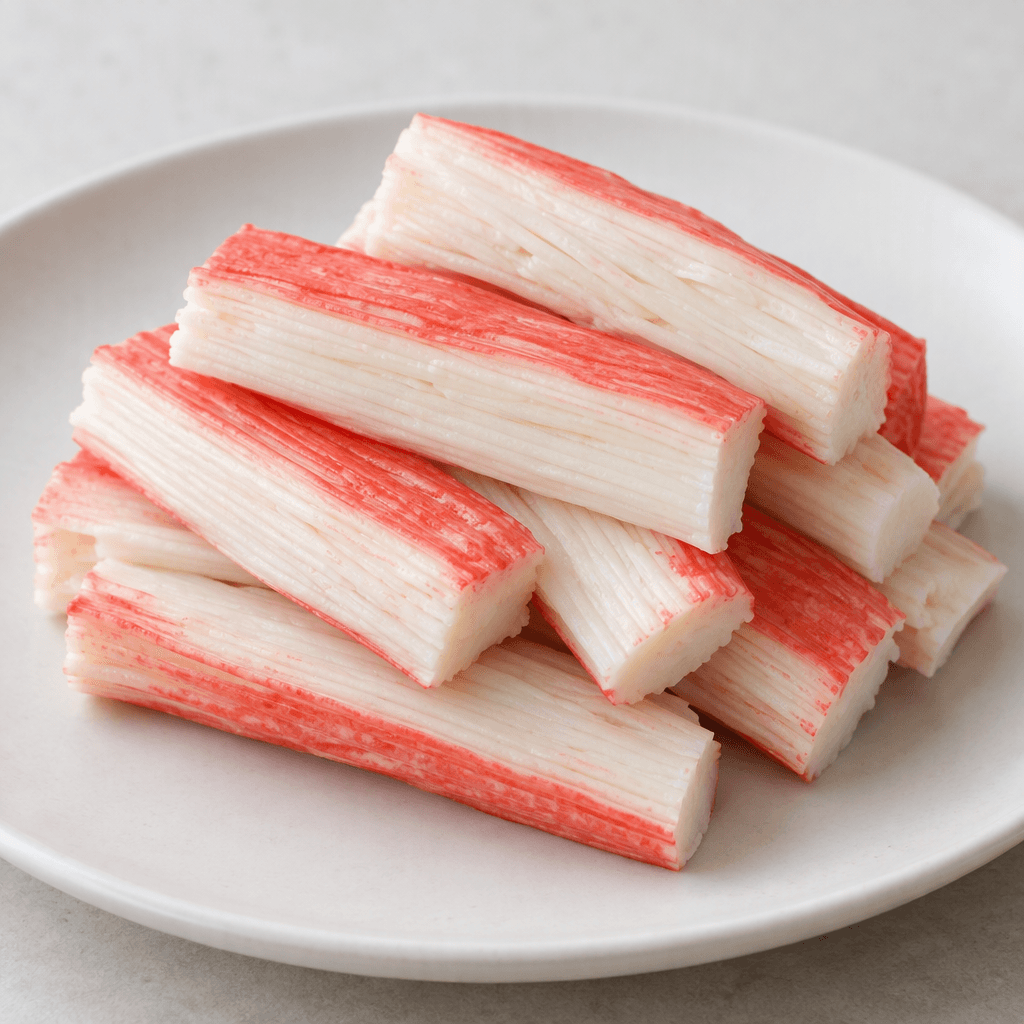
Surimi is made by mincing white fish into a paste, then seasoning and shaping it—often into pale sticks with pink edges designed to resemble crab. The method has roots in Japanese fish-paste traditions, while today’s imitation-crab style is widely sold as a convenient seafood ingredient.
Mild in flavour, firm and finely layered, surimi is usually served cold in salads, sandwiches and sushi rolls, or added to seafood-style appetisers. It is low in fat and provides some protein, though it is not as protein-dense as a fillet of fish. For a lighter meal, pair it with crunchy vegetables, citrus and a simple dressing rather than a rich, mayonnaise-heavy sauce.
Surimi Nutrition Facts
Selected: 100 g
99
KCAL / 100G
Carbs
13.5g
· 5% DV
Protein
7.5g
· 15% DV
Fat
0.8g
· 1% DV
Fiber
0g
· 0% DV
DV is the share of the daily value covered, on a 2,000 kcal reference diet.
Calories come from: Carbs 59% · Protein 33% · Fat 8%
Surimi Vitamins & Minerals
Vitamins
B12
0.5µg · 21% DV
B3
0.6mg · 4% DV
B5
0.15mg · 3% DV
B6
0.05mg · 3% DV
Minerals
Sodium
700mg · 30% DV
Selenium
10µg · 18% DV
Iodine
20µg · 13% DV
Phosphorus
80mg · 11% DV
How Nutritious Is Surimi?
Nutrient density
Medium
How many vitamins, minerals and how much fiber this food carries per calorie. A high score means a lot of nutrition for few calories.
Satiety score
Medium
An EatBetter score computed from fiber, protein and calorie density. A high score means staying full longer on the same calories.
Both scores are calculated per 100 g and do not change with the selected portion. The satiety score is EatBetter's own calculation, not a clinical measure.
Surimi Glycemic Index
GLYCEMIC INDEX
GLYCEMIC LOAD
Accounts for portion size — a more realistic measure than GI alone.
How to Burn Off Surimi
To burn the 99 calories in 100 g:
🚶
Walking (5 km/h)
🏃
Running (8 km/h)
🚴
Cycling
🏊
Swimming
Times are calculated with the MET equation for a 70 kg adult. Actual burn varies with your weight, age and pace.
Is Surimi Processed?
NOVA 3
Processed
1. Unprocessed
2. Minimally Processed
3. Processed
4. Ultra-Processed
NOVA classifies foods into 4 groups by industrial processing. NOVA 1 (unprocessed) is the healthiest.
Does Surimi Contain Allergens?
Contains these allergens:
Which Diets Is Surimi Good For?
Vegan
— Not suitable
Vegetarian
— Not suitable
Gluten-Free
— Not suitable
Dairy-Free
— Not suitable
Mediterranean
✓ Suitable
Paleo
— Not suitable
Whole30
— Not suitable
DASH
— Not suitable
Keto
— Not suitable
Low FODMAP
— Not suitable
Surimi Fat Profile
SATURATED
0.2g
MONOUNSATURATED
0.2g
POLYUNSATURATED
0.2g
Omega 6:3 ratio 0.3:1
Below the ideal 4:1 — a good omega balance.
Compare Surimi
Foods Similar to Surimi
Frequently Asked Questions About Surimi
What is surimi made of?
Surimi is made from fish flesh that is minced and processed into a paste, often with ingredients such as starch and seasonings. The fish species and added ingredients vary by product, so surimi does not have one fixed recipe.
Is surimi the same as imitation crab?
No. Surimi is the fish paste used to make several seafood products, while imitation crab is a shaped, seasoned surimi product designed to resemble crab meat. Not every food made from surimi is imitation crab.
What fish is used to make surimi?
Surimi is commonly made from mild, white-fleshed fish; Alaska pollock is widely used in many products. The species can differ by region and manufacturer, so the ingredient list is the best way to identify the fish in a particular package.
Is surimi already cooked?
Most surimi sticks are cooked during manufacturing and are ready to eat, including when served cold. Check the package directions for the specific product, and keep it refrigerated as instructed.
What does surimi taste like?
Surimi has a mild, slightly sweet seafood taste and a soft, springy texture. Imitation crab versions are seasoned to suggest crab, but they do not taste exactly like fresh crab meat.
Why are surimi sticks pink on the outside?
The pink or red edge is usually coloring added to make surimi sticks resemble the appearance of crab meat. It is part of the product’s design, not a natural sign that the stick contains crab.
Can you use surimi in sushi?
Yes, surimi is commonly used in sushi rolls, especially California rolls. It is typically added cold in strips or flakes, often paired with rice, cucumber, avocado, or mayonnaise.
What can you make with surimi besides sushi?
Surimi works in seafood salads, sandwiches, pasta, and soups. For hot dishes, stir it in near the end of cooking: prolonged heating can make the already-cooked pieces dry or overly soft.
How long does surimi last after opening?
Once opened, keep surimi covered in the refrigerator and follow the package’s stated use-by guidance. There is no single shelf life for every product; discard it if it develops an unusual smell, color, or texture.
Can you freeze surimi?
Yes, surimi can be frozen in an airtight package, though thawing may make its texture softer or more watery. Thaw it in the refrigerator and do not refreeze it after it has thawed.
Have another question about Surimi?
Ask the AI nutrition coach — calories, portions, alternatives and more, answered in seconds in the app.

Scan calories with your camera
Instant AI nutrition analysis

Nutrition data compiled from USDA FoodData Central and scientific sources.