

Ready & Packaged Foods
All →Vegetables & Legumes
All →Desserts & Confectionery
All →Meat & Protein
All →Grains & Bakery
All →Beverages
All →Milk & Dairy
All →

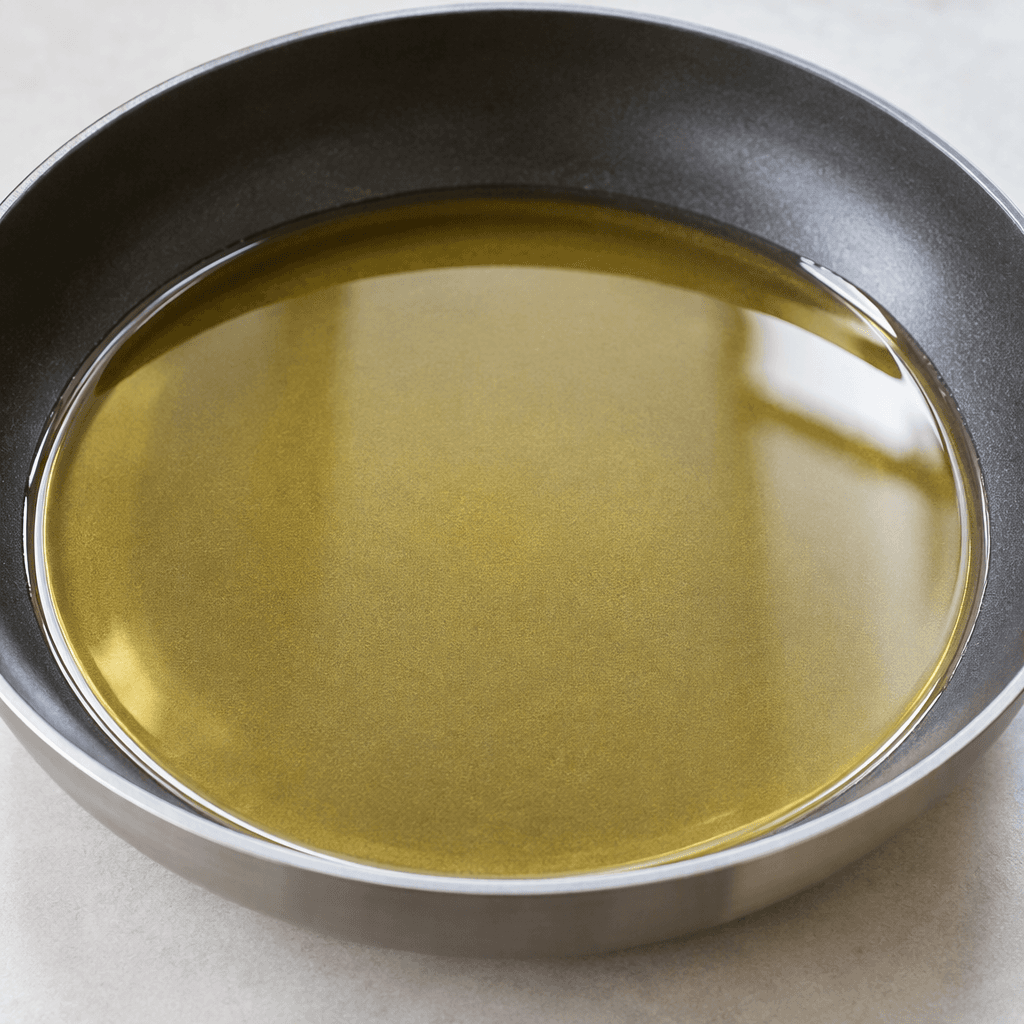
Sunflower Oil (Frying) Calories
Sunflower oil for frying is high in vitamin E and polyunsaturated fats.
In season: Spring · Summer · Autumn · Winter
CALORIES
GI
POTASSIUM
FIBER
Quick answer
1 tablespoon (medium) of Sunflower Oil (Frying) (14 g) has 120 calories. That works out to 884 calories per 100 g. It contains 0 g of carbs, 0 g of protein, 13.6 g of fat and 0 g of fiber. Its 5.6 mg of Vitamin E covers 37% of the Daily Value. Its glycemic index is 0 (low), so it raises blood sugar slowly.
What is Sunflower Oil (Frying)?
Sunflower oil for frying is pressed from sunflower seeds and has a pale golden colour with a mild, neutral flavour. It is used in home kitchens and restaurants around the world to fry foods such as potatoes, vegetables, fish and fritters, without adding a strong taste of its own.
It gives fried food a crisp, browned exterior while the inside stays tender. The oil is entirely fat, with no protein or carbohydrate, and is notable for its vitamin E and polyunsaturated fats. For a less greasy result, avoid overcrowding the pan and let fried food drain briefly before serving.
Sunflower Oil (Frying) Nutrition Facts
Selected: 100 g
884
KCAL / 100G
Carbs
0g
· 0% DV
Protein
0g
· 0% DV
Fat
100g
· 128% DV
Fiber
0g
· 0% DV
DV is the share of the daily value covered, on a 2,000 kcal reference diet.
Calories come from: Carbs 0% · Protein 0% · Fat 100%
Sunflower Oil (Frying) Vitamins & Minerals
Vitamins
Vitamin E
41.1mg · 274% DV
Vitamin K
5.4µg · 5% DV
Vitamin A
0µg · 0% DV
B1
0mg · 0% DV
Minerals
Calcium
1mg · 0% DV
Iron
0mg · 0% DV
Magnesium
0mg · 0% DV
Zinc
0mg · 0% DV
How Nutritious Is Sunflower Oil (Frying)?
Nutrient density
Low
How many vitamins, minerals and how much fiber this food carries per calorie. A high score means a lot of nutrition for few calories.
Satiety score
Low
An EatBetter score computed from fiber, protein and calorie density. A high score means staying full longer on the same calories.
Both scores are calculated per 100 g and do not change with the selected portion. The satiety score is EatBetter's own calculation, not a clinical measure.
Sunflower Oil (Frying) Glycemic Index
GLYCEMIC INDEX
GLYCEMIC LOAD
Accounts for portion size — a more realistic measure than GI alone.
How to Burn Off Sunflower Oil (Frying)
To burn the 884 calories in 100 g:
🚶
Walking (5 km/h)
🏃
Running (8 km/h)
🚴
Cycling
🏊
Swimming
Times are calculated with the MET equation for a 70 kg adult. Actual burn varies with your weight, age and pace.
Is Sunflower Oil (Frying) Processed?
NOVA 3
Processed
1. Unprocessed
2. Minimally Processed
3. Processed
4. Ultra-Processed
NOVA classifies foods into 4 groups by industrial processing. NOVA 1 (unprocessed) is the healthiest.
Does Sunflower Oil (Frying) Contain Allergens?
No known major allergens
Which Diets Is Sunflower Oil (Frying) Good For?
Vegan
✓ Suitable
Vegetarian
✓ Suitable
Gluten-Free
✓ Suitable
Dairy-Free
— Not suitable
Mediterranean
✓ Suitable
Paleo
— Not suitable
Whole30
— Not suitable
DASH
— Not suitable
Keto
— Not suitable
Low FODMAP
— Not suitable
Sunflower Oil (Frying) Fat Profile
SATURATED
10.3g
MONOUNSATURATED
19.5g
POLYUNSATURATED
65.7g
Omega 6:3 ratio 657:1
Above the ideal 4:1 (657:1).
Compare Sunflower Oil (Frying)
Foods Similar to Sunflower Oil (Frying)
Frequently Asked Questions About Sunflower Oil (Frying)
Is sunflower oil for frying good for deep frying?
Yes, refined sunflower oil is commonly used for deep frying because it has a neutral taste and handles high heat better than unrefined sunflower oil. Choose a product intended for cooking at high temperatures, and avoid letting the oil smoke.
Can you reuse sunflower oil after frying?
Yes, you can reuse sunflower oil if it has not overheated or become contaminated with burnt food. Let it cool, strain out crumbs, and store it in a clean, sealed container away from heat and light.
What is the smoke point of sunflower oil for frying?
There is no single smoke point for all sunflower oils; it varies with refining and the specific product. Refined sunflower oil is generally the better choice for frying. If the oil starts smoking, lower the heat rather than continuing to cook in it.
Is sunflower oil for frying better than olive oil?
Not in every case. Refined sunflower oil has a mild, neutral flavor, while olive oil can add its own flavor and is also used for frying. The better choice depends on the taste you want and whether the oil is refined.
Why does food turn greasy when fried in sunflower oil?
Food can absorb more sunflower oil if the oil is not hot enough or the pan is overcrowded. Dry food before frying, cook in smaller batches, and let the finished pieces drain on a rack or paper towel.
How do you get crispy fries with sunflower oil?
For crispier fries, dry the cut potatoes well before adding them to sunflower oil and avoid crowding the pan. Frying in batches helps the oil stay hot; drain the fries after cooking so they do not sit in excess oil.
Why does sunflower oil foam while frying?
Moisture from food and leftover crumbs can make sunflower oil foam. Pat food dry and remove debris between batches. If the oil foams heavily, smells off, or threatens to spill over, turn off the heat and discard it once safe.
How can you tell if sunflower oil used for frying has gone bad?
Discard sunflower oil if it smells rancid or burnt, has become unusually dark or sticky, or foams excessively during cooking. Oil that has been heated until it smokes should not be saved for another frying session.
How should you store sunflower oil for frying after opening?
Keep sunflower oil tightly closed in a cool, dark place, away from the stove and direct sunlight. Light and heat speed up deterioration. If you are saving used oil, cool and strain it first, then place it in a clean sealed container.
Is frying with sunflower oil healthy?
Frying with sunflower oil adds fat to food, and frequently eating fried foods can make a balanced eating pattern harder to maintain. Avoid overheating the oil and make fried foods an occasional choice. If you have diabetes or another health condition, ask your clinician for individualized advice.
Have another question about Sunflower Oil (Frying)?
Ask the AI nutrition coach — calories, portions, alternatives and more, answered in seconds in the app.

Scan calories with your camera
Instant AI nutrition analysis

Nutrition data compiled from USDA FoodData Central and scientific sources.