

Ready & Packaged Foods
All →Vegetables & Legumes
All →Desserts & Confectionery
All →Meat & Protein
All →Grains & Bakery
All →Beverages
All →Milk & Dairy
All →

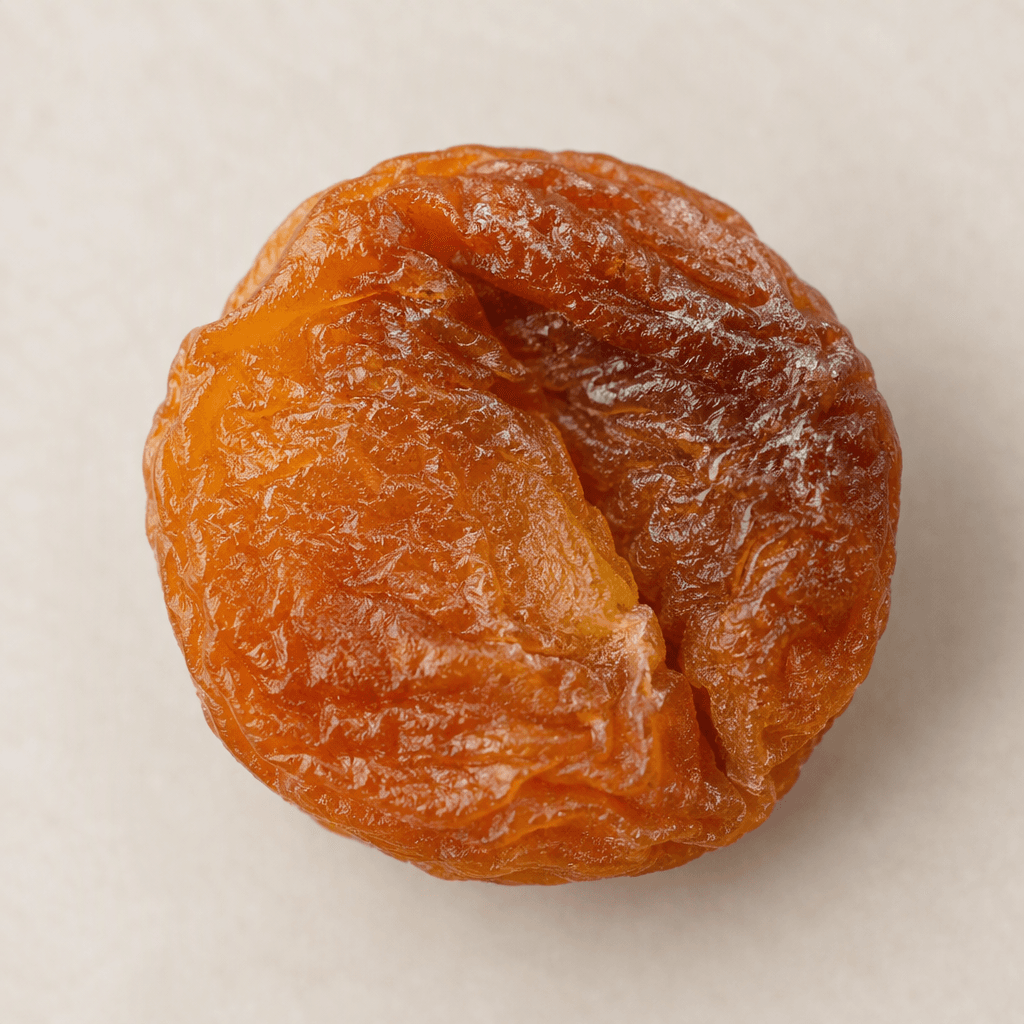
Sun-dried apricot Calories
Naturally sun-dried, high in fiber and potassium, no additives
In season: Summer · Autumn
CALORIES
GI
POTASSIUM
FIBER
Quick answer
5 piece (medium) of Sun-dried apricot (40 g) has 96 calories. That works out to 241 calories per 100 g. It contains 25.6 g of carbs, 1.4 g of protein, 0.2 g of fat and 2.9 g of fiber. Its 0.2 mg of Copper covers 18% of the Daily Value. Its glycemic index is 30 (medium), so it raises blood sugar at a moderate pace.
What is Sun-dried apricot?
Sun-dried apricots are ripe apricots dried in the sun, a familiar preserve in Turkey, particularly around Malatya. Unlike bright orange apricots treated to retain their colour, the naturally dried fruit is usually dark brown, flattened and wrinkled.
It tastes sweet with a gentle tang and has a chewy, slightly leathery texture. In Turkey it is eaten as a snack, with breakfast or tea, and used in compotes; elsewhere, it also works well chopped into porridge, yoghurt or baked goods. It provides fibre and potassium while being low in fat, with 7.3 g of fibre per 100 g. Pair a few pieces with nuts for a more filling snack, or chop them into plain yoghurt to balance their concentrated sweetness.
Sun-dried apricot Nutrition Facts
Selected: 100 g
241
KCAL / 100G
Carbs
63.9g
· 23% DV
Protein
3.4g
· 7% DV
Fat
0.5g
· 1% DV
Fiber
7.3g
· 26% DV
DV is the share of the daily value covered, on a 2,000 kcal reference diet.
Calories come from: Carbs 93% · Protein 5% · Fat 2%
Sun-dried apricot Vitamins & Minerals
Vitamins
Vitamin A
360µg · 40% DV
Vitamin E
4.3mg · 29% DV
B3
2.6mg · 16% DV
B5
0.5mg · 10% DV
Minerals
Potassium ⭐
1162mg · 34% DV
Iron
3mg · 17% DV
Phosphorus
71mg · 10% DV
Magnesium
32mg · 8% DV
How Nutritious Is Sun-dried apricot?
Nutrient density
High
How many vitamins, minerals and how much fiber this food carries per calorie. A high score means a lot of nutrition for few calories.
Satiety score
Medium
An EatBetter score computed from fiber, protein and calorie density. A high score means staying full longer on the same calories.
Both scores are calculated per 100 g and do not change with the selected portion. The satiety score is EatBetter's own calculation, not a clinical measure.
Sun-dried apricot Glycemic Index
GLYCEMIC INDEX
GLYCEMIC LOAD
Accounts for portion size — a more realistic measure than GI alone.
How to Burn Off Sun-dried apricot
To burn the 241 calories in 100 g:
🚶
Walking (5 km/h)
🏃
Running (8 km/h)
🚴
Cycling
🏊
Swimming
Times are calculated with the MET equation for a 70 kg adult. Actual burn varies with your weight, age and pace.
Is Sun-dried apricot Processed?
NOVA 2
Minimally Processed
1. Unprocessed
2. Minimally Processed
3. Processed
4. Ultra-Processed
NOVA classifies foods into 4 groups by industrial processing. NOVA 1 (unprocessed) is the healthiest.
Does Sun-dried apricot Contain Allergens?
No known major allergens
Which Diets Is Sun-dried apricot Good For?
Vegan
✓ Suitable
Vegetarian
✓ Suitable
Gluten-Free
✓ Suitable
Dairy-Free
— Not suitable
Mediterranean
✓ Suitable
Paleo
✓ Suitable
Whole30
— Not suitable
DASH
— Not suitable
Keto
— Not suitable
Low FODMAP
— Not suitable
Sun-dried apricot Fat Profile
SATURATED
0.02g
MONOUNSATURATED
0.07g
POLYUNSATURATED
0.09g
Omega 6:3 ratio 9:1
Above the ideal 4:1 (9:1).
Compare Sun-dried apricot
Foods Similar to Sun-dried apricot
Frequently Asked Questions About Sun-dried apricot
Are sun-dried apricots good for you?
Yes, sun-dried apricots provide fibre and potassium, and they can be a useful fruit snack. Drying concentrates their natural sugars, so pair a modest portion with nuts or yogurt if you want a more filling snack.
Are sun-dried apricots different from fresh apricots?
Yes. Sun-dried apricots have had most of their water removed, making them denser, chewier and sweeter-tasting than fresh apricots. They are easier to store and carry, but a small handful represents more fruit than it may appear to.
How do you eat sun-dried apricots?
Sun-dried apricots can be eaten as they are, chopped into oatmeal or yogurt, or added to salads, rice dishes and baked goods. If they feel leathery, briefly soaking them in warm water makes them easier to chew.
Do sun-dried apricots need to be washed before eating?
Rinse sun-dried apricots under clean running water if they were sold loose or look dusty. Pat them dry before eating or storing; washing packaged fruit is not necessary when it is visibly clean and the package directs you to eat it as sold.
How should sun-dried apricots be stored?
Keep sun-dried apricots in an airtight container in a cool, dry, dark place. Refrigerate them in a sealed container in warm or humid conditions, and discard any fruit that develops mold or an unusual smell.
Can you freeze sun-dried apricots?
Yes, sun-dried apricots can be frozen in an airtight freezer bag or container. Separate portions before freezing so you can take out only what you need; thaw them in the refrigerator or use them straight from frozen in cooking.
How do you soften hard sun-dried apricots?
Soak hard sun-dried apricots in warm water for about 10 to 15 minutes, then drain them. For a softer result in a recipe, simmer them briefly in water or juice; avoid leaving them soaking at room temperature for hours.
Do sun-dried apricots contain sulfites?
Naturally sun-dried apricots like these have no added sulfites or other additives. Many bright-orange dried apricots are treated with sulfur dioxide to preserve their color, while untreated fruit is usually darker.
How many sun-dried apricots should you eat a day?
A typical serving is about five medium sun-dried apricots, or 40 grams. Since drying concentrates the fruit, use that portion as a practical guide rather than eating handfuls without noticing how much you have had.
Can people with diabetes eat sun-dried apricots?
People with diabetes can include sun-dried apricots, but the concentrated natural sugars can affect blood glucose. Keep the portion modest and account for it in your meal plan; ask your clinician or dietitian for advice tailored to your glucose targets.
Have another question about Sun-dried apricot?
Ask the AI nutrition coach — calories, portions, alternatives and more, answered in seconds in the app.

Scan calories with your camera
Instant AI nutrition analysis

Nutrition data compiled from USDA FoodData Central and scientific sources.